Voices from the Sylff Community
Sep 9, 2026
Luxury Hospitality, Community Empowerment, and Life Satisfaction: Lessons from Bali
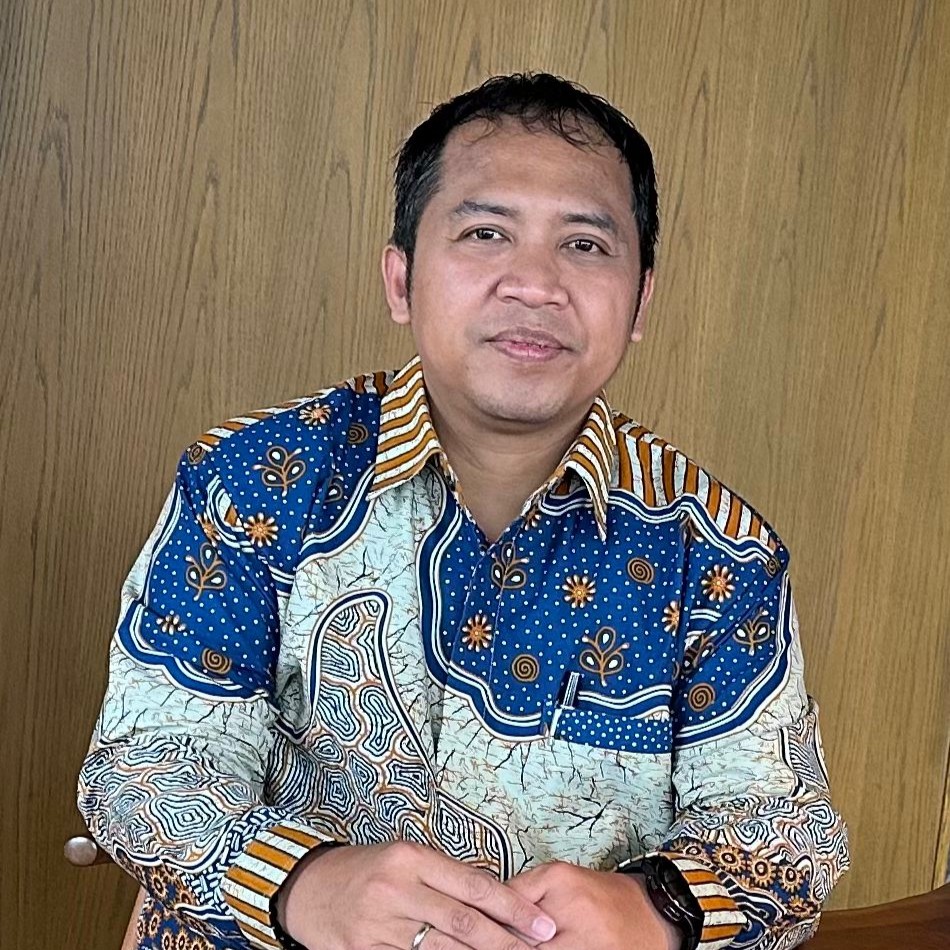
What makes a luxury travel experience truly meaningful? Drawing on research conducted in Bali, A. Faidlal Rahman (Gadjah Mada University, 2008–09) examines how local culture, community involvement, and authentic hospitality shape tourists’ well-being and satisfaction.
Why I Chose This Topic
I conducted field research in Bali with the support of Sylff Research Grant 2025. The study was motivated by the fact that tourism success has long been measured primarily through economic indicators, such as tourist arrivals, hotel occupancy, length of stay, and tourism revenue. While these indicators are important, they do not fully explain how tourist experiences contribute to the well-being of both visitors and local communities. Moreover, tourism research has largely focused on customer satisfaction, tourist loyalty, and revisit intention, whereas the relationship between tourists’ experiences and life satisfaction remains underexplored (Bagheri et al. 2024; Gupta et al. 2026).
Previous studies have examined luxury service experience values, community empowerment, and brand authenticity, but most have investigated these concepts separately. Researchers have paid limited attention to how luxury service experiences and community empowerment jointly shape brand authenticity and tourists’ life satisfaction. This gap inspired me to adopt a more human-centered perspective that views tourism as an experience capable of creating lasting meaning rather than merely short-term satisfaction. This perspective reflects the experience economy, which identifies memorable and authentic experiences as a primary source of value creation (Pine and Gilmore 1999).
In the luxury hospitality industry, tourists increasingly seek personalized experiences that build emotional connections and strengthen their identities (Lin and Choe 2022; Jain et al. 2023). At the same time, community empowerment has become a cornerstone of sustainable tourism. UN Tourism has emphasized that tourism should generate economic, social, and cultural benefits for local communities, which preserve the culture, traditions, and identity that attract visitors (Scheyvens 1999; Dolezal and Novelli 2022; Prasongthan 2023).
Bali was selected as the research site because it is one of the world’s leading tourist destinations, where luxury hospitality thrives alongside a vibrant local culture. The island represents a unique meeting point between globalization and tradition. Local communities continue to preserve religious rituals, traditional arts, local philosophies, and cultural values that have been passed down through generations.
This distinctive setting makes Bali an ideal place to explore how luxury hospitality and local culture shape authentic tourist experiences. Luxury hotels further reinforce this authenticity by incorporating local employees, locally sourced products, traditional cuisine, cultural performances, and Balinese philosophy into the guest experience.
Learning from the Perspective of International Tourists
This study adopted a quantitative cross-sectional survey design and collected responses from 375 international tourists staying at four- and five-star hotels in Bali using purposive sampling. I collected data through structured questionnaires over a six-month period, from December 2025 to May 2026.
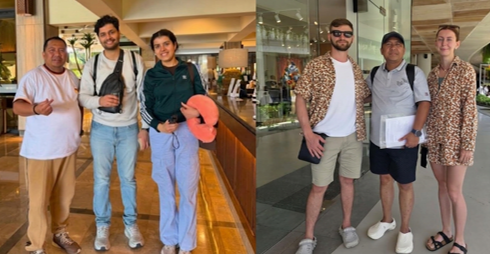
Surveying international tourists in Bali.
Most respondents came from Oceania (38.4%) and Europe (32.3%), representing approximately 70.7% of the sample. These findings indicate that international tourists from these two regions remain the primary market for Bali’s luxury hotels. Nearly all respondents (98.4%) visited Bali for leisure, while most traveled with family (47.7%) or their partners (33.9%) and stayed for four to six nights (69.1%). Most had previous experience staying in star-rated hotels, and almost all (98.9%) booked their accommodation through online travel agencies.
In addition to collecting quantitative data, I had informal conversations with tourists from various countries to better understand their experiences at luxury hotels in Bali. During one memorable conversation at a hotel restaurant, the international tourists I spoke to explained that the highlight of their stay was not the luxurious facilities but the atmosphere shaped by Balinese culture, meaningful interactions with local communities, and the genuine hospitality they experienced.
What Did This Research Find?
The structural model showed that luxury service experience values and community empowerment had positive and significant effects on brand authenticity and tourists’ life satisfaction. Brand authenticity also positively influenced life satisfaction and mediated the relationships between luxury service experience values, community empowerment, and tourists’ life satisfaction. These findings suggest that authentic tourist experiences depend not only on high-quality hotel services but also on meaningful involvement of local communities.
The study found that tourists no longer evaluate luxury hotels in Bali solely on their facilities or service quality. Luxury service experience values contributed to brand authenticity and tourists’ life satisfaction, indicating that tourists increasingly value experiences that create personal meaning, foster emotional connections, and introduce them to local culture.
Hedonic, utilitarian, and self-expressive values together explain how modern luxury delivers not only pleasure and comfort but also functional benefits and opportunities for self-expression. These findings support the experience economy theory (Pine and Gilmore 1999) and are consistent with the studies of Lin and Choe (2022) and Jain et al. (2023).
The study further found that community empowerment positively and significantly influenced both brand authenticity and tourists’ life satisfaction. Tourists perceived hotels as more authentic when they observed meaningful involvement of local communities in hotel operations through local employment, locally sourced products, and the integration of Balinese culture into hotel services.
Local employees, community products, traditional cuisine, cultural performances, and Balinese philosophy not only generated economic benefits for local communities but also strengthened hotel identity and enriched tourists' experiences. These findings support the concept of social value creation (Erhardt et al. 2022) and are consistent with the studies of Chang et al. (2022) and Chiang and Chen (2023).
Furthermore, brand authenticity had a positive effect on tourists’ life satisfaction and significantly mediated the relationships between luxury service experience values, community empowerment, and tourists’ life satisfaction. Tourists perceived their experiences as more meaningful when hotels genuinely reflected Balinese cultural identity. Four dimensions—continuity, credibility, integrity, and symbolism—shaped this perception of authenticity. These findings support the work of Morhart et al. (2015) and Hong and Ahn (2024), who argue that authentic brands strengthen tourists’ psychological well-being.
Overall, this study suggests that tourists have redefined the meaning of luxury. They no longer view luxury as an exclusive experience but rather as one that balances economic, social, and cultural values. This perspective supports the concept of sustainable luxury, which proposes that modern luxury becomes more valuable when it incorporates sustainability and community empowerment (Chang et al. 2022; Jain et al. 2023).
The findings also extend the luxury tourism literature by demonstrating that luxury service experience values and community empowerment significantly enhance tourists’ life satisfaction, both directly and indirectly through brand authenticity. In Bali, true luxury lies not only in exceptional facilities but also in a hotel’s ability to create meaningful experiences while generating lasting benefits for local communities.
Reflections
Although tourists come from diverse national, linguistic, religious, and cultural backgrounds, they share a common desire to seek meaningful experiences, build genuine connections, and better understand the places they visit. Bali fulfills these aspirations by offering living traditions, performing arts, local cuisine, and cultural values that coexist with a world-class luxury hospitality industry.
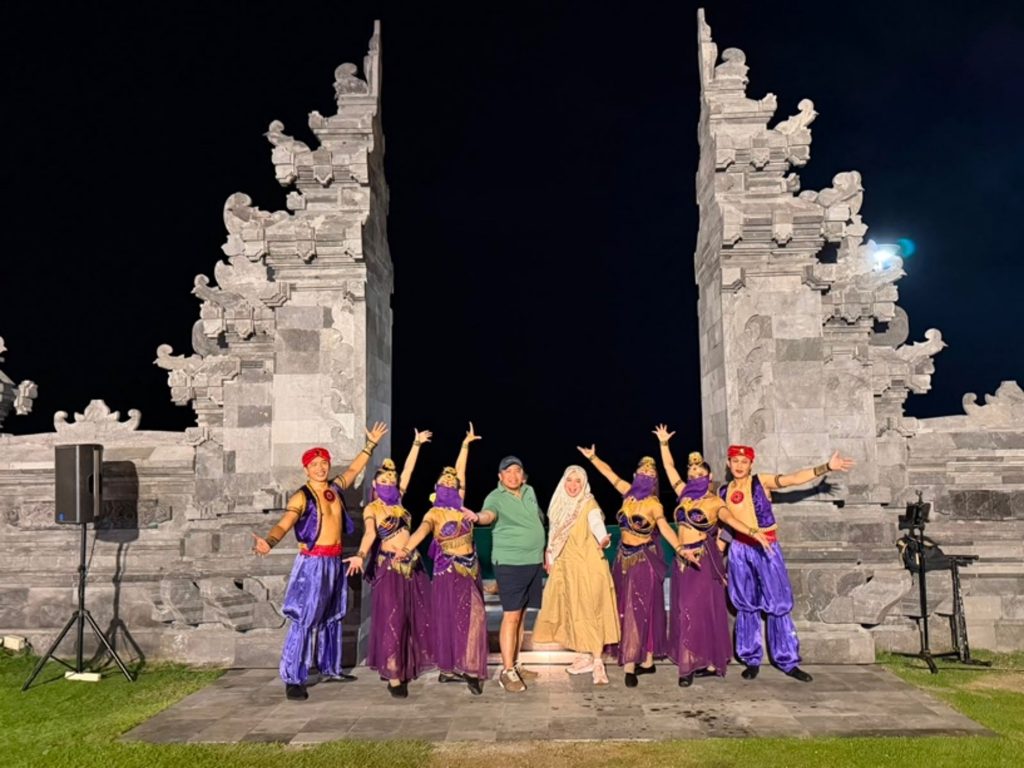
Posing with members of a Balinese art troupe performing at a luxury hotel.
Many tourists I met regarded Balinese cultural performances in luxury hotels as more than entertainment. They viewed these performances as opportunities to experience the richness of Balinese culture and develop stronger connections with the destination.
Tourists from Europe, the Americas, Asia, Australia, and India consistently described these cultural encounters as more memorable than luxury facilities alone, demonstrating that local culture transforms a hotel stay into a more authentic and meaningful journey.
These experiences illustrate both the universality and diversity of human experience. Tourists from different cultural backgrounds share a common desire for meaningful journeys, while each destination fulfills this aspiration through its unique cultural identity. In Bali, local culture helps connect tourists with local communities and adds deeper meaning to their travel experiences.
My fieldwork showed that tourists often valued interactions with local communities, Balinese philosophy, local products, and living traditions more than exclusive facilities. Hotels that combine high-quality service with community empowerment strengthen their competitiveness while enhancing tourist well-being and supporting sustainable destination development.
This research also changed my understanding of luxury. Before conducting this study, I associated luxury primarily with exceptional facilities and service quality. After months of fieldwork, I realized that genuine luxury lies in meaningful human connections, cultural authenticity, and tourism’s ability to improve people’s lives.
The findings also demonstrate that Bali can continue developing its tourism industry without sacrificing its cultural identity. Destinations that actively involve local communities can enhance authenticity and create richer visitor experiences. This lesson extends beyond Bali and offers valuable insights for destinations seeking to balance economic growth, cultural preservation, and community well-being. Ultimately, luxury tourism creates its greatest value when it connects people, cultures, and communities in meaningful and lasting ways.
References
Bagheri, Fatemeh, Manuela Guerreiro, Patrícia Pinto, and Zahed Ghaderi. 2024. “From Tourist Experience to Satisfaction and Loyalty: Exploring the Role of a Sense of Well-Being.” Journal of Travel Research 63 (8): 1989–2004.
Chang, Wen-Yun, Viriya Taecharungroj, and Supara Kapasuwan. 2022. “Sustainable Luxury Consumers’ Preferences and Segments: Conjoint and Cluster Analyses.” Sustainability 14 (15): 9551.
Chiang, Chien-Ting, and Ying-Chieh Chen. 2023. “The Effect of Destination Brand Identity on Tourism Experience: The Case of the Pier-2 Art Center in Taiwan.” Sustainability 15 (4): 3254.
Dolezal, Claudia, and Marina Novelli. 2022. “Power in Community-Based Tourism: Empowerment and Partnership in Bali.”Journal of Sustainable Tourism 30 (10): 2352–2370. https://doi.org/10.1080/09669582.2020.1838527.
Erhardt, Niclas, Carlos Martin-Rios, Jason Bolton, and Matthew Luth. 2022. “Doing Well by Creating Economic Value through Social Values among Craft Beer Breweries: A Case Study in Responsible Innovation and Growth.” Sustainability 14 (5): 2826.
Gupta, Pragya, Weng Marc Lim, Nidhi Singh, and Dhruv Galgotia. 2026. “Nature Tourism: Intrinsic and Extrinsic Motivations, Travel and Life Satisfaction, and Willingness to Revisit.” Tourism Recreation Research 51 (3): 999–1024. https://doi.org/10.1080/02508281.2025.2585807.
Hong, EunPyo, and Jiseon Ahn. 2024. “Exploring International Customers’ Luxury Service Experiences During the COVID-19 Pandemic.” Tourism and Hospitality Research 24 (4): 535–547. https://doi.org/10.1177/14673584231165939.
Jain, Varsha, Jochen Wirtz, Parth Salunke, Robin Nunkoo, and Ayushi Sharma. 2023. “Luxury Hospitality: A Systematic Literature Review and Research Agenda.” International Journal of Hospitality Management 115: 103597. https://doi.org/10.1016/j.ijhm.2023.103597.
Lin, Yangpeng, and Yeongbae Choe. 2022. “Impact of Luxury Hotel Customer Experience on Brand Love and Customer Citizenship Behavior.” Sustainability 14 (21): 13899. https://doi.org/10.3390/su142113899.
Morhart, Felicitas, Lucia Malär, Amélie Guèvremont, Florent Girardin, and Bianca Grohmann. 2015. “Brand Authenticity: An Integrative Framework and Measurement Scale.”Journal of Consumer Psychology 25 (2): 200–218. https://doi.org/10.1016/j.jcps.2014.11.006.
Pine, B. Joseph II, and James H. Gilmore. 1999. The Experience Economy: Work Is Theatre & Every Business a Stage. Boston, MA: Harvard Business School Press.
Prasongthan, Supaporn. 2023. “Exploring Tourists’ Responsible Behavior: Evidence from Thailand.” ABAC Journal 43 (3): 26–45.
Scheyvens, Regina. 1999. “Ecotourism and the Empowerment of Local Communities.” Tourism Management 20 (2): 245–249. https://doi.org/10.1016/S0261-5177(98)00069-7.