Voices from the Sylff Community
Dec 12, 2025
Guatemalan Farmworkers in Canada: Migration, Land Inequality, and Development
Guatemalan participation in Canada’s Agricultural Stream program has surged nearly 200% since 2016, highlighting migration’s role in rural survival and development. But Chris Little (York University, 2019–21) reports that growing uncertainty over migration pathways is raising questions about sustainability and inequality.
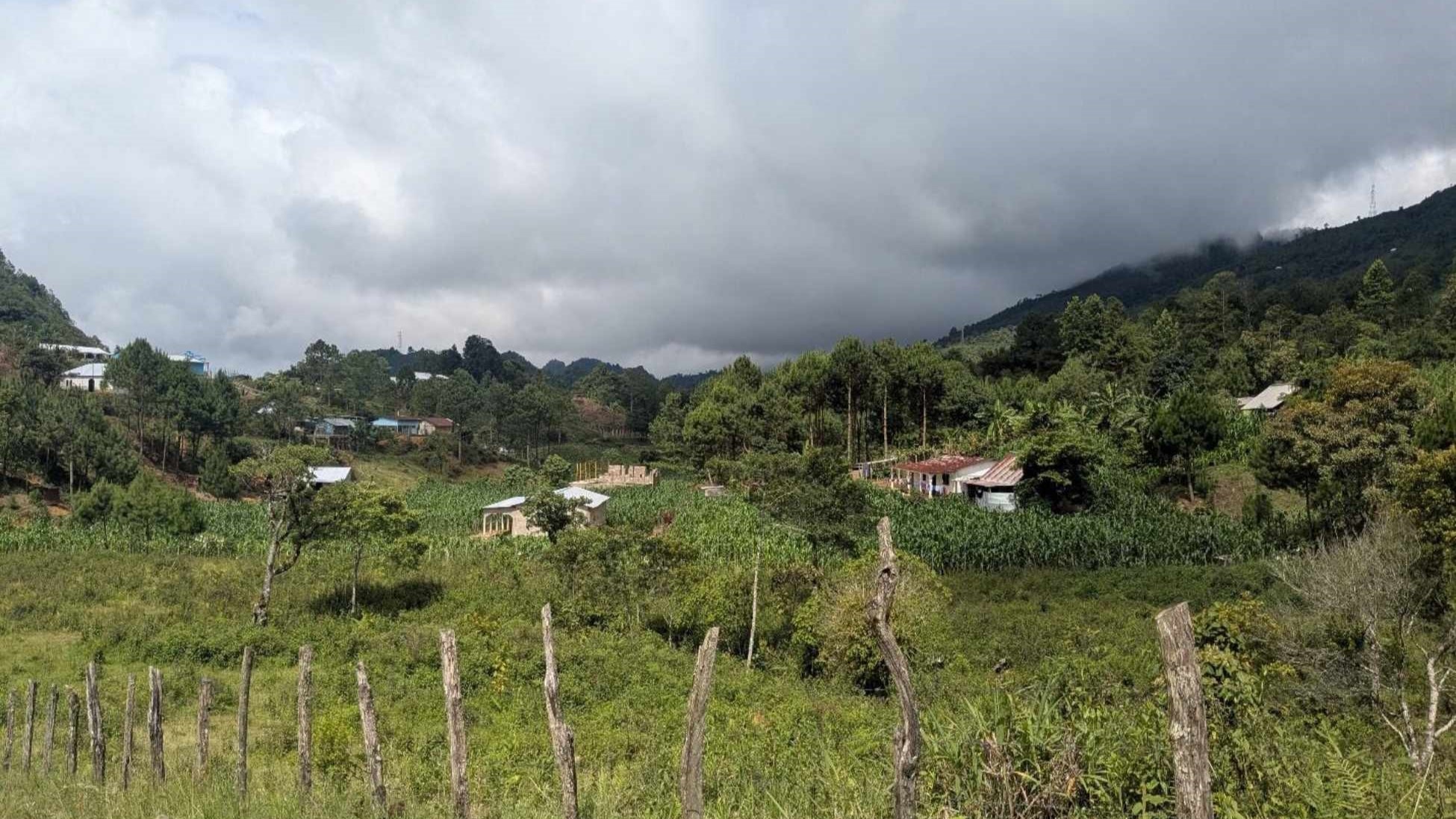
A rural Guatemalan community with high levels of out-migration. Author’s own work.
Guatemalan participation in the Agricultural Stream (AS) of Canada’s Temporary Foreign Worker Program (TFWP) has increased by 194% since 2016, a pace far outstripping the 77% growth in migrant farmworker numbers overall (Statistics Canada 2025).
With almost 20,000 Guatemalan AS participants in 2024, this migration flow is small compared to the huge flow of irregular migrants from Guatemala to the United States but is still a significant component of the 19.1% of Guatemalan GDP made up by remittances in 2024 (World Bank 2025).
Yet in the current hemispheric political context, with migration pathways being called into question and in some cases curtailed, the role of migration in Guatemala’s development may be changing.
Most workers who migrate from Guatemala under the AS are smallholder farmers, or campesinos, in their home communities. In my doctoral dissertation, tentatively titled Finca Logic: Hemispheric Agrarian Change and Guatemalan Migrant Farmworkers in Ontario, I am exploring the relationship between agrarian change and labor migration in the Americas through the case study of the growing population of Guatemalan migrant farmworkers in Ontario greenhouse agriculture.
Drawing on over 100 interviews, I take a labor-centered approach to analyzing the impact of transnational labor migration on the organization of agricultural production at both ends of the migration journey—Ontario and Guatemala.
Interrogating the “Triple Win” Paradigm
Temporary migrant labor programs are often posited to be beneficial to the sending country, the receiving country, and the migrants themselves—so-called circular or “triple win” migration (Rannveig Agunias and Newland 2007; Castles and Ozkul 2014; Wickramasekara 2011).
While there are undoubtedly benefits to all parties engaged in migration—remittances for the migrant, foreign exchange for the sending country, labor for the receiving country—the results of participation for the migrant workers themselves appear to be much more complex and contradictory than this framework might suggest.
My doctoral dissertation research critically interrogates the “triple win” paradigm. It investigates the socioeconomic conditions that shape Guatemalan campesinos’ migration practices and the developmental impacts of participation in the AS, particularly with regard to land distribution. I seek to understand the Guatemalan side of the temporary migration story, which is under-researched compared to the AS and its sister program, the Seasonal Agricultural Worker Program (SAWP) in general, and where much more attention has been paid to the specific experiences of the more longstanding participant nationalities, particularly Mexican and Jamaican.
Through my research, I find that the developmental possibilities for participants in the program are often mixed and frequently severely constrained by the immediacy of day-to-day subsistence needs for workers and their families and the effects of the highly unequal distribution of land in Guatemala.
This situation is compounded by two other factors: the vulnerability of temporary migrant workers to losing access to employment through the program and, in a wider respect, the limited number of spaces relative to demand for the program, even amidst the significant growth in Guatemalan participation and the AS overall.
Often, participants compared their experiences to the nature of irregular migration to the United States, which was generally framed as offering increased possible reward but at much greater possible risk.
The “Land Question”
Guatemalan participants in the AS face deeply unequal land distribution as campesinos in their home country. This “land question” is demonstrated by the fact that just 2.5% of the total number of farms control some 65% of arable land, while another 88% of farms share a mere 16% of arable land (Lopez-Ridaura et al. 2019).
In other words, a huge number of campesinos have access to a remarkably small proportion of arable land, while a small number of large landowners predominate. Unequal land distribution in Guatemala, compounded by extractive projects and the dispossession and repression associated with them (Alonso-Fradejas 2012; 2021; Konforti 2022; Little 2024; Nolin and Russell 2021), is the crux upon which rests a society profoundly unequal in broader economic and political terms as well.
Due to constrained possibilities for rural development and sustainable livelihoods, Guatemalans turn to labor migration as a survival strategy—both through participation in the AS and in the much larger irregular flows to the United States. My doctoral dissertation research historically situates this dynamic, placing the interview data collected within the lineage of campesino labor regimes in Guatemala and the different ways in which the struggle over the means of social reproduction has taken place between campesinos and the ruling class.
In the twentieth century, violent repression of land reform efforts was the basis for the 36-year-long Guatemalan Civil War. Following the peace accords signed in 1996, the land question has remained unresolved and a key area of social conflict and inequality within the country, with the individualized form of land reform pursued through the accords criticized as insufficient to change the dynamics of land distribution in any substantive way (Gauster and Isakson 2007; Granovsky-Larsen 2013; Palma Murga 1997; Short 2008).
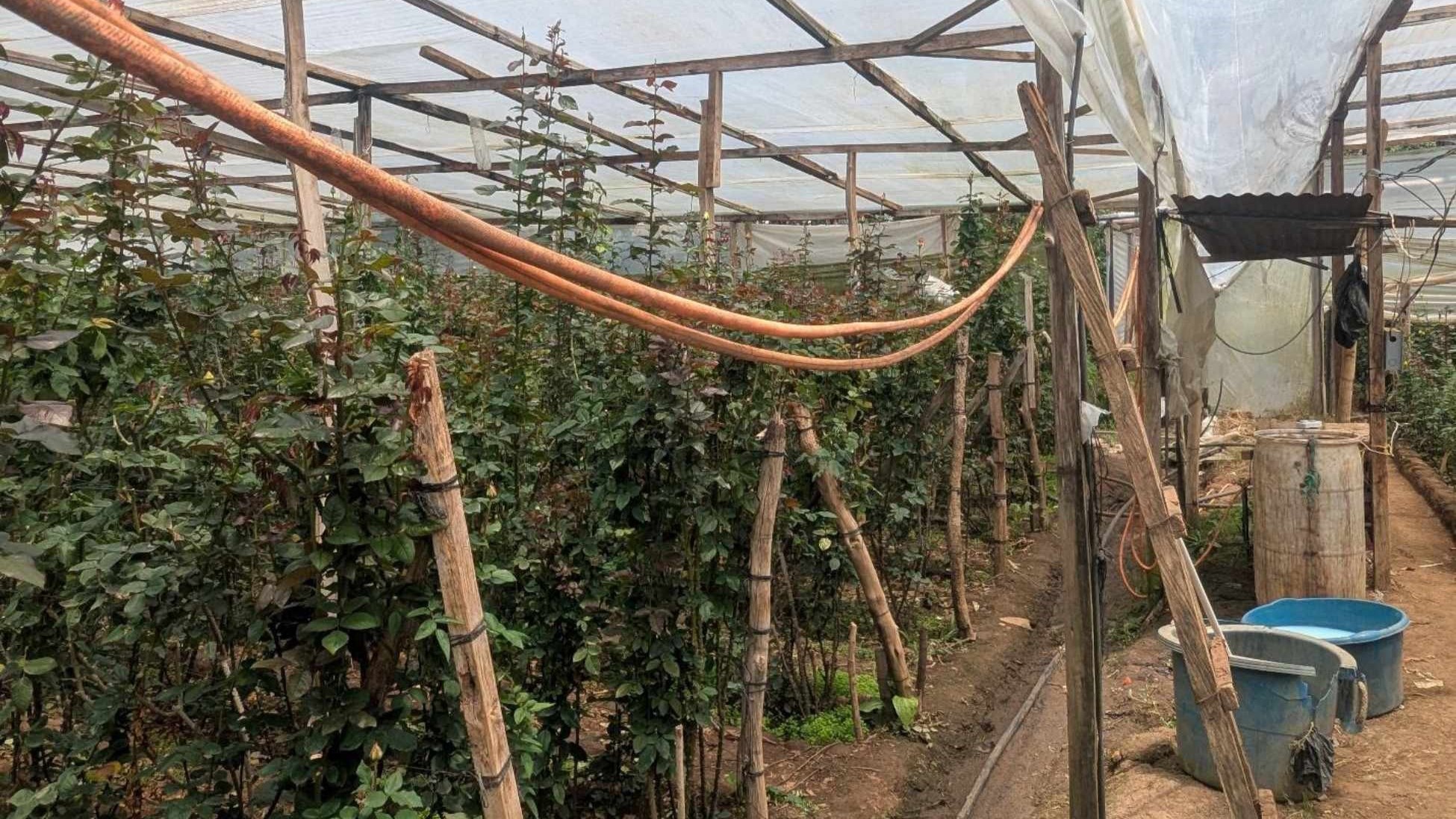
Floriculture in a campesino community with high out-migration. Author’s own work.
Fieldwork and Emerging Concerns
The 2024 SRG award enabled me to return to Guatemala in June–July 2025 to follow up on some of the threads that had emerged from my primary round of fieldwork in 2024. I have been able to speak with government representatives, social movement actors, and people from communities that have been impacted by high rates of out-migration. This process involved targeted engagement with participants who could deepen the findings from my first round of fieldwork, which have demonstrated the heterogeneity of experiences for Guatemalan campesino participants in Canada’s TFWP-AS.
In particular, I found that government actors and social movement representatives shared concerns regarding the sustainability of Guatemala’s reliance on migration as a mode for development. These concerns were bolstered by interviews with workers and members of communities with high rates of TFWP-AS participation.
These participants recognized the need to look for alternatives given the uncertainty over migration possibilities in general and the limited availability of places in documented migration programs such as the TFWP-AS.
This underscores the importance of conducting labor-centered research on temporary migration programs, as the heterogeneity of experiences and the impact of remittances could be missed without developing a more granular picture of the community level. I am currently in the process of continuing to review and process the findings from this round of fieldwork and to integrate them in a process of comparison with prior findings. These will allow me to understand the potential developmental impacts of changes or limitations in migration possibilities for Guatemalan campesinos, both with regard to migration to Canada and also to the United States.
The SRG grant has also enabled me to strengthen my working relationship with Guatemalan research assistants, with whom I intend to collaborate on further projects that will follow a participatory research approach. One key aspect of the research—confirmation that workers understand their situations and prospects in ways that outsiders cannot—is the driving force behind my plans for further research beyond the doctoral dissertation that I am currently working on completing.
Toward Food Sovereignty
I returned to Guatemala in late October to visit two organizations working to defend land rights and promote food sovereignty for campesinos. With this experience, I am in the process of developing ideas for dissemination of my dissertation findings in a manner that can inform and support movements toward food sovereignty and providing alternatives to temporary labor migration for campesinos where communities seek such alternatives.
Support from the Sylff Association has been integral to deepening my understanding of the complex and shifting reality of rural life in Guatemala amid temporary migration flows. It will continue to bear fruit as I conclude this portion of my research and utilize it as a foundation for further investigation and action.
References
Alonso-Fradejas, Alberto. 2012. “Land Control-Grabbing in Guatemala: The Political Economy of Contemporary Agrarian Change.” Canadian Journal of Development Studies 33 (4): 509–28. https://doi.org/10.1080/02255189.2012.743455.
Alonso-Fradejas, Alberto. 2021. “Life Purging Agrarian Extractivism in Guatemala: Towards a Renewable but Unlivable Future?” In Agrarian Extractivism in Latin America, edited by Ben M. McKay, Alberto Alonso-Fradejas, and Ezquerro-Cañete. Routledge.
Castles, Stephen, and Derya Ozkul. 2014. “Circular Migration: Triple Win, or a New Label for Temporary Migration?” In Global and Asian Perspectives on International Migration. Springer, Cham. https://doi.org/10.1007/978-3-319-08317-9_2.
Gauster, Susana, and S. Ryan Isakson. 2007. “Eliminating Market Distortions, Perpetuating Rural Inequality: An Evaluation of Market-Assisted Land Reform in Guatemala.” Third World Quarterly 28 (8): 1519–36. https://doi.org/10.1080/01436590701637375.
Granovsky-Larsen, Simon. 2013. “Between the Bullet and the Bank: Agrarian Conflict and Access to Land in Neoliberal Guatemala.” The Journal of Peasant Studies 40 (2): 325–50. https://doi.org/10.1080/03066150.2013.777044.
Konforti, Lazar. 2022. “‘Nosotros No Comemos Caña’: Defence of Territory and Agrarian Change in the Polochic Valley, Guatemala.” Thesis, University of Toronto. https://tspace.library.utoronto.ca/handle/1807/125620.
Little, Chris. 2024. “The Extraction of Migrant Labor-Power.” In The Labor of Extraction in Latin America, edited by Kristin Ciupa and Jeffery R. Webber. Latin American Perspectives in the Classroom. Rowman & Littlefield.
Lopez-Ridaura, Santiago, Luis Barba-Escoto, Cristian Reyna, Jon Hellin, Bruno Gerard, and Mark van Wijk. 2019. “Food Security and Agriculture in the Western Highlands of Guatemala.” Food Security 11 (4): 817–33. https://doi.org/10.1007/s12571-019- 00940-z.
Nolin, Catherine, and Grahame Russell. 2021. Testimonio: Canadian Mining in the Aftermath of Genocides in Guatemala. Between the Lines.
Palma Murga, Gustavo. 1997. “Promised the Earth: Agrarian Reform in the SocioEconomic Agreement.” In Negotiating Rights: The Guatemalan Peace Process. Accord 2. Conciliation Resources.
Rannveig Agunias, Dovelyn, and Kathleen Newland. 2007. Circular Migration and Development: Trends, Policy Routes, and Ways Forward. MPI Policy Brief. Migration Policy Institute.
Short, Nicola. 2008. The International Politics of Post-Conflict Reconstruction in Guatemala. Palgrave Macmillan. http://www.vlebooks.com/vleweb/product/openreader?id=none&isbn=978113704 0848.
Statistics Canada. 2025. “Table 32-10-0221-01 Countries of Citizenship for Temporary Foreign Workers in the Agricultural Sector.” Table 32-10-0221-01. May 9. https://doi.org/10.25318/3210022101-eng.
Wickramasekara, Piyasiri. 2011. “Circular Migration: A Triple Win or a Dead End.” SSRN Scholarly Paper No. 1834762. Social Science Research Network, February 1. https://doi.org/10.2139/ssrn.1834762.
World Bank. 2025. “Personal Remittances, Received (% of GDP).” BX.TRF.PWKR.DT.GD.ZS. World Bank. https://data.worldbank.org/indicator/BX.TRF.PWKR.DT.GD.ZS.