Voices from the Sylff Community
Jun 12, 2026
From Electric Fleets to Agentic Mobility: Aligning Transport with Societal Needs
Drawing on three studies, Jônatas Augusto Manzolli (University of Coimbra, 2019) examines how electric mobility, system integration, and AI-enabled “agentic” vehicles are reshaping transportation. These developments point to new pathways toward lower emissions, greater resilience, and more human-centered urban systems.
Introduction
On a cold winter morning in Montreal, waiting for a bus can feel longer than it should. The air is sharp, the streets are busy, and even small delays matter. Public transportation is not an abstract system; it is what people rely on every day to reach work, school, and essential services.
Yet behind this everyday experience lies a complex network of decisions, technologies, and constraints that shape how mobility functions in our cities. For decades, public transportation has depended on diesel-powered vehicles, contributing to air pollution and climate change. The shift toward electric mobility offers a promising alternative, with the potential to reduce emissions and improve urban environments.
As I began working in this field, though, it became clear that electrification is not simply a matter of replacing engines. It changes how fleets are planned, how energy is consumed, and how infrastructure must be designed. This realization shaped the central motivation of my Sylff Research Grant project: to develop tools and frameworks that help decision-makers navigate the transition to electric mobility in a realistic and informed way.
Over the course of the project, this initial focus expanded into a broader investigation of how transportation systems can become more adaptive, resilient, and aligned with human needs. During this period, I published three scientific papers, each addressing a different layer of this transformation. One focused on the operational challenges of electric fleets (Manzolli et al. 2026a), another explored the role of mobility systems in urban resilience (Manzolli et al. 2026b), and a third introduced the concept of agentic vehicles as a new paradigm for intelligent transportation (Yu et al. 2025).
Together, these works form a continuous narrative, moving from practical challenges to system-level integration and, ultimately, to a rethinking of mobility itself.
From Electrification to System Complexity
Electric buses are often presented as a straightforward solution to urban emissions. In practice, however, their deployment introduces new layers of complexity. Unlike diesel vehicles, electric buses depend on charging infrastructure, battery capacity, and electricity markets. Their performance is influenced by external factors such as weather conditions, traffic patterns, and operational schedules.
In earlier stages of my research, I focused on understanding these challenges. Coordinating charging schedules, for example, is not only a technical problem but also an economic one. Charging at the wrong time can increase costs and create peaks in electricity demand that strain the grid. Similarly, battery degradation is influenced by how and when vehicles are charged, affecting long-term fleet performance and investment decisions.
These insights revealed that electrification is fundamentally a system problem. Decisions about vehicles, infrastructure, and energy are interconnected, and optimizing one element in isolation can lead to inefficiencies elsewhere. Addressing this complexity requires integrated approaches that consider the entire system.
The photo below illustrates an example of electric bus charging infrastructure, capturing the interface between transportation and energy systems, where operational decisions directly translate into energy demand. This physical connection is at the heart of the transition to electric mobility.
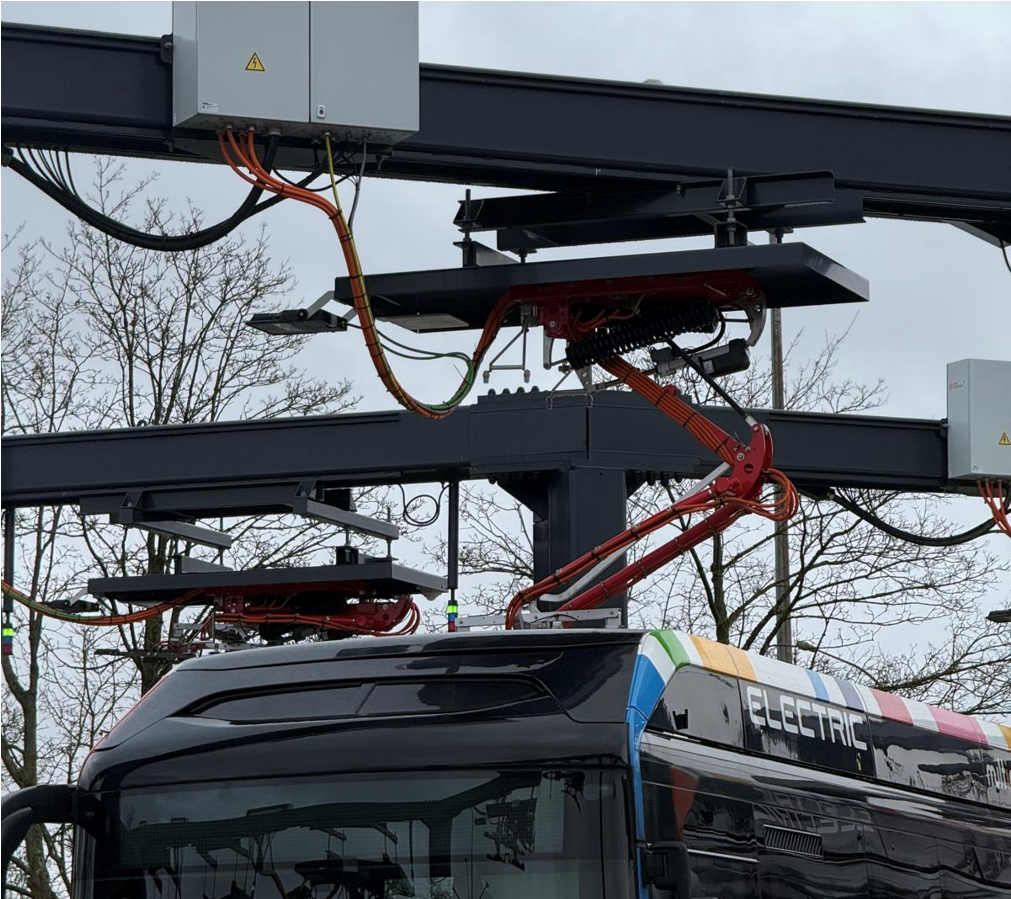
Overhead fast-charging infrastructure used for electric bus operations illustrates the integration between mobility systems and power networks.
Optimizing Electric Fleet Operations
The first major outcome of this research relates to strategies for improving the operation of electric fleets. Using optimization models, approaches were developed to coordinate charging, minimize energy costs, and account for battery degradation. These models drew on real-world data, including trip schedules, energy consumption patterns, and electricity prices.
One key finding was that smart charging can significantly improve system performance. By aligning charging activities with lower electricity prices and favorable grid conditions, operators can reduce costs while avoiding demand peaks. At the same time, incorporating battery degradation into the decision-making process helps extend battery life, which is one of the most expensive components of electric vehicles.
These results demonstrate that operational strategies are critical to the success of electrification. Even with the same vehicles and infrastructure, different charging approaches can lead to very different outcomes. This highlights the importance of providing decision-makers with tools that make these trade-offs visible and manageable.
Mobility as a Component of Urban Resilience
While operational improvements are essential, they represent only part of the picture. Transportation systems are embedded within broader urban and energy systems, and their importance becomes especially evident during disruptions.
In a second study, an examination was made of how shared autonomous electric vehicles can contribute to urban resilience. Using a case study based on real-world data from Montreal, a framework was developed to analyze fleet performance under disruptive conditions, such as power outages. The findings show that electric vehicles can serve not only as transportation assets but also as mobile energy resources.
During disruptions, these vehicles can help supply electricity to critical locations, support emergency services, and maintain essential mobility. This transforms the role of transportation systems from passive energy consumers to active participants in maintaining urban stability.
This perspective is particularly relevant in the context of climate change, which is increasing the frequency and severity of extreme events. Cities must adapt to these challenges by developing flexible systems capable of responding to uncertainty. Integrating mobility and energy systems offers one promising pathway toward this goal.
Toward Agentic Mobility Systems
The third component of this research moves beyond optimization and system integration to explore the future of mobility systems. Recent advances in artificial intelligence have enabled the development of systems that can reason, adapt, and interact with users in increasingly sophisticated ways.
Building on these trends, this research advances the concept of agentic vehicles, which are capable of making decisions based on goals, context, and interactions. Unlike traditional automated systems, which follow predefined rules, agentic vehicles can respond dynamically to changing conditions. They can interpret user needs, coordinate with other systems, and operate under uncertainty. This represents a shift from automation to intelligence.
The photo below shows an experimental autonomous vehicle platform used in this research. While still in a controlled environment, such platforms provide a glimpse into how future mobility systems may operate.
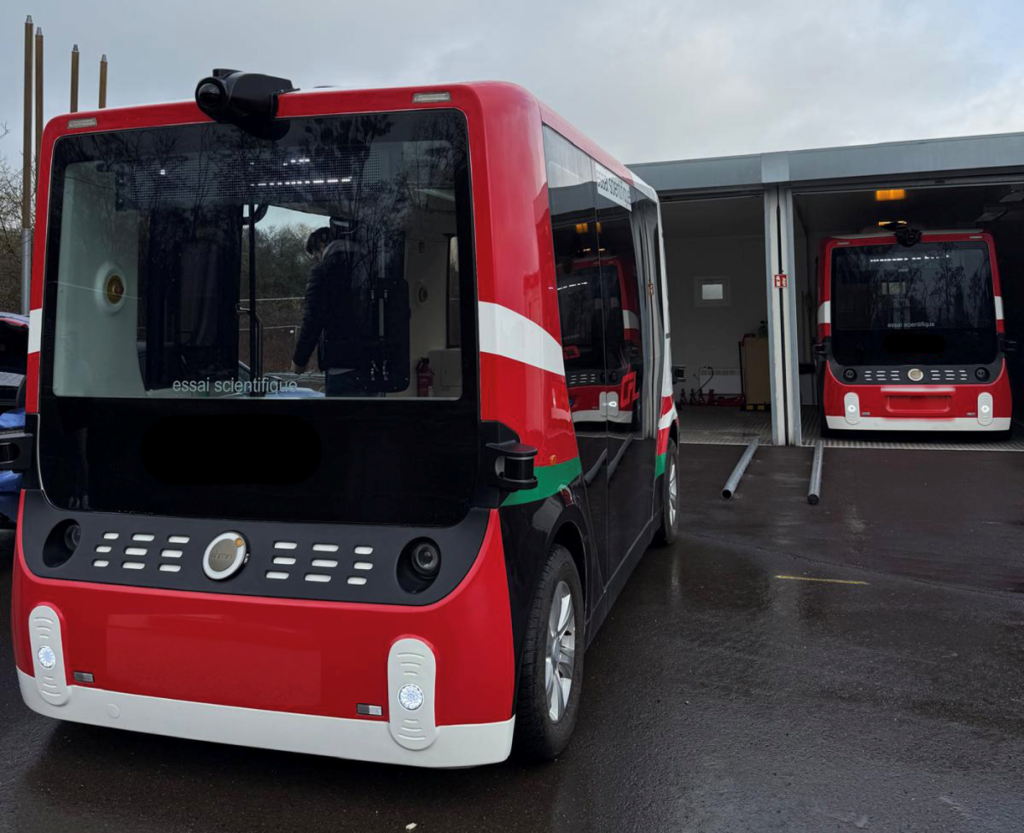
The experimental autonomous vehicle platform used to investigate interactions between automation, electrification, and operational strategies.
The concept of agentic mobility also raises important questions. How should these systems be governed? How can they be designed to align with societal values? Addressing these questions requires collaboration across disciplines, including engineering, social sciences, and public policy.
Connecting the Layers: Operations, Systems, and Intelligence
Taken together, these three research directions illustrate a progression. At the operational level, improving charging strategies and fleet management enhances efficiency and reduces costs. At the system level, integrating mobility with energy systems increases resilience and flexibility. At the intelligence level, developing adaptive and interactive systems opens new possibilities for how mobility can function.
This progression reflects a broader transformation in engineering and technology. Systems are becoming more interconnected, data-driven, and responsive. Designing them requires not only technical expertise but also an understanding of human needs and societal contexts.
Contribution to Society
The contributions of this research extend beyond technical advancements. Improving the efficiency and feasibility of electric fleets supports the transition to lower-carbon transportation systems. This has direct implications for reducing emissions and improving air quality in urban areas.
The integration of mobility and energy systems also enhances urban resilience, helping cities respond to disruptions and maintain essential services. This is particularly important for vulnerable populations, who are often the most affected by infrastructure failures.
At the same time, the development of decision-support tools empowers operators and policymakers to make informed choices. By making trade-offs explicit, these tools promote transparency and alignment with broader societal goals.
Finally, the concept of agentic mobility emphasizes the importance of designing systems that are not only efficient but also accessible, equitable, and responsive to the needs of the communities they serve.
Final Remarks
The transition to electric mobility is often described as a technological change. In reality, it represents a broader, systemic transformation that requires new ways of thinking about transportation, energy, and decision-making.
This research contributes to that transformation by connecting operational efficiency, system integration, and intelligent behavior. It shows that improving mobility is not only about reducing emissions but also about creating systems that are more resilient, adaptive, and aligned with human needs.
Looking ahead, the challenge is not only to develop new technologies but also to ensure that they are implemented in ways that benefit society. This requires collaboration, innovation, and a sustained focus on the human dimension of mobility.
References
Manzolli, Jônatas Augusto, Alessandro Vissarios D’Apice, Praveen Pandey, Francesco Ciari, and Luis Miranda-Moreno. 2026a. “Planning Resilient Electric Bus Operations in Cold Regions: An Agent-based Simulation–Optimization Framework.” Applied Energy 413: 127735.
Manzolli, Jônatas Augusto, Jiangbo Yu, Alessandro Vissarios D’Apice, and Luis Miranda-Moreno. 2026b. “Balancing Energy Resilience and Mobility: A Multi-Objective Framework for Shared Autonomous Electric Vehicles.” NPJ Sustainable Mobility and Transport 3 (1): 13.
Yu, Jiangbo, Jônatas Augusto Manzolli, et al. 2025. “Agentic Vehicles for Human-Centered Mobility: Definition, Prospects, and Synergistic Co-Development with Vehicle Autonomy.” arXiv: 2507.04996.