Voices from the Sylff Community
Jun 23, 2026
Do Tax Breaks Actually Fuel Innovation? Evidence from China’s Factory Floors
China has built one of the world’s most comprehensive fiscal incentive systems for innovation. But whether these instruments reach the entrepreneurs who need them depends less on policy generosity than on policy design, argues Zhe Li (Ristumeikan Asia Pacific University, 2025) based on fieldwork in China’s advanced manufacturing sector.
* * *
Advanced manufacturing is the driving force behind China’s transformation into a global powerhouse and an important pillar in building a modern economic system. The sector encompasses industries that are not only economically important but also strategically significant, including high-end intelligent equipment, new energy vehicles, semiconductors, and aerospace components.
Yet innovation in advanced manufacturing is structurally hard to finance. Research and development activities are characteristically high risk and capital intensive, with long development cycles and uncertain returns, leaving enterprises facing significant financing constraints. When a company decides to innovate, it must first solve the problem of who bears the cost of trying and failing.
This is where government policy enters the picture. Measures such as value-added tax refunds for R&D activity, super deductions for R&D expenditures, and direct innovation financial subsidies can alleviate the financial constraints faced by innovative firms.
China’s fiscal support architecture for innovation is among the most comprehensive in the world. A more pressing question—one that policy designers in every country grapple with—however, is whether these incentives reach the companies that need them and whether they function as effectively as intended. It is this gap between policy design and policy reach that motivated my choice of research topic.
A Combined Quantitative and Qualitative Approach
This SRG-supported study, drawing on fieldwork conducted in China, combined quantitative analysis with in-depth qualitative inquiry—an approach designed to capture both statistical patterns and the human dynamics behind them.
On the quantitative side, I assembled a balanced panel dataset for advanced manufacturing listed enterprises, using data from the China Stock Market and Accounting Research (CSMAR) database and annual financial reports covering 2016–23. Key variables included R&D expenditure, patent filings disaggregated by type, government subsidies, and tax relief.
A two-stage least squares (2SLS) strategy was adopted to address the endogeneity inherent in the relationship between R&D personnel and innovation output: skilled researchers both produce innovation and are attracted to firms that are already innovative.
On the qualitative side, I conducted several on-site interviews with R&D directors, financial officers, and senior engineers at manufacturing firms across the technology intensity spectrum. I also visited relevant government departments that design and optimize the financial incentive policies to understand how programs are designed and monitored from the administrative side. A series of in-depth case studies tracked individual companies’ innovation trajectories across multiple policy cycles—a longitudinal lens that panel data cannot provide.
In addition, I participated in several stakeholder workshops in which enterprise representatives and academic researchers collectively reviewed preliminary findings. These interactions served both to validate interpretations and to highlight policy recommendations grounded in lived experience rather than theoretical assumptions.
Fiscal Incentives Work—Unevenly
The quantitative analysis confirmed that fiscal incentives do improve innovation outcomes. Advanced manufacturing enterprises benefitting from R&D super deductions showed significantly stronger growth in invention patent filings—the most meaningful measure of genuine technological originality. VAT refunds, by reducing immediate cash flow pressure, also enabled firms to maintain multi-year research programs that would otherwise have been limited by budget constraints.
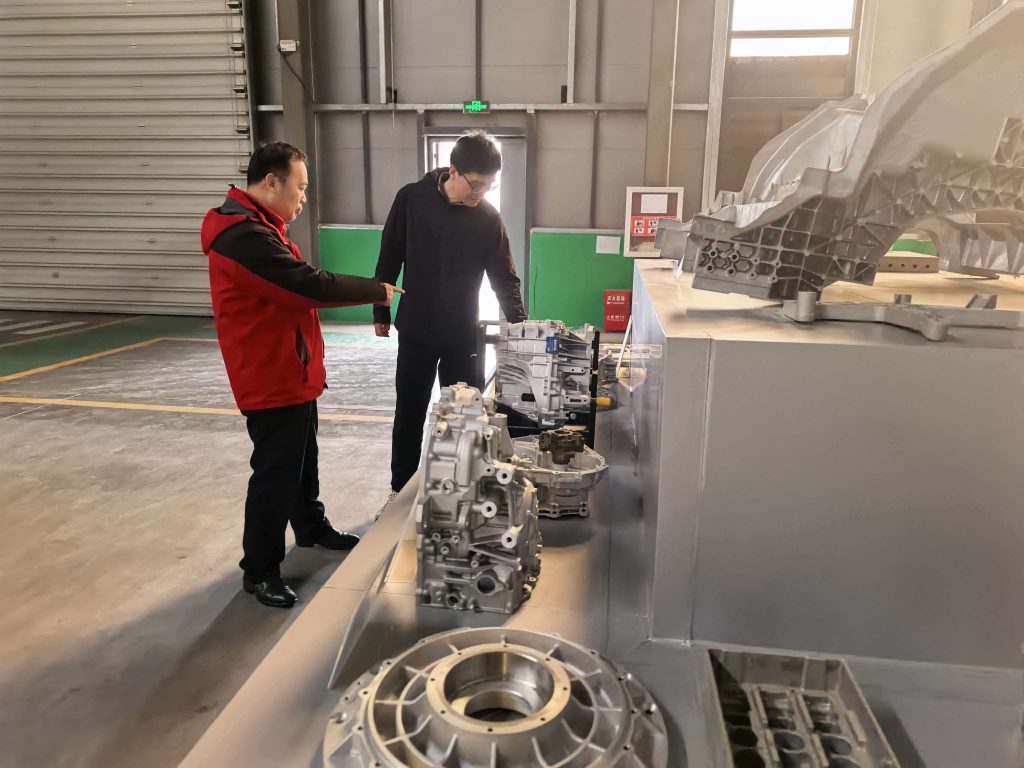
Visiting the manufacturing floor to engage in in-depth discussions with frontline workers.
But these benefits are unevenly distributed. High-technology firms—those with established R&D departments and sophisticated tax compliance teams—absorbed incentives most effectively. For mid-level enterprises, the effects were more limited and conditional on internal capabilities. In some medium-technology sectors, the incentive policies produced no significant increase in innovation outputs, though some companies successfully used subsidies to fund equipment upgrades and process improvements.
This uneven impact is not surprising and consistent with broader findings. KPMG’s industry report (2023), for example, notes that policy incentives often carry eligibility thresholds—tax compliance requirements, talent registration standards, certification processes—that might exclude firms at the most critical stage of growth: large enough to have innovation ambitions but lacking the administrative infrastructure to access policy benefits.
The Talent Bottleneck: A Cycle That Reinforces Itself
Among the field research’s most significant findings was a mutually reinforcing relationship between R&D personnel and innovation, as confirmed statistically through the 2SLS framework. Firms with stronger research teams produce better innovation outcomes, which in turn help attract and retain higher-quality talent. This creates a virtuous cycle for those companies, but it also leads to wider gaps with less innovative firms.
This finding has direct implications for policy design. The 2025 Urban Manufacturing Quality Development Report (CAICT 2025) documents a similar pattern at the city level: regions with higher R&D intensity tend to attract more innovation talent, further boosting R&D capacity. Enterprises that had built credible innovation records were able to offer competitive salaries and genuine research opportunities to engineers who might otherwise migrate to coastal clusters. Firms without such track records struggled to attract talent, limiting their ability to translate fiscal support into research output.
This suggests that fiscal incentives alone are not enough; breaking this self-reinforcing cycle requires complementary policies to support talent attraction, university-industry collaboration, and personnel development.
State-Owned and Private Enterprises Respond Differently
The research also found differences between state-owned enterprises (SOEs) and private firms. SOEs maintained stable R&D investment across policy cycles, reflecting both their access to patient capital and their responsiveness to institutional mandates. But their innovation outputs—measured by commercially significant patents and new product revenues—were less elastic with respect to fiscal incentives than those of private firms.
Private enterprises proved more responsive. When incentives were accessible and the process manageable, they invested aggressively in R&D; when conditions were less favorable, they pulled back. Research by Qian (2023) on China’s new energy vehicle industry reaches a similar conclusion: tax incentives show stronger innovation efficiency effects on private enterprises than on SOEs. This asymmetry suggests that private firms may offer the greatest potential return for policy support—but are also the most vulnerable to implementation challenges.

A BYD dealership in Shanghai. The electric carmaker has benefited greatly from subsidies, policy financing, and other fiscal incentives to achieve many innovation breakthroughs. (© Robert Way via Getty Images)
The “Last Mile”: Where Policy Design Meets Practice
A relatively consistent finding, regardless of firm type or technology intensity, was the gap between how incentive programs look on paper and how they function in practice for individual enterprises. While these programs may have been designed with realistic budgets and sincere intentions, awareness of available programs at the firm level was uneven. Some application processes proved to be complicated, and disbursement timing often failed to align with R&D planning cycles—undermining the intended incentive effect even for firms that qualified.
Some companies reported learning about subsidy programs only after the application window had closed. Others committed R&D expenditures in anticipation of support but faced liquidity pressure when complicated application processes caused approval delays. The KPMG report identifies analogous institutional barriers, describing problems of unbalanced policy design, insufficient digital governance capacity, and incomplete strategic planning that prevent enterprises from effectively accessing available support. My fieldwork confirmed these observations at the individual firm level, across city types and ownership structures.
Implications for Policy
The policy challenge this research examines—how to design fiscal instruments that genuinely stimulate corporate innovation—is one that every government pursuing a technology-intensive growth strategy confronts. The findings from fieldwork have several implications for concrete and actionable approaches.
The first implication concerns accessibility. The evidence is clear that fiscal generosity does not automatically translate into policy reach. Simplifying application procedures, developing dedicated intermediary services for smaller firms, and building proactive information systems that notify enterprises of approaching program windows would substantially expand the reach of existing measures.
The second implication concerns the need for integrated policy design. The positive feedback loop between R&D personnel and innovation performance suggests that policies should focus on creating sustainable innovation ecosystems rather than one-off interventions. This would be consistent with the logic of China’s long-term strategic planning approach, which considers key aspects of the R&D process in a comprehensive manner to help firms build cumulative innovation capabilities.
The third implication concerns differentiation. The heterogeneity of technology intensity levels argues against uniform incentive structures. Calibrating eligibility thresholds, deduction rates, and complementary support measures to the specific innovation challenges of different technology tiers would generate better outcomes at equivalent fiscal cost.
More broadly, the study illuminates something fundamental about the relationship between public policy and the production of knowledge. Innovation is structurally difficult to finance privately: it requires resources committed today for returns that may not materialize for years. Tax incentives and subsidies are society’s mechanisms for sharing that risk—a collective commitment that the aggregate benefits of technological progress justify absorbing part of its cost. The success of fiscal incentives depends on whether they truly reach the entrepreneurs who need them most.
In short, the fieldwork supported by SRG proved to be far more than an on-site academic survey. The material and perspectives accumulated during the fieldwork have directly shaped my first academic article to be published in Economies, a Scopus-indexed journal, and have inspired the analytical framework I will bring to a second research project examining how fiscal and policy instruments shape corporate export behavior.
Bibliography
Bloom, Nick, Rachel Griffith, and John Van Reenen. 2002. “Do R&D Tax Credits Work? Evidence from a Panel of Countries 1979–1997.” Journal of Public Economics 85 (1): 1–31.
China Academy of Information and Communications Technology (CAICT). 2025. Urban Manufacturing Quality Development Research Report. Beijing: CAICT Information Technology and Industrial Development Institute.
China Electronics Information Industry Development Research Institute (CCID) and China Electronic Information Industry Federation (CEIF). 2024. 2023–2024 China Advanced Manufacturing Development Blue Book. Beijing: Publishing House of Electronics Industry.
Guo, Di, Yan Guo, and Kun Jiang. 2016. “Government-Subsidized R&D and Firm Innovation: Evidence from China. Research Policy 45 (6): 1129–1144.
Hall, Bronwyn and John Van Reenen. 2000. “How Effective Are Fiscal Incentives for R&D? A Review of the Evidence.” Research Policy 29 (4-5): 449–469.
KPMG China and Yunhui Capital (V Fund). 2023. “Digital and Intelligent Transformation for Advanced Manufacturing: An Observation Report on China’s Industrial Technology Enterprises.” Beijing: KPMG China.
Qian, Binhua. 2023. “Financial Subsidies, Tax Incentives, and New Energy Vehicle Enterprises’ Innovation Efficiency: Evidence from Chinese Listed Enterprises.” Plos One 18 (10): e0293117.
Song, Li and Yating Wen. 2023. “Financial Subsidies, Tax Incentives and Technological Innovation in China’s Integrated Circuit Industry. Journal of Innovation & Knowledge 8 (3): 100406.
Wu, Aihua. 2017. “The Signal Effect of Government R&D Subsidies in China: Does Ownership Matter?” Technological Forecasting and Social Change 117: 339–345.