Voices from the Sylff Community
Nov 11, 2026
Giacomo Leopardi’s Classical Moralism and the Relativity of Everything
Italian poet and philosopher Giacomo Leopardi, a towering figure of nineteenth-century European thought, grappled with questions that remain strikingly familiar today: how to make sense of a world marked by political and social transformation and shifting core values. SRG-supported research by Natasa Gavrilovic (University of Belgrade, 2020) examines these themes through Leopardi’s Zibaldone di Pensieri, a work that remains highly relevant today.
Who Are Classical Moralists?
In his seminal book on classical moralists, Giovanni Macchia describes these philosophers as giving the impression “of working in a makeshift environment, like in a house where everything is perpetually in disorder, starting with doors that won’t close.”[1]* They are “moralists that don’t moralize”[2] but are instead attentive observers of the world, focusing on human beings and their position within ever-changing social and historical circumstances.
“The last of the classical moralists,” according to Amedeo Quondam,[3] was Giacomo Leopardi (1798–1837), the principal figure of Italian literature and one of Europe’s most important thinkers in the nineteenth century. In Leopardi’s work, literature, language, and philosophy constantly intertwine, making all the “things of the world” relative and changeable. There seem to be no rules in this world, only exceptions.
“Everything was relative, and we believed everything was absolute,”[4] Leopardi wrote on January 12, 1821, in his Zibaldone di Pensieri: a vast, albeit fragmentary, “notebook” that is an intellectual autobiography of the author’s thoughts on literature, language, happiness, melancholy, society and its laws, and humanity’s relationship with nature.
As a philologist whose main passion is literature, and as someone who strongly believes in the value of the humanities, I found the Zibaldone both a challenge and a mission. It was a challenge because of its many layers, contradictions, profundity, and both linguistic and philosophic complexity, and a mission because the questions it raises and the insights it offers deserve to be heard more broadly today.
Following Leopardi’s Footsteps
The aim of my SRG research was to develop my doctoral thesis into a monograph dedicated to Leopardi’s philosophical and moralistic thought, concentrating on his place within the tradition of classical moralism and on the complex structure of the Zibaldone. To pursue this project, I conducted research in three Italian cities: Padua, Florence, and Recanati.
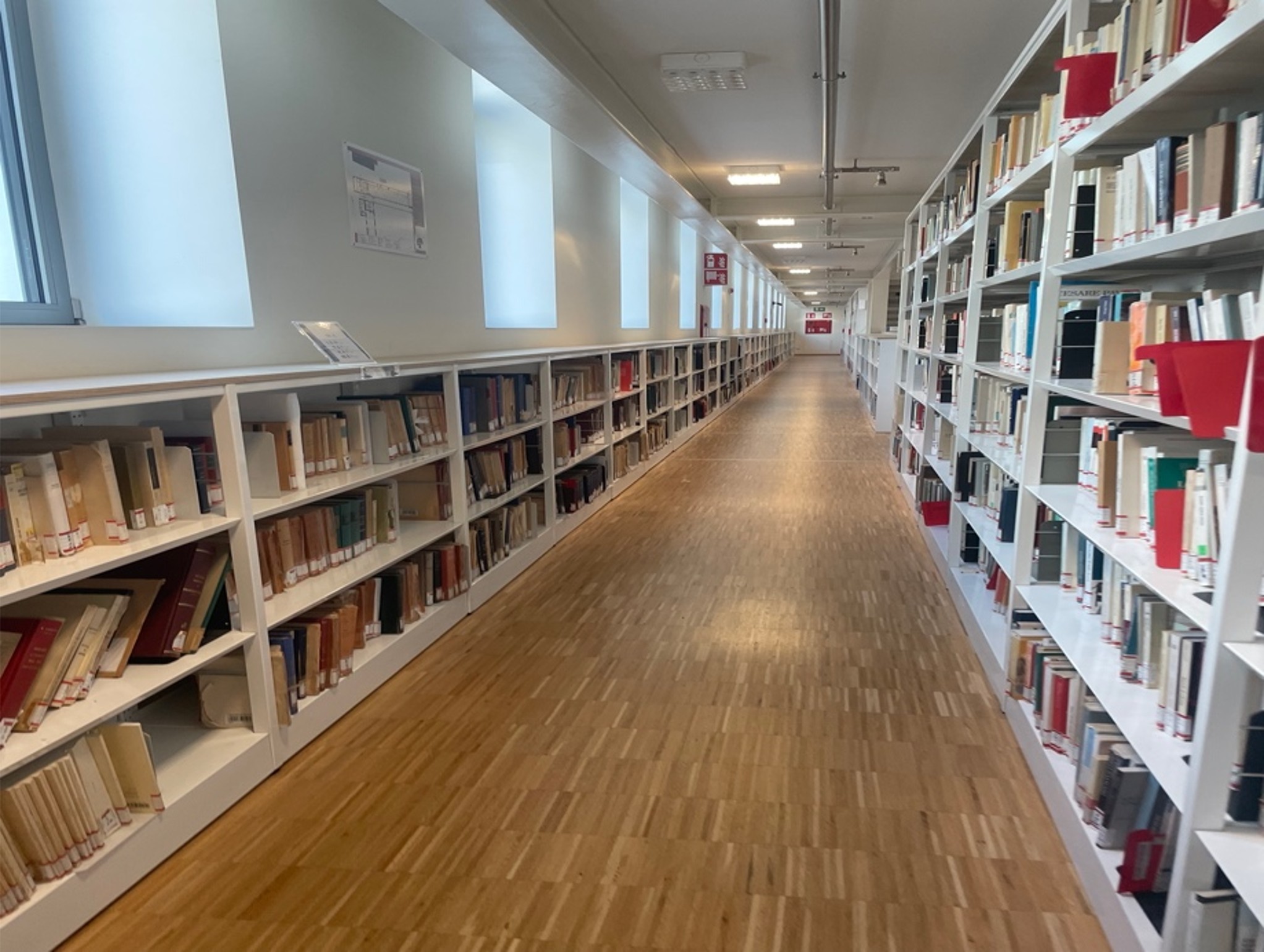
The Beato Pellegrino Library, University of Padua.
In Padua, I consulted a major part of the relevant bibliography at the University Library in Padua, the second oldest university in Italy. There, I had the opportunity not only to deepen my reading but also to meet some of the most prestigious scholars of Italian literature and the history of language, in particular Professor Tobia Zanon. Discussions with him and his colleagues provided precious insights and led me to other sources essential for my research.
The second location I visited was the National Central Library of Florence, one of the most beautiful and important libraries in Italy. This is a city where Leopardi spent significant periods of his life (1827–28 and 1830–33). There, I was able to complete my readings and proceed with writing.
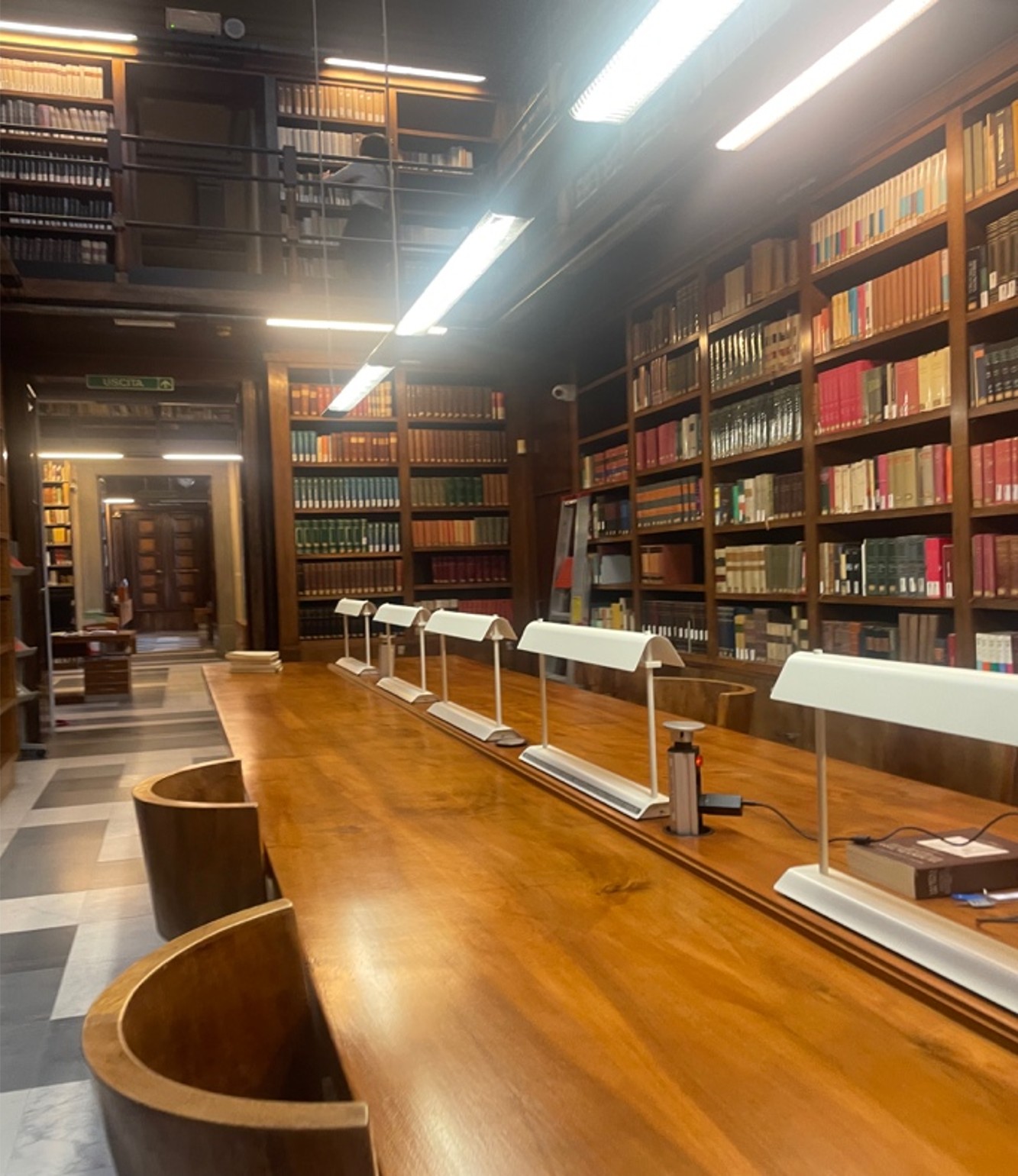
The National Central Library of Florence.
The last location was his hometown of Recanati, where I visited the National Centre for Leopardian Studies—founded in 1937—as well as the house where he lived and the library where he studied with his siblings. One rewarding experience was the opportunity to examine one of the books from his library that Leopardi read and reread: Francesco Guicciardini’s (1483–1540) Avvertimenti (later published under the title Ricordi).
Often described as “the first classical moralist,”[5] Guicciardini seems to be, in my opinion, extremely important for understanding Leopardi’s prose and philosophy. One objective of my visit was to verify whether the 1603 edition of the book, which the Leopardi family owned, contained any notes in the margins that could be useful to my research and to confirm the hypothesis that Guicciardini was a great influence on Leopardi’s work—and on the Zibaldone in particular. Thanks to the generosity of Arianna Franceschini, scholar and archivist at the Biblioteca Leopardi, I was able to confirm the presence of notes and underlining in the volume. However, with her assistance, I also concluded that the handwriting and symbols predate Leopardi, perhaps belonging to his father Monaldo, who founded the library. If this hypothesis is confirmed, it could lead to further research concerning Monaldo Leopardi, an important figure in his own right.
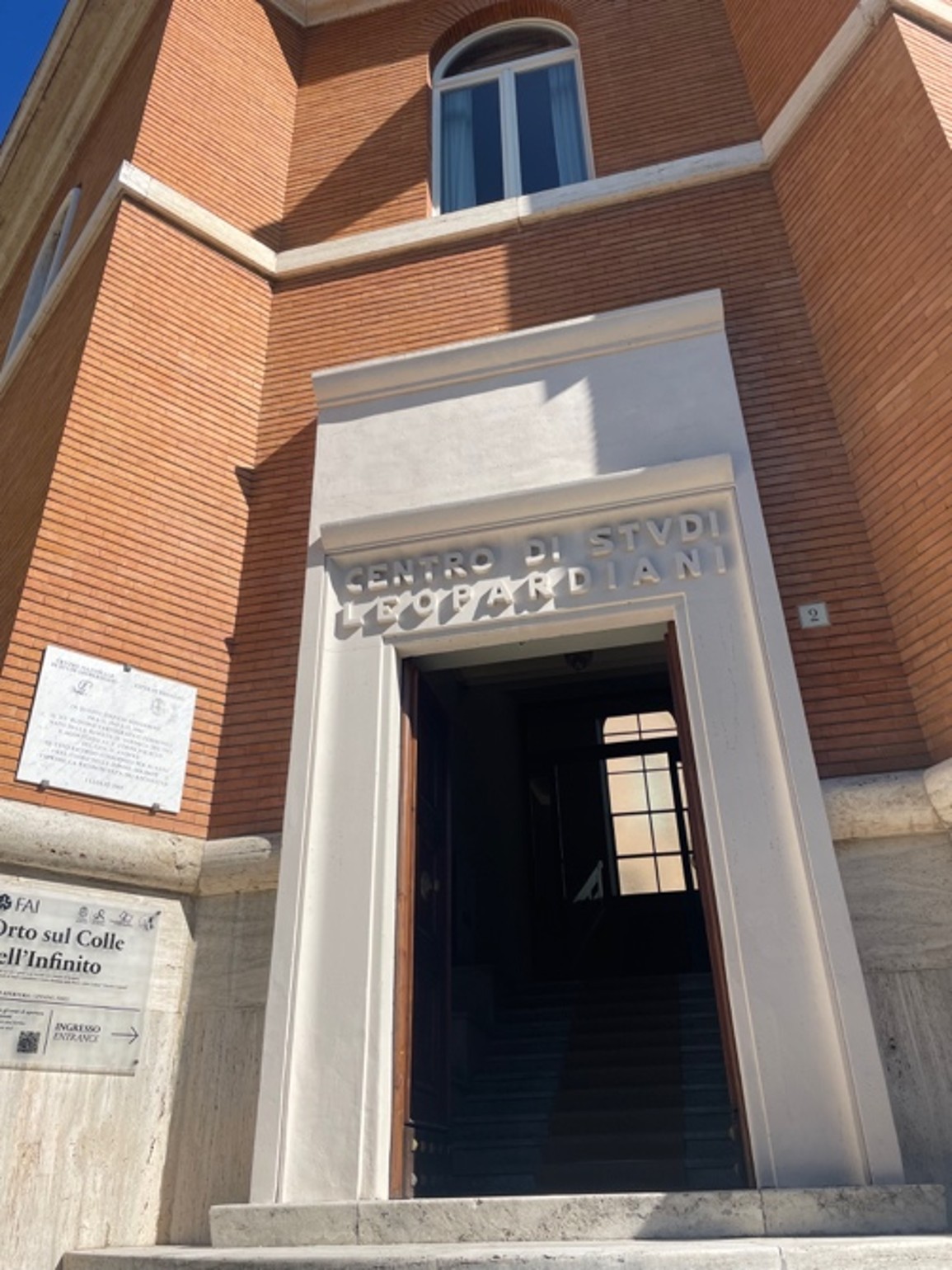
The National Centre for Leopardian Studies, Recanati.
These archival and bibliographical activities were necessary to strengthen the foundations of my research work and to test the two central hypotheses of the book I hope to publish.
The first hypothesis is that Leopardi’s Zibaldone, despite its fragmentary form and open-ended structure, is a complete and coherent philosophical work in which each fragment has its place and is connected to the whole, even though much of the existing bibliography treats the Zibaldone mainly as a “hodgepodge” of thoughts or a kind of philosophical diary.
The second hypothesis concerns the influence of Guicciardini, the author of Ricordi (Avvertimenti). Although he is not usually considered of great importance for Leopardi’s thought or style, I believe he may actually have been one of the most significant influences on both Leopardi’s philosophical outlook and for the linguistic-stylistic aspects of his prose.
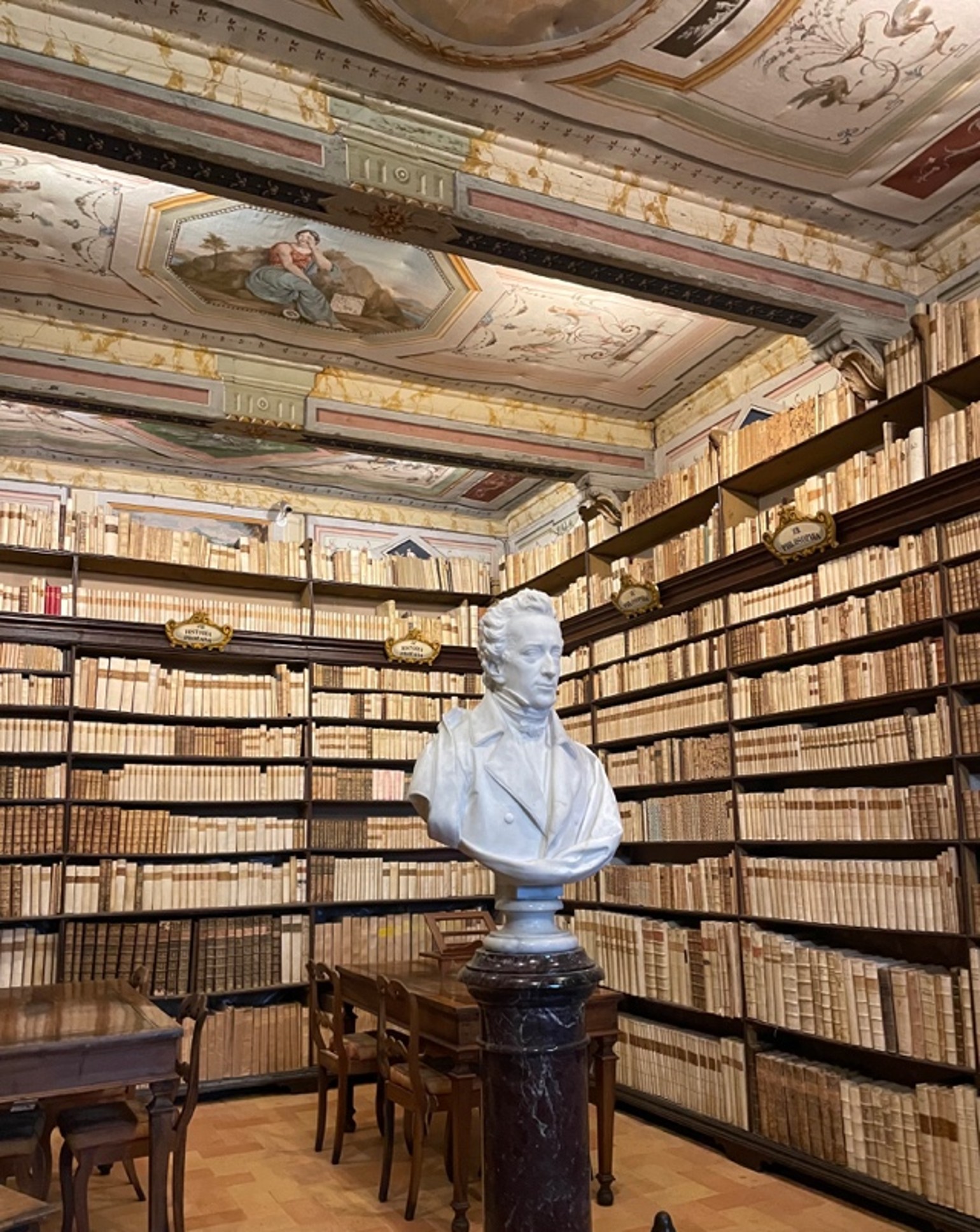
The library of Leopardi’s family home in Recanati.
A fuller understanding of these aspects of Leopardi’s work could contribute to a deeper appreciation of this highly original thinker who wanted, and succeeded, in transcending the cultural boundaries of the Apennine Peninsula.
From the Particular to the Universal
In the last entry of the Zibaldone, written in Florence on December 4, 1832, Leopardi concludes with these words: “Man is left astonished to see the general rule borne out in his own case.”
The entire work—both in form and content—unfolds as a dialogue between the particular and the universal. The relativity of everything on which Leopardi insists throughout the 4,526 pages of the Zibaldone is based on an understanding that the particular may or may not lead to broader conclusions and that, whenever they do, the conclusions remain provisional rather than absolute: a possibility.
Nevertheless, contradictions are an essential feature of his thought. Change is not a sign of failure but intrinsic to our nature and therefore to our understanding. For this reason, the final passage of the Zibaldone may be considered a reappraisal of its central premise. Human beings are more governed by general rules than they imagine; they are perhaps less exceptional than they may have hoped.
Yet this observation need not be discouraging; it can also have a liberating effect. It suggests that we are connected to others through shared experiences and common limitations. In this sense, Leopardi’s reflections point toward solidarity as maybe the only value capable of giving meaning to human existence—a theme that finds its full expression in his last poem, “The Broom” (“La ginestra o il fiore del deserto”).
Ultimately, this is an attempt to understand the Other in all their contradictions and vulnerabilities. In a world characterized by instability, where man is merely “a flower in the desert,” such understanding may be the only constant. That is why I hope that my research will have a significance beyond the boundaries of academia and serve as a flickering light in conversations about how we can live together in difficult and often cruel times.
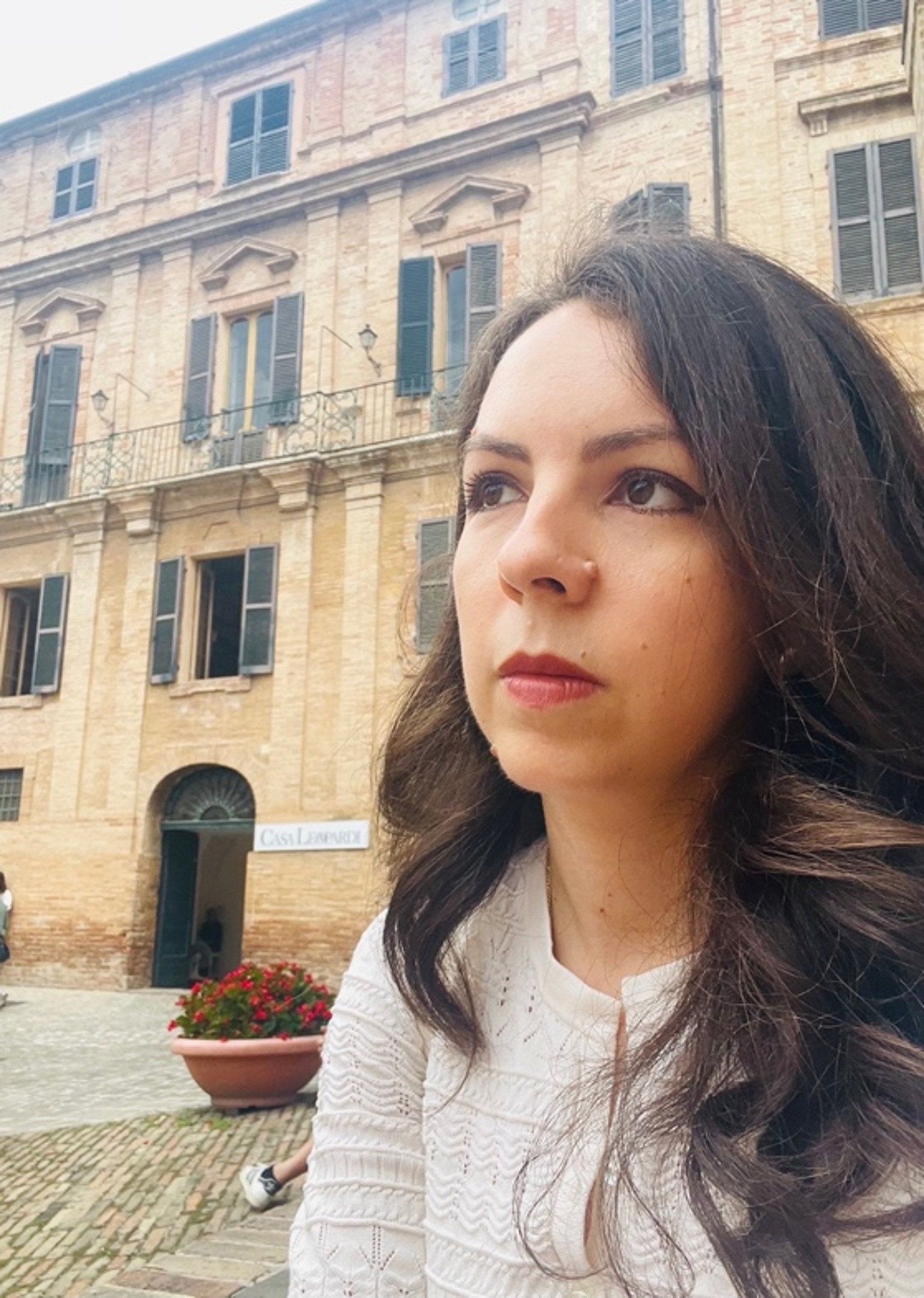
In front of Leopardi’s house in Recanati.
I am profoundly thankful to Sylff for cultivating these same values and for making this work possible. After all, Leopardi’s voice arrived quite early in Japan. The first Japanese translation of one of his Moral Essays—another of his important philosophical works—by Izumi Yanagida, appeared in 1911, while Torao Tsutsumi’s Studies on Leopardi’s Pessimism was published in 1931.
A century later, the cross-cultural dialogue continues, reminding us that the questions Leopardi posed about human beings, society, and the search for meaning remain highly relevant today.
* Unless otherwise noted, all translations are by the author.
Notes
[1] Giovanni Macchia, I moralisti classici. Da Machiavelli a La Bruyère (Milano: Adelphi, 2001; first published 1988), p. 18.
[2] Amedeo Quondam, Forma del vivere: l’etica del gentiluomo e i moralisti italiani (Bologna: Il Mulino, 2010), p. 250.
[3] Ibid, p. 370.
[4] All citations from Leopardi’s Zibaldone are from Zibaldone di Pensieri, ed. Francesco Flora (Milano: Mondadori, 1937).
[5] Liana Cellerino, Sentieri per capre: percorsi e scorciatoie della prosa d’invenzione morale (L’Aquila: Japadre Editore, 1992), p. 61.