Voices from the Sylff Community
Feb 25, 2026
Building Emotionally Safe and Inclusive Schools in Samburu County, Kenya
Using an SLI award, Jayne Warwathia Chege (University of Nairobi, 2012–14) organized a project in northern Kenya to strengthen teachers’ ability to integrate social and emotional learning into everyday classroom practice while also addressing the often-overlooked issue of teacher well-being and professional development.
* * *
Educating the mind without educating the heart is no education at all.
—Aristotle
In many parts of Kenya, schools operate within difficult social, cultural, and environmental conditions that strongly influence how learners experience education. Teachers today are expected to do far more than teach academic content. They are expected to guide behavior, instill values, protect learners from harm, respond to emotional distress, and prepare young people to participate responsibly in society. Yet, the support systems available to teachers have not evolved at the same pace as these expectations. In Samburu County, this gap is especially visible.
Teachers in the county face the dual responsibility of implementing the competency-based education (CBE) curriculum while responding to ongoing challenges such as tribal conflicts, learner emotional distress, school-related gender-based violence (SRGBV), harmful cultural practices, environmental pressures, and limited access to counselling and psychosocial services. Many schools serve communities affected by poverty, insecurity, and long-standing social norms that place learners—particularly girls—at risk. It was within this context that the Social and Emotional Learning (SEL) Training of Trainers initiative was developed and implemented.
Funded by a Sylff Leadership Initiatives (SLI) grant and implemented by the community-based organization Persons of Influence, the project aimed to strengthen teachers’ ability to integrate social and emotional learning into everyday classroom practice while also addressing the often-overlooked issue of teacher well-being.
SEL aligns closely with the goals of CBE by supporting values education, emotional awareness, communication skills, ethical decision-making, and responsible citizenship. However, early engagement with teachers and education stakeholders revealed a major concern: while teachers understood the importance of learner well-being, very few had received structured opportunities to update their skills, reflect on their practice, or learn how to respond to the growing emotional and social needs in their classrooms.

The author leading a session on self-awareness.
For many teachers, professional development opportunities are limited and narrowly focused on syllabus coverage and examinations. Training on mental health, emotional well-being, child protection, or trauma-informed teaching is rare. Yet, teachers regularly encounter learners dealing with grief, neglect, violence, early marriage, poverty, and emotional withdrawal. In the absence of structured support and clear guidance, teachers often rely on personal judgment and experience, carrying the emotional weight of these challenges largely on their own.
Over time, this accumulation leads to fatigue, frustration, and burnout. The SEL Training of Trainers initiative responded directly to this reality by placing teacher well-being at the center of the conversation, guided by a simple but powerful reminder that ran throughout the program: you cannot pour from an empty vessel.
Interactive and Reflective Approaches
The project began with a stakeholder engagement forum that brought together teachers, curriculum support officers, Ministry of Education officials, and civil society partners. The forum underscored the need for integrating SEL into schools, but it also revealed serious gaps. Participants spoke openly about the prevalence of SRGBV, the difficulty of identifying learners with mental health challenges or learning disabilities, and the absence of clear referral pathways to health and social services. These discussions made one point clear: schools are being asked to manage problems that go far beyond the classroom, often without the tools, authority, or institutional backing to do so effectively.
Using insights from this engagement, a team of trainers developed a five-day SEL Training of Trainers program that focused on practical application rather than theory alone. Specialists in child protection, gender-based violence, mental health, and inclusive education were invited to support specific sessions. The training methods were interactive and reflective, using role plays, real-life case discussions, guided journaling, group work, and school-based planning. These approaches allowed teachers to connect the training to their daily experiences and to reflect honestly on their own emotional health and leadership roles.
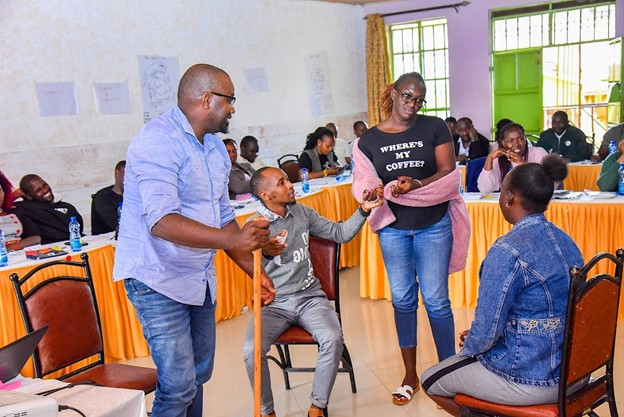
Role play on responsible decision-making.
Baseline assessments conducted at the onset of the training showed clear gaps. Most participants had limited understanding of the core SEL competencies or familiarity with the core values of the competency-based curriculum. Confidence levels were low when it came to recognizing emotional distress, responding to sensitive cases, or navigating referral systems. Many teachers also acknowledged that they struggled to manage their own stress, despite being expected to remain calm, patient, and supportive in difficult situations.
At the same time, teachers expressed a strong willingness to learn. Attitudes toward SEL were positive, and participants showed openness to new ways of thinking about teaching and learning. By the end of the training, post-assessment results showed clear improvement. Teachers demonstrated a better understanding of SEL concepts, greater confidence in facilitating discussions about emotions and behavior, and stronger ability to integrate SEL into lesson planning and classroom routines. Awareness of referral pathways for mental health concerns and SRGBV cases also improved, enabling teachers to respond more responsibly and ethically.
The project placed strong emphasis on continuity beyond the training itself. Each participating school developed a simple SEL action plan outlining activities, responsibilities, and timelines. Teachers committed to embedding SEL into lessons, assemblies, clubs, and everyday interactions with learners. A community of practice was also formed through a shared WhatsApp group, allowing participants to share experiences, ask questions, and support one another. This peer network helped reinforce the idea that change in schools is sustained through shared responsibility rather than individual effort.
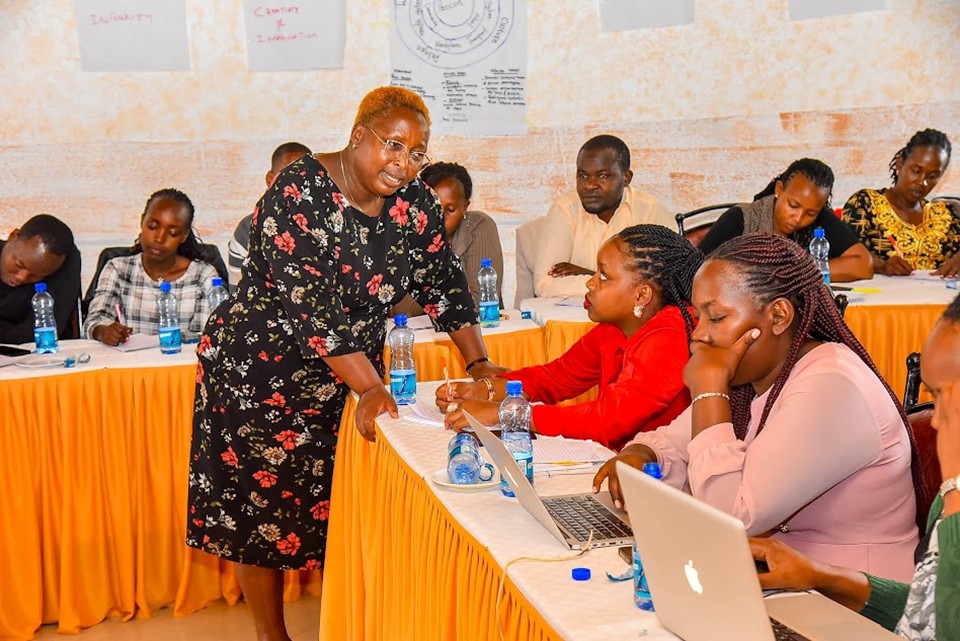
Ms. Mirriam facilitating a session on self-management.
Equipping Teachers to Create Supportive Spaces
A few challenges were encountered during implementation. Limited resources, higher-than-expected attendance, and environmental conditions such as prolonged drought affected some planned activities, including school greening initiatives. At the school level, weak enforcement of child protection and SRGBV policies, combined with limited access to counselling services, made immediate application difficult in some cases. These challenges highlighted the limits of short-term training and the need for stronger institutional support and follow-up.
Despite these constraints, the project demonstrated the value of investing in teachers as whole people, not just curriculum implementers. When teachers are given space to learn, reflect, and receive support, they are better equipped to guide learners through difficult emotional and social realities. More importantly, they are better placed to model integrity, empathy, and responsible behavior.
After all, CBE was not modeled on examination results; it was meant to shape young people who can think critically, relate respectfully to others, make ethical choices, and participate meaningfully in their communities. The SEL Training of Trainers initiative demonstrated that when teacher well-being is prioritized and teachers are given opportunities to retool, schools become safer, more supportive spaces. In contexts like Samburu County, where social challenges and education are deeply intertwined, such approaches are essential for raising engaged, empowered, and ethical citizens as envisaged by CBE.
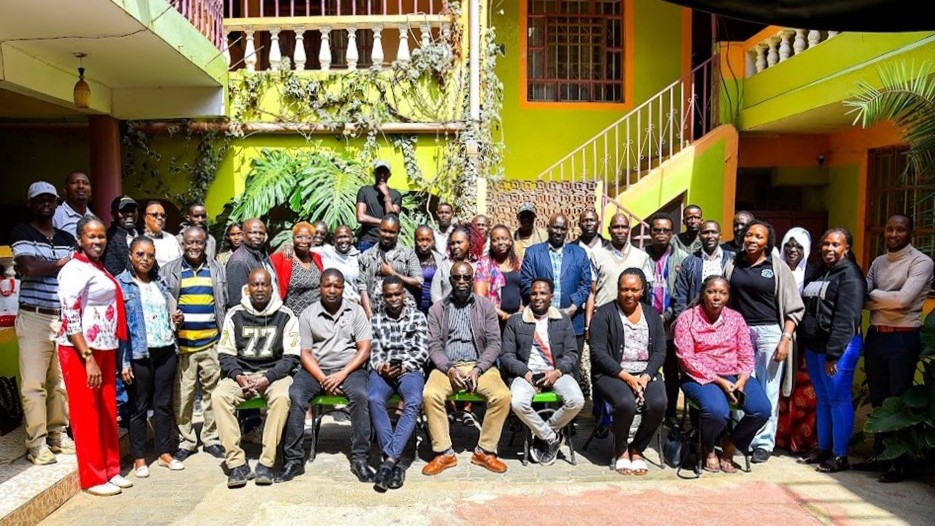
Group photo of participants in the SEL Training of Trainers program.
Comments
Other
Jayne is a professional who goes beyond to reaching hearts and changing lives. She is a focused determined and results oriented person. SYLF program has blessed us and recreated our way of life. (Haron Sekulai, February 26, 2026)