Category Archives: Voices

Between 2:00 and 4:00 pm: How a Full-Time Mother Organized a Food-Bank Symposium

March 18, 2015
By 19658

Sherilyn Siy Tan, a Sylff fellow who completed her master’s at Ateneo de Manila University in 2007, used an SLI award to organize a highly successful community conference to promote food donations and improve food security for those in need in the Philippines. Called “Our Community, Our Resources: Increasing Food Security,” the first food bank symposium in the country featured prominent speakers from civil society, industry, and government and examined such issues as food loss, logistical considerations in recovering and redistributing food, and increasing transparency and accountability. In this report, she recounts how she managed to overcome the challenges of organizing this major event while also working as a full-time mother of two young children.

* * *

Sherilyn, second from left, with her two children.

Sherilyn, second from left, with her two children.

Every so often, we read about the successful projects and achievements of Sylff fellows, and sometimes, instead of feeling inspired, we feel discouraged. We say, “That’s great, but that’s them, not me,” or “I wonder how they did that?” In this article, I share the “how to” of putting a symposium together while working in two different countries and coping with the unique set of challenges I faced as a full-time mother of two (aged 2 and 4). The first Philippine food bank symposium, entitled “Our Community, Our Resources: Increasing Food Security,” was held on March 22, 2014, at Miriam College, Quezon City, Philippines. There were about 100 participants and a powerhouse line-up of speakers that included government, nonprofit, and industry leaders.

Being a full-time mother is probably one of the busiest jobs in the world. Renowned psychologists and marital experts Dr. John M. Gottman and Dr. Julie Schwartz Gottman drafted a comprehensive list of over 600 chores that parents with children have to perform. Yet at the same time, it has been said that “if you want something done, ask a busy person” (a quote attributed to both Benjamin Franklin and Lucille Ball). I often wondered whether this was true and wanted to challenge myself.

Having stepped out of the professional work world around five years ago, I felt that my skill set has downgraded to reading picture books in silly voices and washing off stains from bibs and diapers. I had a lot of apprehension as to whether I was even capable of leading this project. I am extremely grateful to the Tokyo Foundation for believing in me and in my leadership potential. Completing this Sylff Leadership Initiatives (SLI) project has truly been an empowering experience for me. Here are some of the key things that have helped me in the process.

Keeping in Mind Why the Project Is Important

The theme of this project is especially close to my heart. I am a foodie—I love to eat, appreciate good food, and enjoy cooking. Now that I am a mother, I love baking my kids’ favorite cookies and cakes. Food nourishes our bodies but also bears a lot of social and emotional significance, since many of our fondest memories center around family and friends gathering together at the table.

Now imagine families that do not have this because they cannot provide three square meals for their children every day. This is the situation in the Philippines, where more than a quarter (27.9%) fall below the poverty line (National Statistical Coordination Board 2013 from http://investvine.com/how-feudalism-will-undo-the-philippine-elections/), where 55% (12.1 million families) self-rated themselves as poor (Social Weather Station October 2014 statistics from http://www.mb.com.ph/survey-reveals-more-poor-families/), and where 18.1% (3.9 million families) reported being hungry at least once in the last three months, 2.6% of which reported being severely hungry (Social Weather Station January 2014 statistics from http://www.sws.org.ph/pr20140122.htm).

One would think that in such a social context, food banks would be widespread. However, it was not until 2012 that the first Philippine food bank was incorporated, and development has been slow. With this symposium, I hoped to raise awareness of the food resources that exist within the community and introduce a sustainable system (that is, food banking) that can match the surplus resources with unmet needs. The symposium would also introduce key stakeholders who can play a pivotal role in moving food banking forward and highlight some of the challenges the Philippines faces to promote food banking as a viable resource for the community.

I first got to know about food banking through Charles McJilton, who started the first and now the largest food bank in Japan, Second Harvest Japan. Food banking is essentially matching excess resources on one end with those who need it on the other end. It really is a very neat solution to address the issue of excess (often wasted) food and, at the same time, create a food safety net for vulnerable groups.
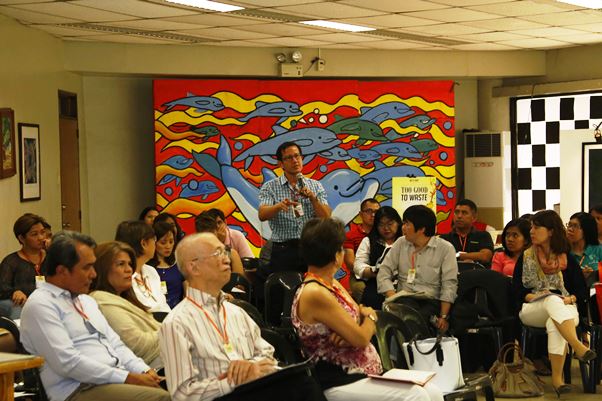
A participant makes a point during the symposium.

A participant makes a point during the symposium.

A food bank is a mediating organization with the capacity to receive food donations and distribute these to those who need it. The world's first food bank was St. Mary’s Food Bank Alliance in Arizona, which was started in 1967 by John Van Hengel. While helping out at a community dining room, Van Hengel learned that grocery stores often threw away food that was near expiration or had damaged packaging. He started collecting these for the feeding program with which he was involved but soon had too much. He then created a central location from which other agencies can collect food. Since then, food banking has spread. (http://en.wikipedia.org/wiki/Food_bank).

I am a big fan of the work that they do and believe that such efforts make a huge difference in people’s lives. As a case in point, I have a classmate in my Japanese language class, a full-time mother of two. Her husband is studying to be a caregiver, and he receives a small stipend on which the whole family depends. As we chatted, I got the impression that they were having a difficult time making ends meet. I got her address and arranged for a box of food from Second Harvest Japan to be sent to their home. Later, she wrote me:

Well, I am just writing to say that today we received a package with a lot of delicious food! Lately, I have just been receiving bills to pay, but today I received a present that makes me breathe again....

I was very moved by her note. This is exactly the mission of a food bank, to provide relief in meeting one of the most basic human needs. And this is exactly what we need in the Philippines. Whenever I felt discouraged in the tough work of putting the symposium together, I kept in mind why this project was important and how it would impact the lives of others.

Small Things Often, Consistently

When I said I am a full-time mother, I mean that the kids are with me 24 hours a day, 7 days a week. They do not go to any daycare or kindergarten. My neighbor learned about the symposium I was organizing and said to me, “There’s no way you can do that by yourself with the kids. You need to hire a nanny. They’re not very expensive.” I didn’t. My secret is simple: Small things often, consistently.

My kids nap between 2:00 and 4:00 in the afternoon, and that is when I do everything that requires quiet time: writing, emailing, calling, designing, drafting, etc. With only two hours every day to work, I had to start planning early and work months ahead of the event. As soon as I received the SLI award, I worked little by little, day by day. Thinking in small steps and breaking this big event into small manageable tasks helped me to focus and not be too overwhelmed. You will be surprised by how much one can accomplish by doing little things, because in the end, they all add up. We often get excited by the big things, but it is actually the small, seemingly insignificant things that add up and push things forward.

I have applied the same strategy to two other events. One is chairing the 2015 Women’s Conference in Izu, Japan. The closer I get to the conference weekend, the less stressed I feel. Again, because I have worked slowly and consistently on the details of the conference months and months before in slow increments, I feel like I have covered the groundwork and will not be scrambling towards the finish line. The second is the 2015 Tokyo Marathon. I cannot just cram the training in. I have to train over a long period of time, slowly and gradually adding more and more kilometers each time to build endurance and strength. The closer I get to race day, the more prepared I feel, and the less likely I will injure myself.

Be Flexible, Work within Limitations

In an ideal world, I would have put all my time and energy into my SLI project. The reality was that there were competing demands for my attention. This meant that I had to work around the eating, napping, and outdoor play schedules of my children and bring them with me to the meetings. It also required some creativity in planning which tasks I can do while the kids are awake, which tasks I should bring with me to the playground, and which tasks I should prioritize when they are asleep.

Photo exhibit.

Photo exhibit.

And then there are culture- and country-specific constraints. While the Philippines is my country, I have lived in Japan for a while and have grown used to a different rigor when it comes to efficiency, planning, and keeping time. Traffic in Manila is notoriously bad. A 20-minute car trip can turn into a 2-hour ride at rush hour. This can be extremely frustrating, but I had to constantly remind myself that I could only do so much in terms of planning ahead. People were generally understanding about delays caused by traffic. Another thing is that Filipinos tend not to RSVP until the last minute, and sometimes, not even then. Knowing this, I did not panic when the RSVP numbers were low two weeks before the symposium.

Finally in terms of time management of the symposium itself, I made sure to move things along as scheduled. The symposium started promptly at 10 am and was slated to end at 4 pm. I arranged for registration to start at 9 am and invited participants to come early to enjoy the free-flowing coffee as well as the photography exhibit. This lead time was important, as Filipinos tend to be lax about punctuality, and I had to make allowances for bad traffic. As the host of the symposium, I was courteous to each presenter but made sure they ended promptly, as I knew it would be disrespectful to the others if they lost time on account of someone going overtime.

In an ideal world, things would go exactly and perfectly as we planned, but in the real world, we need to be flexible and make the best out of a given situation.

Draw from and Build Social Capital
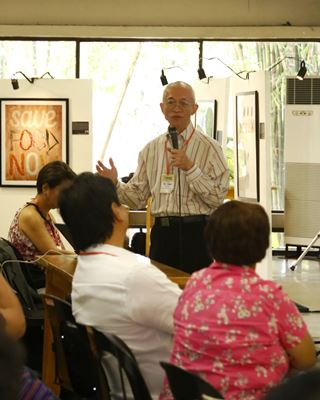
Dr. Ned Roberto speaks on the importance of reaching out to those in dire poverty.

Dr. Ned Roberto speaks on the importance of reaching out to those in dire poverty.

This project harnessed the social capital accumulated over time. Social capital refers to the value derived from the network of relationships that facilitates cooperation and effective functioning in society. Unlike other forms of capital, social capital takes time and effort to build, and the returns are not always tangible. But if you take time to invest in building good relationships (or create “human moments”), it becomes easier to draw from them later on.

As a board member of the first incorporated food bank in the Philippines, I have been networking with various key persons working in NGOs, logistics, food companies, faith-based organizations, and academia. My previous position at Miriam College and the good relationships formed there made it extremely easy to provide a suitable location for the event and coordinate the logistics (that is, lodging for out-of-town participants, catering for the event, registration and ushering support, parking facilities, etc.). It was also through a solid relationship with another Sylff fellow I have known for years that I was able to get one of the speakers, Dr. Ned Roberto—the most sought-after marketing expert and consultant in the Philippines.

The symposium generated social capital as well by strengthening ties across various sectors. Participants came away with new information, insights, and energy. There was increased shared knowledge of the current situation and heightened interest in food banking, with new partners ready to come on board.

I am, again, very grateful to the Tokyo Foundation and the SLI award for the opportunity to validate Colin Powell when he said, “Leadership is the art of accomplishing more than the science of management says is possible.”

Why Do Some Organizations Perform Better Than Others?
Investigating the Importance of Context and Strategy Choices

February 26, 2015
By 19643

Mirjam Goudsmit1, a Sylff fellow at the UNSW Australia Business School, used her Sylff Research Abroad award to investigate how organizations are affected by “turbulence,” or radical, unpredictable changes in the business environment. For the empirical phase of her project, she went to Israel, which has a long history of instability, conducting research at the Hebrew University of Jerusalem and elsewhere. Her research aims to help organizations achieve their business objectives in various turbulent conditions. A summary of her research is presented below.

* * *

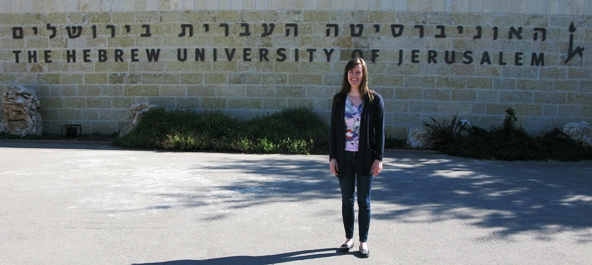
The author at the Hebrew University of Jerusalem

The author at the Hebrew University of Jerusalem

At the core of strategic management research is the explanation of performance differences among business organizations. I look at this question from the perspective that organizations are increasingly confronted with turbulence in their competitive contexts. The term turbulence is considered here as radical, unpredictable change in the environment. The situation is unstable, unsettled, and in turmoil. Instead of calm waters, imagine a turbulent sea that is choppy, bumpy, and at times violently rough. Instabilities are irregular. Organizations have to navigate such waters, that is, such competitive situations.

Triggers of turbulence in a business context include technology developments, political issues and conflicts, unsettled regulations, and ubiquity of information.

Overall, these triggers change to different degrees; some changes are radical and transformative in nature—they disrupt the status quo in an environment and have the potential to alter expectations and what is considered valuable. Think of an unexpected and radically new product that profoundly alters the market. Existing products are afterwards considered dated and less valuable, the willingness to pay for those products decreases, and they are eventually perceived as largely useless and are displaced. A familiar case is the introduction of the iPhone with its significant impact on the nature of the mobile phone industry.

In today’s unsettled times, destabilizing forces operate with increased frequency and impact and present significant difficulties for organizations. One important challenge is to effectively make strategy choices—choices that entail courses of action necessary for carrying out long-term organizational objectives. This challenge follows from the increased difficulty of predicting the future and reduced guidance from experience, that is, what worked in the past may no longer work in the future. Strategy choices can help explain performance differences among organizations. Specifically, ineffective choices may result in decreased performance or even threaten and undermine the survival of organizations. Understanding more about effective strategy choices in turbulent contexts, I believe, is therefore important.

In my research, I am curious about strategy choices that organizations make and how different turbulent conditions might influence the effect of these strategies on organizational performance. The empirical project consists of two sequenced and interconnected phases. In Phase One the aim is to explore and understand more about the research topics through interviews, while the aim of Phase Two is to test and provide statistically valid insights through a questionnaire. The first phase is designed to carefully further develop the research and ideas as a foundation for large-scale investigation in the second phase.

My Research Abroad

In the spring of 2014 I went to Israel for the first empirical research phase. This context represents a long history of instability. My research activity during this time included fieldwork, interviews with organizational decision-makers, and discussions with experts. The visiting institution, the Hebrew University of Jerusalem, provided valuable support, such as office facilities and the opportunity to exchange ideas and discuss research with the faculty and graduate community. Findings from this research abroad provided insights into how decision-makers think about turbulence and strategy in the context of Israel. This exploration, based on the interviews I conducted with businesses, has led to several observations and preliminary insights that are being put to the test in the second empirical phase. I will hereafter touch on some interesting insights. First, the findings suggest that turbulence and its consequences are more complex than previously assumed. Between and within organizations, decision-makers were found to recognize changes in their environment to different extents and in different ways. For example, one manager emphasized the importance of commodity prices and the natural environment, while another emphasized the importance of competition. In another example, one manager considered the environment, or an aspect in that environment, as relatively stable and predictable, while another considered it as relatively unstable and unpredictable.

Turbulence is thus not as universal as previously understood, that is, similar across all organizations and for all decision-makers. How dissimilar perspectives matter for strategy choices and their effectiveness need further investigation. Moreover, organizations were found managing simultaneous, sometimes contradictory changes. An illustration of such environmental factors is limited but major regulatory changes occurring at the same time as many, small changes in relevant technology. Organizations therefore have to attend to this complexity and take action that is possibly more systemic—and thereby more multifaceted.

Second, the unique geographical location in which organizations operate is pertinent. There are context-specific aspects of the situation in Israel, such as the sizeable power of labor unions in some sectors that organizations have to negotiate. Also there is a heightened risk of disruptive geopolitical issues with the potential of escalation and extreme consequences, such as hostility and conflict. These possible issues are revealed on the radar of some organizations to varying degrees, but they are indeed exceptional circumstances—infrequent and unforeseeable. As such, these issues resemble forces majeure, which cannot reasonably be known in advance, controlled, and prepared for.

Some organizations are more exposed to this category of issues, such as when facilities are located in areas of contention. When situations arise, organizations can sometimes only react, such as by closing retail stores or moving portable assets, including employees, to another site, with little room for further maneuvering. Often short-term, quick responses emerge when situations occur that are in conflict with long-term (planned) strategies. How to manage the conflict is exposed as a challenge for organizations.

Furthermore, amidst disruption many organizations aim to continue their business as much as possible. Conservative financial planning and contingency planning were found to be prudent strategic approaches for some organizations to continue achieving outcomes in such a situation, such as by reducing risk and preparing for scenarios. An additional observation is that the local country and organization context more frequently extend across borders. The above geopolitical issues are examples of this observation. Another is that many industries and products were found to be fundamentally global in nature so that competition is essentially global.

Organizations were also impacted by rulings from other countries’ regulators, at distant locations. An example is the Foreign Account Tax Compliance Act that requires foreign financial institutions to report directly to the US government all clients who are “US persons.” This is a big change that is having a big impact on financial institutions worldwide. Crucially, my findings have uncovered the fact that global issues of turbulence can rapidly become local issues and, conversely, local issues can rapidly become global ones for organizations. Organizations therefore have to navigate this increasingly interconnected world that might call for different strategies.

Finally, the findings suggest numerous different strategy choices for organizations, like the several already mentioned above. Some strategies are specific to a particular industry or organization, while others are more general in nature. For example, several managers indicated that their organizations faced persistent constraints from their environment through unions, interest groups, or regulatory bodies. Organizations differed in their responses to these constraints, however. Some adopted a more reactive approach and largely responded to changes after they occurred. Others adopted a more proactive approach and largely anticipated changes before they occurred. Which type of strategy is more effective under what circumstances needs to be further understood.

In sum, in these increasingly turbulent times, I believe this research is meaningful and relevant for both academics and practitioners. As an important foundation and next step for further research, the findings provide more understanding of the important topics of strategy choices and turbulence. The overriding intent of this project is to support organizations achieve organizational objectives in different turbulent conditions. With this research I aspire to benefit organizations worldwide and, ultimately, contribute to the future prosperity of society at large.


1For supporting this research abroad, my tremendous gratitude goes to the Ryoichi Sasakawa Young Leaders Fellowship Fund, the host institution Hebrew University and its academic community, home institution UNSW Australia and primary academic advisor Dr.George Shinkle, all intermediaries, including the Israel-Australia Chamber of Commerce, and organizations and people who participated in this research for their generous time, efforts, and insights.

Arbitration in Europe: Article 2 of the European Convention on International Commercial Arbitration

February 5, 2015
By 19692

Nērika Lizinska, a Sylff fellow at the University of Latvia, used her Sylff Research Abroad (SRA) award to research state participation in international commercial arbitration in 2014. She conducted her research at the Swiss Institute of Comparative Law. It was in Switzerland that the European Convention on International Commercial Arbitration—which plays a significant role on this issue—was signed. A summary of her research regarding Article 2 of the convention is presented below.

* * *

Introduction

Everything starts with an idea. Parties then enter into a commercial contract with the hope of profiting from it in an optimistic frame of mind. At this stage, unfortunately, not all parties think that a dispute might someday arise and that a mechanism would be needed to resolve it. However, international trade and commercial transactions are specific and linked to particular legal systems (which laws are to be applied and which court will hear the case, etc.), that need to be agreed upon between the parties in any contract.

Businesses mainly choose arbitration (arbitration is the “settlement of a dispute by the decision of a person or persons chosen and accepted as judges”)1 as a mechanism for dispute resolution, instead of litigation (litigation is “a formal process whereby claims are taken through court and conducted in public. Judgements are binding on the parties subject to rights of appeal” 2 ) due to its neutrality (parties can choose the seat of arbitration), flexibility (“parties may control the manner of the proceedings having regard to the nature of the dispute and to their precise needs”), 3finality (there is no appeal), confidentiality, and speed of resolution. “Parties in cross-border disputes may be unfamiliar with the complicated procedure of litigation and the language of the national court. . . . [M]ost businesses want a quick and efficient remedy and are reluctant to wait for an extended period for their disputes to be resolved through national courts.”4

Nowadays, it is internationally accepted that a state, too, can conclude international commercial contracts with a private party (for example, to purchase goods) and can choose arbitration as a dispute resolution mechanism by adding an arbitration clause in a commercial contract. This means that in the case a dispute that cannot be otherwise resolved between the parties (for example, by negotiation or mediation, which “is essentially a negotiation facilitated by a neutral third party”)5, a claimant can seek arbitration6 . Although a state can act like a private party and has similar rights, there are plenty of issues and risks for contracting parties. The main risk is that when a state becomes a contractual party, dispute resolution can take a considerably different course from general procedures. This is why the inclusion of an arbitration clause for a commercial party in such agreements has become a precondition for concluding a commercial contract with the state. The state, too, has many considerations in this regard.

History and Application

At the international level, a document governing the capacity of states to conclude arbitration agreements is the European Convention on International Commercial Arbitration7 (hereinafter called the European Convention), signed on April 21, 1961, in Geneva at a meeting convened by United Nations Economic Commission for Europe. More than 30 countries are currently party to the European Convention, including Cuba, Burkina Faso, the Russian Federation, and Turkey,8 which became contracting parties in accordance with the provisions of Article 10 (1) and (2) of the European Convention.

Provisions regarding the application of the European Convention are stated in Article 1 (1), according to which “this Convention shall apply: (a) to arbitration agreements9 concluded for the purpose of settling disputes arising from international trade between physical or legal persons having, when concluding the agreement, their habitual place of residence or their seat in different Contracting States; (b) to arbitral procedures and awards based on agreements referred to in paragraph 1 (a) above.” This means that if arbitration agreements concluded for the purpose of settling disputes arising from international trade between physical or legal persons having, when concluding the agreement, their habitual place of residence or their seat in countries that are not contracting states—such as the United Kingdom, the Netherlands, and Switzerland—the European Convention will not apply.

Historically, “the intention of the European Convention was to introduce the first uniform set of rules concerning international arbitration in order to remove the obstacles created by widely differing national arbitration laws. With its scope focusing on Europe, the aim was to facilitate and promote European trade between the (back then) Eastern and Western block.”10 “When the European Convention was signed, . . . Europe was still dominated by the East-West conflict. The different political and economic systems made trade between parties coming from the two blocks very difficult. Each side had little confidence in the courts of the other side with the consequence arbitration was often the only option for dispute settlement acceptable to all parties. . . . The main purpose of the European Convention was to overcome these psychological barriers and the legal problems which were affecting arbitration in the East-West trade in Europe.” 11In addition, it should be noted that “in certain countries that were to become Contracting States of the European Convention, public corporate bodies were not allowed to enter into arbitration agreements. This led the draftsmen of the European Convention to include Article 2 (1).”12

Right of States to Resort to Arbitration

With regard to the historical circumstances, Article 2 (1) of the European Convention states as follows: “. . . legal persons considered by the law which is applicable to them as ‘legal persons of public law’ have the right to conclude valid arbitration agreements.” The term “legal persons of public law” is used here instead of “state” in order to cover a broader scope of state institutions, such as state agencies, public entities, and governmental institutions.

There have often been cases in which the state argues that in accordance with its domestic laws, it is not entitled (lack of capacity issue) to enter into an arbitration agreement, thus an agreement, even if legally concluded, does not have legal force. There have also been cases where a state party concludes an agreement but then relies on its national (internal) law to prove that a contract is null and void, as its national law prohibits resorting to arbitration. For example, Article 2060 of the Civil Code of France prohibits French state public bodies and institutions from concluding arbitration agreements.13 Article 487 of the Latvian Civil Procedure Law states, “any civil dispute may be referred for resolution to an arbitration court, with the exception of a dispute: . . . 2) in which a party, albeit even one, is a State or local government institution or the award of the arbitration court may affect the rights of State or local government institutions.”14 In Hungary, Act CXCVI of 2011 on National Assets, which came into force on January 1, 2012, states in Article 17 (3) that “in civil law agreements concerning national assets located on the territory of Hungary, the governing language may only be Hungarian, the governing law may only be Hungarian and the jurisdiction for the settlement of disputes may only be that of the Hungarian state courts.” 15At the same time, for example, Article 177 (2) of the Swiss Private International Act contains advanced regulation stating, “if a party to the arbitration agreement is a state, a stateheld enterprise or a state owned organization, it cannot rely on its own law in order to contest its capacity to be a party to an arbitration or the arbitrability of a dispute covered by the arbitration agreement.”16

Belgium also has special regulations.17 In fact, Belgium was involved in one of the first cases18 in which the court had to decide whether a state can invoke its domestic laws to avoid arbitral jurisdiction. “Benteler v. Belgium provides further authority for the proposition that a commercial arbitration between a [s]tate and a private party cannot be avoided simply by the [s]tate’s invoking a prohibition in its own law against arbitration by the [s]tate.”19 After this ad hoc decision, Belgium chose to use its rights provided in Article 2 (2) of the European Convention.

Declarations

Article 2 (2) of the European Convention stipulates, “On signing, ratifying or acceding to this Convention any State shall be entitled to declare that it limits the above faculty to such conditions as may be stated in its declaration.” “The content of Article II met strong opposition from Civil Law countries where public entities are, generally, prohibited from resorting to arbitration. To accommodate these States, which otherwise would have not ratified the Convention, a second paragraph providing for the possibility of a reservation was added to Art. II.”20

One may say that to some extent the European Convention has reached the objective set out in its Preamble,21 because at the present time only Belgium has such a declaration, as provided for in Article 2 (2). After the Benteler v. Belgium case, Belgium stated that “in accordance with article II, paragraph 2, of the [European] Convention, the Belgian Government declares that in Belgium only the State has . . . the faculty to conclude arbitration agreements” 22to avoid similar cases in the future.

When Latvia ratified the European Convention, it also made a declaration in accordance with Article 2 (2). It stated that Latvian state and local government authorities have no right to conclude arbitration agreements. At a time when there were discussions and debates about the withdrawal of the declaration, one of the draft laws stipulated that “local government authorities before concluding the arbitration agreement shall transmit a draft to the Ministry of Environmental Protection and Regional Development to obtain opinion from the State Chancellery that the arbitration agreement is in conformity with the state interest.”23 Accordingly, if such a law were to be adopted, the State Chancellery would need to assess whether the arbitration clause included in international commercial contracts (between a local authority and a private party) is consistent with the public interest. The questions this gave rise to were, what is the state interest (common good), how to determine it, and is it possible only from the content of the arbitration agreement to determine whether the state interest will be protected?

On December 23, 2013, Latvia notified the Secretary General of the United Nations of its full withdrawal of the declaration under Article II (2), made upon accession in 2003. Accordingly, these fundamental changes can be considered a new page for Latvian state and local government authorities and practitioners to record their experiences in the history of international commercial arbitration and for scientific researchers to document new ideas and findings in the field of arbitration.


1A.S. Hornby & Ruse, Oxford ESL Dictionary, Oxford University Press, 1997, p. 30.
2Peter Fenn, Commercial Conflict Management and Dispute Resolution, Spon Press, 2012, p. 12.
3Ibid, p. 89.
4Sameer Sattar, “National Courts and International Arbitration: A Double-edged Sword?” Journal of International Arbitration, 27 (1), Kluwer Law International, 2010, pp. 51-52.
5What is mediation? Detailed information available at http://adr.findlaw.com/mediation/what-is-mediation-.html.
6State participation in international arbitration can be analyzed from various aspects, for example, whether arbitration as a dispute resolution mechanism is suitable for state contracts in general, is it possible to properly protect state interests in arbitration, and whether an arbitration clause in a state contract automatically implies a waiver of state immunity from jurisdiction and enforcement, etc.
7European Convention on International Commercial Arbitration, available at https://treaties.un.org/pages/ViewDetails.aspx?src=TREATY&mtdsg_no=XXII-2&chapter=22&lang=en.
8Full list of contracting states available at https://treaties.un.org/pages/ViewDetails.aspx?src=TREATY&mtdsg_no=XXII-2&chapter=22&lang=en.
9Article 1 (2) of the European Convention gives the following definitions: (a) the term “arbitration agreement” shall mean either an arbitral clause in a contract or an arbitration agreement being signed by the parties, or contained in an exchange of letters, telegrams, or in a communication by teleprinter and, in relations between States whose laws do not require that an arbitration agreement be made in writing, any arbitration agreement concluded in the form authorized by these laws; (b) as the term “arbitration” shall mean not only settlement by arbitrators appointed for each case (ad hoc arbitration) but also by permanent arbitral institutions; (c) the term “seat” shall mean the place of the situation of the establishment that has made the arbitration agreement.
10Alice Fremuth-Wolf, “Issues Specific to Arbitration in Europe: The European Convention on International Arbitration as a Tool to Remedy Pathological Arbitration Agreements—There’s Still Life in the Old Dog Yet!” in Chapter 1 of C. Klausegger, P. Klein, et.al. (eds.), Austrian Yearbook on International Arbitration 2013, pp. 60–61.
11Stefan Michael Kroll, “Issues Specific to Arbitration in Europe: The European Convention on International Commercial Arbitration—The Tale of a Sleeping Beauty,” in Chapter 1 of C. Klausegger, P.Klein, et al. (eds.), Austrian Yearbook on International Arbitration 2013, p. 3.
12Nikolaus Pitkowitz, “Issues Specific to Arbitration in Europe: Is There Still a Scope of Application of the European Convention on International Commercial Arbitration?” In Chapter 1 of C. Klausegger, P. Klein, et.al. (eds.), Austrian Yearbook on International Arbitration 2013, p. 106.
13Article 2060 of the Civil Code of France, Title XVI of Arbitration Agreements, states, “One may not enter into arbitration agreements in matters of status and capacity of the persons, in those relating to divorce and judicial separation or on controversies concerning public bodies and institutions and more generally in all matters in which public policy is concerned, (Act no 75-596 of 9 July 1975), however, categories of public institutions of an industrial or commercial character may be authorized by decree to enter into arbitration agreements,” available at http://www.legifrance.gouv.fr/Traductions/en-English/Legifrance-translations.
14Latvian Civil Procedure Law, Civilprocesa likums. 14th edition. Rīga: TNA, 2010.
15Gabor Bardos, “The Award and the Courts, Hungary: New Rules on Arbitration Related to National Assets” in Chapter 4 of C.Klausegger, P.Klein, et al. (eds), Austrian Yearbook on International Arbitration 2013, p. 181.
16Swiss Private International Law Act available at https://www.swissarbitration.org/sa/en/rules.php.
17See Article 1676.2 of Belgium Code Judiciaire, May 19, 1998, available at http://www.jus.uio.no/lm/belgium.code.judicature.1998/1676.2.html.
18Ad Hoc Award of November 18, 1983, Benteler v. Belgian State, Journal of International Arbitration, 1984, pp.184–90.
19Jan Paulsson, “May a State Invoke Its Internal Law to Repudiate Consent to International Commercial Arbitration? Reflections On the Benteler v. Belgium Preliminary Award,” Arbitration International, Vol. 2, No. 2 (1986), p. 95.
20Albert Jan Van Den Berg (general ed.), Yearbook Commercial Arbitration, Volume XX, 1995, Kluwer, p. 1017.
21The Preamble of the European Convention states as follows: “. . . desirous of promoting the development of European trade by, as far as possible, removing certain difficulties that may impede the organization and operation of international commercial arbitration in relations between physical or legal persons of different European countries, have agreed on the following provisions.”
22Declarations and reservations are available at https://treaties.un.org/pages/ViewDetails.aspx?src=TREATY&mtdsg_no=XXII-2&chapter=22&lang=en
23Draft law available in Latvian, “Grozījums likumā ‘Par Eiropas konvenciju par Starptautisko komercšķīrējtiesu,’” available at http://titania.saeima.lv/LIVS11/saeimalivs11.nsf/0/ED4CEB6E5CF3B1A5C22579A00044FB8C?.

How the Leopard Got Its Spots: Gender Dimensions of Land Reform in Cambodia

October 10, 2014
By 19590

Large-scale land acquisitions by agribusinesses have negative social and environmental side effects, and many governments are exploring ways to balance commercial interests with those of individual residents. Alice Beban, a Sylff fellowship recipient at Massey University, conducted research in Cambodia, where the national government is advancing bold land reforms to attract agribusiness investments, using an SRA grant. In this article, she examines the socioeconomic implications of the land reforms for the country’s smallholder farmers.

* * *

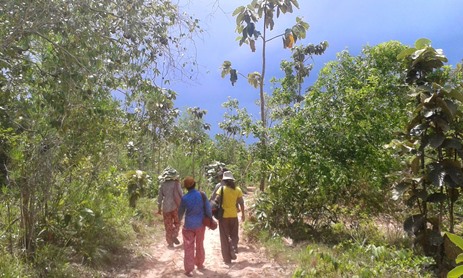
Forest Patrol Walking: A group of 16 rural villagers and representatives from the Forestry Administration patrol an area that was designated as a community forest in the land reform to check for illegal land clearing.

Forest Patrol Walking:
A group of 16 rural villagers and representatives from the Forestry Administration patrol an area that was designated as a community forest in the land reform to check for illegal land clearing.

Land and food production has returned to the center of global development concerns in recent years, spurred by a dramatic rise in large-scale farmland investment for agribusiness and speculation (White et al., 2012). The Southeast Asian nation of Cambodia is a key site for farmland investment, with around 50% of the country’s arable land reportedly awarded as “economic land concessions” (ELC) to agribusiness companies in recent years (Bickell & Lohr, 2011; Borras & Franco, 2011).

Now, with mounting concern over food security, public unrest, and the documented negative social and environmental consequences of large-scale land acquisitions (also known as “land grabbing” by some academics and activists), many governments are asking what can be done to balance a desire for agribusiness investment with environmental and social concerns.1

One response is smallholder land reform. This was the approach taken by Cambodia in 2012, when the Cambodian government announced a bold new initiative to expand post-conflict land registration to households living on the ELCs. Thousands of student volunteers from Cambodia’s capital began knocking on doors in remote areas of the country to survey land for redistribution to smallholders. This policy—dubbed the “leopard skin policy” by Prime Minister Hun Sen—envisages large scale agribusinesses and smallholders coexisting like animal spots on the landscape, with the plantations gaining a labor force and smallholders gaining secure title to the land on which they live (Naren & Woods, 2012).

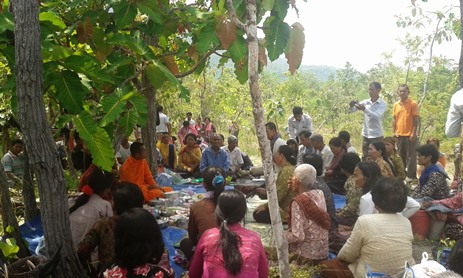
Mountain spirit meeting:  Rural people who had lost land to an agribusiness company meet to ask spirits to help them recover their land.

Mountain spirit meeting:
Rural people who had lost land to an agribusiness company meet to ask spirits to help them recover their land.

I was in Cambodia when this land reform was carried out, and I was fascinated with the scope and speed of the initiative and the potential it holds for shifting the trajectory of “land grabbing” across the country and offering lessons to many other countries struggling to develop a socially just agrarian policy.

It also challenges gender norms by promoting joint husband/wife land titling. My PhD research examines this land reform and the roles it plays in contemporary Cambodian politics, society, and ecology. I had the opportunity to explore this issue with my SRA award, with mentoring and support from my Cambodian SRA host, Professor Pou Sovachana of Pannyasastra University, who is now research director at the Cambodian Institute for Cooperation and Peace (CICP).

I was a senior research fellow at CICP for six months during my SRA award. While at CICP, I was able to attend many conferences and seminars, meet researchers from around Cambodia and the world with similar interests to my own, and also give a lecture to Cambodian students and assist in CICP’s research projects.

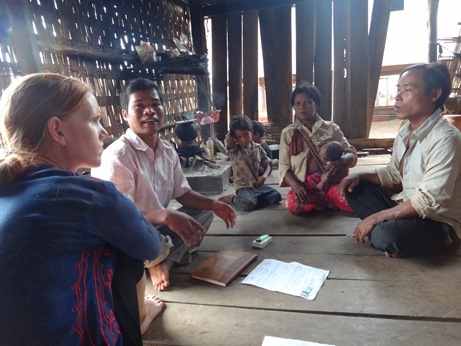
Alice interviewing family: I am talking with a family and looking at the land title certificate they just received.

Alice interviewing family:
I am talking with a family and looking at the land title certificate they just received.

Most of my SRA award tenure was spent at a research site within Cambodia’s largest agribusiness concession, one of the first sites where the new land reform was implemented. I interviewed 18 government officials at both the central government and local government levels and conducted over 60 semi-structured interviews to gain a variety of perspectives from people in communities where land titles were given out, as well as the views of the student volunteers and organizations working on land rights. I also attended land title award ceremonies, agricultural training sessions, and forest patrols in communities that had received titles under the land reform.

I investigated the politics of the land titling reform’s implementation and the implications of the reform for people’s perceptions of security, agricultural production, and relationships within the household. My initial findings suggest that the benefits women and men in farming communities received from the land reform policy were highly dependent upon local authorities’ implementation.

Given Cambodia’s “neo-patrimonial” political system, where political power works through networks connecting elite politicians and businesspeople with their supporters at all levels of government (Un & So, 2009), it is perhaps not a surprise that, in some cases, local authorities and powerful players were able to use the land reform to their advantage (for example, by titling common forest areas and selling land to outsiders for personal financial gain). This meant that poorer families, including female-headed households, often benefitted less than wealthier families, as they did not have the political connections necessary to take advantage of the reform.

Receiving land titles: Officials from the Ministry of Land hand out land titles to rural villagers at the local village temple.

Receiving land titles:
Officials from the Ministry of Land hand out land titles to rural villagers at the local village temple.

My SRA grant enabled me to spend time in areas where this kind of elite capture was widespread and also areas where it was far less apparent. I found that even in areas with similar conditions, differences in the land reform process were apparent, in part due to the presence of supportive individuals in positions of authority and to strong community networks that were able to inform community members about correct process in the land reform and hold authorities more accountable.

My research also shows that assumptions of a simple causal relationship between a policy promoting joint title and women’s land rights overlooks deeper, gendered power relations. During the policy implementation process, I found that local officials’ understanding of gender roles had a large part to play in how joint land titles were awarded.

For example, there was confusion among officials and community members as to how people’s land should be titled when one partner was not present. This meant that some women I interviewed who had been abandoned by spouses were awarded joint title to their land with the spouse who had abandoned them. Flexibility in the law for local authorities to resolve specific cases can be a strength, as it recognizes that policies produced in the capital can never account fully for on-the-ground realities. But it can also mean that people with power and resources can use this flexibility for their own gain and that enduring gender constructs that view women as less capable of controlling household assets can guide the decisions of local authorities.

I expected that the award of property rights might reduce insecurity and enable farmers to increase production efficiency, but many people in my study with legal tenure security did not necessarily perceive their land to be secure. While land title recipients were usually happy to receive title and some people certainly felt more secure, a common theme that arose in interviews was people’s ongoing fear that their land would be taken even after receiving land title. The main reasons given for this was that the court system is expensive and incomprehensible to many rural people, and it is difficult for people to accept that the new paper titles will carry much weight in a system that for years has been dominated by money and power.

I am now continuing to investigate this aspect of the land reform in my ongoing PhD research, through examining the cultural bases of men’s and women’s sense of security, including the various type of evidence people use to support their claims to land and the ways people settle disputes locally.

The SRA experience was extremely enriching for me as I continue with my PhD. It not only provided me the resources to undertake an extended period of research but also connected me with a whole new network of wonderful Cambodian and international scholars whom I am continuing to work with on several collaborative research projects.

References

Bickel, M., & D. Lohr. (2011). “Pro-Poor Land Distribution in Cambodia.” Rural 21, 3, 33-35.
Borras, S., & J. Franco. (2011). Political Dynamics of Land Grabbing in Southeast Asia. Amsterdam: Transnational Institute.
Naren, K., & B. Woods. (2012, ). “Hun Sen Says Land Program Proving a Success.” Cambodia Daily, August 9, 2012.
White, B., J. Borras, R. Hall, I. Scoones, & W. Wolford. (2012). “The New Enclosures: Critical Perspectives on Corporate Land Deals.” Journal of Peasant Studies, 39(3-4).
Un, K., & S. So. (2009). “Politics of Natural Resource Use in Cambodia.” Asian Affairs: An American Review, 36(3), 123-138.


1See for example the United Nations Food and Agriculture Organization (FAO), “Voluntary Guidelines on the Responsible Governance of Tenure” and the country debate around this (http://www.fao.org/nr/tenure/voluntary-guidelines/en/).

A Disaster-Resilient, “Frugal” Information System

September 26, 2014
By 19642

In March 2011, the Tohoku region of Japan suffered the worst earthquake and tsunami disaster to ever hit the country. Hampering rescue and relief activities in the immediate aftermath of the quake was the serious damage to the communications infrastructure. How can an information system be built that is more resilient to major disasters? Mihoko Sakurai, a Sylff fellow at Keio University, believes that the key to such a system is “frugality.”

* * *

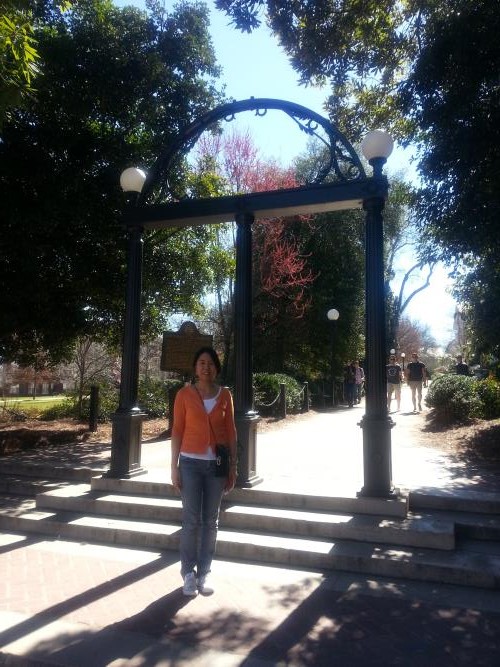
The Arch, the university’s academic symbol.

The Arch, the university’s academic symbol.

My current research on disaster-resilient information systems (IS) was prompted by the March 11, 2011, earthquake in northern Japan—the largest quake the country ever experienced. The Great East Japan Earthquake measured 9.0 on the Richter scale, making it one of the most powerful earthquakes in recorded history. The tsunami caused by the quake reached 40 meters in height and hit Tohoku’s eastern coastline, severely damaging a very wide area and triggering great confusion. Japan’s Fire and Disaster Management Agency reports that 18,958 people died, 6,219 were injured, and 2,655 are missing as of March 2014; 127,291 houses were totally lost, and more than 1,000,000 were partially destroyed.

Field Survey in Japan

The earthquake and tsunami exposed the vulnerability of Japan’s information communications technology (ICT) infrastructure, as the loss of communication greatly hampered rescue and relief efforts and more than likely increased the death toll.

From November 2011 to February 2012, eight months after the earthquake, I and other members of our research team conducted structured interviews with 13 municipal governments in the areas hardest hit by the earthquake. The objective of the survey was to ascertain how ICT systems inside municipal offices were affected by the earthquake. We visited Miyako, Otsuchi, Kamaishi, Rikuzentakata, Kesennuma, Minamisanriku, Ishinomaki, Higashimatsushima, Sendai, Minamisoma, and Iwaki, as well as evacuation centers in Namie and Futaba.

These municipalities are located in the prefectures of Iwate, Miyagi, and Fukushima. Under the administrative structure of the Japanese government, municipalities occupy the third rung. At the top of the ladder is the national government; this is followed by the 47 prefectural governments and 1,742 municipal governments (as of May 1, 2013) at the local level. The size of municipal governments varies enormously; while big cities like Osaka and Yokohama have a few million residents, some small villages have a population of less than 1,000.

There are several types of municipalities in Japan, namely, shi (cities with a population of over 50,000), cho or machi (towns variously defined by each prefecture), son or mura (villages), and tokubetu-ku (the 23 special wards of Tokyo). The populations of the municipalities we visited varied from 2,000 to 70,000. Almost all of them were small cities. Legally speaking, the role of municipal governments is to provide public services to citizens and, perhaps most importantly, to maintain a registry of all residents—the data that serves as the foundation of government. Prefectures are defined more loosely as wide-area governments.

Our survey included questions on preparedness, the level of damage, and the recovery process of ICT equipment, including power supply, network connectivity, information systems, and related facilities.

Need for Disaster-Resilient Systems

Analyses of these cases led us to conclude that building a robust system that never fails is impossible and to recognize that creative field responses are of crucial importance. The immediate problem after the March 2011 earthquake was the failure of the supporting infrastructure needed to run the information systems. The physical destruction of servers also meant that residential records were lost in some areas. The survey also revealed that a uniform plan across all municipalities would not have been appropriate, since the situation in various towns and cities—and the necessary responses—were continually changing. Government buildings were generally sturdy, and most survived the tsunami. But this did not mean that the ICT system survived intact. Some municipal offices did not recover their information systems for four months.

This should prompt a rethinking of ICT system design to ensure that communication can be maintained, especially in the immediate aftermath of a major disaster. Resilient systems are needed that can maintain or recover their core functions flexibly and quickly. Flexibility is required to enable creative responses in a disaster situation using minimal resources. Such systems are particularly important for municipal governments, which need to embark on rescue and life-saving activities immediately after a disaster.

This is a totally different approach from that required during normal times. The national government has tried to create robust and special systems for disaster situations, but they have not always had the required resilience in the face of actual severe situations. Once they are destroyed, moreover, they cannot be restored quickly.

“Frugality” as an Essential Concept

The “frugal information system” concept can be useful in building such a resilient system. This is an information system that is “developed and deployed with minimal resources to meet the preeminent goal of the client.” Such a system would be important under disaster situations, when people have limited access to resources. A frugal system is characterized by the four U’s: “universality,” the drive to overcome the friction of information systems’ incompatibilities; “ubiquity,” the drive to access information unconstrained by time and space; “uniqueness,” the drive to know precisely the characteristics and location of a person or entity; and “unison,” the drive for information consistency.

Mobile devices can serve as a standard platform to meet these “4U” requirements.

They were indeed the most widely used means of communication by individuals in the wake of the 3.11 disaster. The mobile infrastructure was restored with greater ease than other systems (ubiquitous network). They have open interfaces (universality). The phone number or SIM ID can be used for the identification of individuals (uniqueness). And as soon as the networks are restored, data can be backed up on cloud data storage (unison). There is the additional benefit that power can be easily supplied to the handsets.

Smartphones can be particularly useful devices in a disaster situation. People are gaining familiarity with these phones through daily use, which is very important under panic situations. Following a disaster, people are unlikely to use tools with which they are unfamiliar.

Future Research

I am currently working on a project to build a prototype smartphone application that employs the principles of resilient design. A test will be conducted in October 2014 at Tome, Miyagi, which was one of the cities heavily affected by the disaster. The initial test will involve the use of smartphones as part of an evacuation center’s operations during the first week. Three key functions will be tested, namely, (1) the identification and registration of people at the center using their phone numbers or SIM IDs, (2) recording people’s arrival and departure, and (3) creating an evacuee database. Using the smartphone’s number, the application can enable the transmission of information on such required items as medicine and milk for infants.

Smartphone applications designed to support disaster victims already exist. But none are suitable for municipal disaster relief operations. If municipal officials use the same applications as residents, the sharing of information can be greatly facilitated, enabling a smoother delivery of relief supplies. What we need to do is to make sure such applications are operational and widely used before they are needed and are quickly made available after a disaster.

The Great East Japan Earthquake posed what might have been the biggest possible challenge to an information society, making us acutely aware that our daily life—as well as government operations to help people in need—rely heavily on the ICT infrastructure. The performance of nearly all activities in advanced economies has become dependent on ICT, and disasters illustrate the fragility of this dependence. The earthquake shook our confidence in technology, and a study of its effects indicates the importance of designing systems with a recovery model in mind.

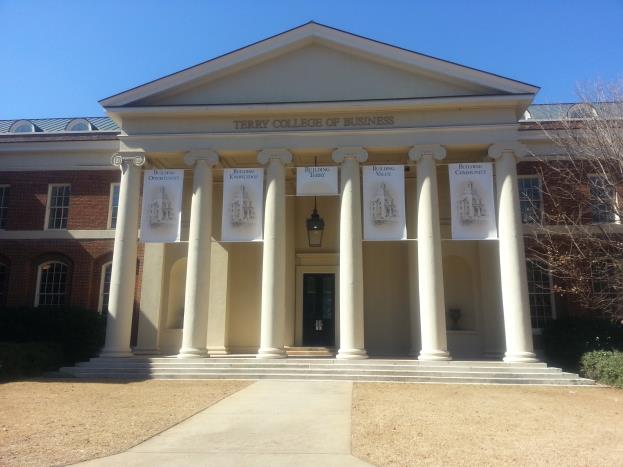
The University of Georgia’s Terry College of Business.

The University of Georgia’s Terry College of Business.

Massive disasters are likely to become more common around the world in the years to come 1, as suggested by the fact that there were three times as many natural disasters between 2000 and 2009 as between 1980 and 19892. I believe that a correct understanding of resilience and the development of information systems designed to withstand severe conditions can make the world a safer plain which to live. This research is certainly not over.

In closing, I would like to express my gratitude to the Tokyo Foundation for supporting my research abroad. Thanks to an SRA award, I was able to conduct research at the University of Georgia, where my ideas were greatly enhanced under the supervision Dr. Richard Watson—regents professor and J. Rex Fuqua distinguished chair for Internet strategy in the Department of Management Information Systems at the University of Georgia’s Terry College of Business—who advocates the notion of a frugal information system.


1http://www.emdat.be/natural-disasters-trends, last accessed June 8 2014.
2http://www.accuweather.com/en/weather-blogs/climatechange/steady-increase-in-climate-rel/19974069, last accessed June 8 2014.

Music and Social Edification in Peru

August 6, 2014
By 19673

Having gained a “keen appreciation for the uplifting power of music” through his participation in the charity workshops and concerts for areas affected by the March 2011 earthquake and tsunami, Paris Conservatoire Sylff fellow Carl-Emmanuel Fisbach launched a Sylff Leadership Initiatives project to utilize music as a potent tool for social cohesion in disadvantaged districts of Peru. Below, the saxophonist details the discoveries made during the initial seminar—held in collaboration with both Europe-based and local musicians—of a five-part SLI project.

* * *

My involvement with the “Together in Tohoku” Sylff project in August 2012 marked a turning point in my conception of the musician’s role in society.

Through that experience, when I was among a group of Sylff musicians who participated in charity workshops and concert in support of areas affected by the March 2011 earthquake and tsunami, I gained a keen appreciation for the uplifting power of music and decided to apply that inspiration to other parts of the world. Little did I know that my path from Japan would eventually lead me to Peru.

A Socio-Musical Intercultural Project

After a string of concerts in Latin Amerca in 2012 and 2013 with the Lima Conservatory and the nongovernmental organization ErArt, which promotes cultural events in less developed areas of Peru, I helped formulate a socio-musical intercultural project titled “Participative Music-Making in Disadvantaged Areas and Pedagogical Training for Saxophonists” that took place in February 2014 with generous assistance from Sylff Leadership Initiatives, ErArt, and the National Conservatory of Music in Lima. The project team included the musicians who accompanied me in Lima during my first tour of the region.

With a poverty rate of 30%; Peru seemed perfectly suited for our planned project of social uplift and edification. From the start of the program, we sought to artistically engage with the local population through concerts and hands-on teaching sessions. Music is a potent tool for social cohesion—one that can transcend social, cultural and linguistic differences while promoting intellectual and spiritual development. Studies demonstrate that participation in cultural events enhances citizens’ sense of belonging within a community. Peruvian saxophonists were instrumental in imaging the project.

The initial 10-day SLI seminar held in Peru in February 2014 was the result of extensive deliberations and was the first in a series of five that will be held every six months through February 2016.

Each seminar has two components: (1) musical workshops in disadvantaged neighborhoods of Lima and its environs to help audiences discover various instruments and contemporary music in partnership with ErArt and (2) professional-level training of saxophone teachers from the principal Peruvian conservatories in partnership with the National Conservatory of Music in Lima.

The long-term objective is for the two Peruvian institutions—ErArt and the Conservatory—to organize more joint activities to sustain the energy generated by the seminars. In many respects, the project was similar to the 2012 Sylff-organized trip to Japan, featuring workshops in Sendai and a concert with middle- and high-school wind musicians at Suntory Hall in Tokyo.

Confronting Reality

The purpose of the Peru project was clear, but preparations were arduous. I had never coordinated such an ambitious project involving partners in such far flung countries as Japan, Spain, France, Peru, and the United States. In February 2014, I travelled to Lima with the cellist Marie Ythier, with whom I perform in the cello-saxophone Denisov Duo. After a taxing flight filled with delays and missed connections, Marie and I arrived in Lima, where everything all at once became real.

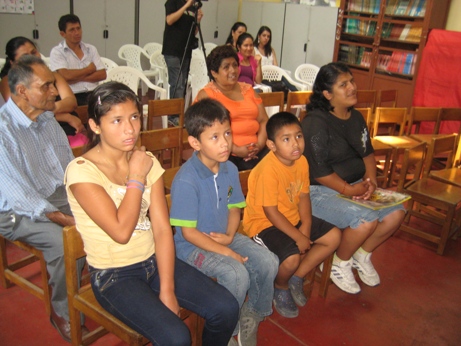
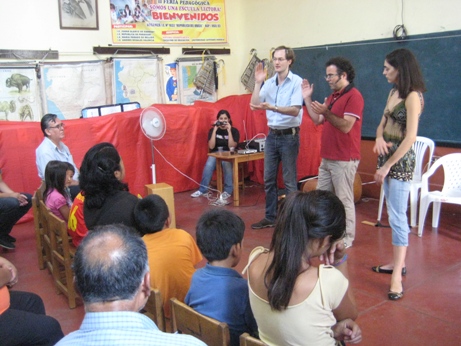
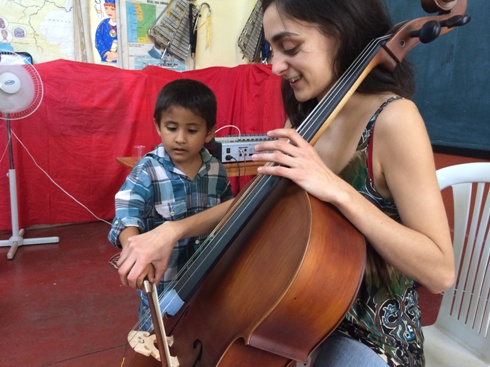
On our first day, we traveled to a municipal school to work with local residents of all ages. It was a joy to share our passion for music with such a receptive, open-minded, and motivated group. Everyone was curious, from small children who imitated the cellist’s use of the bow to the institutional directors who would spontaneously come to the microphone to sing a traditional melody while we improvised an accompaniment.

There were some, though, who questioned our motives for coming to their country to perform as professional musicians—a clear indication that our work would not be easy.

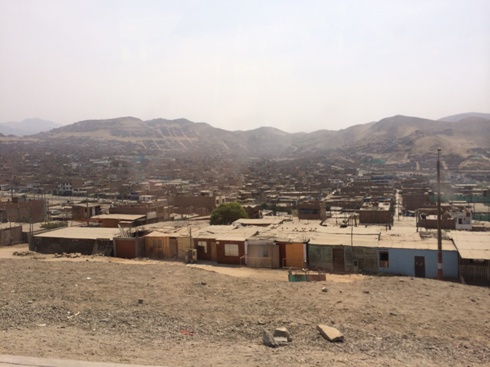
Our program included visits to two schools: the Republica de Brasil not far from the center of town and the Fe y Alegría 33 in the suburbs of Ventanilla to the north of Lima. The bus rides, made with our Peruvian counterparts, were profoundly disturbing. Entire neighborhoods consisted of half-built houses with bare earth as sidewalks. Though we had prepared ourselves for such scenes, the poverty was unrelenting and deeply affecting.

Nevertheless, we came to realize that the schools were protected and much cared for—not only physically but also by the respect they evoked from the local people. It was not rare to see advertising campaigns for these schools or to hear slogans on the radio, such as “Our Education Is Our Future,” including mention of specific schools like Fe y Alegría.

According to the music and other teachers we met, Peru lacks teacher training for music instructors, especially in the public schools. This was the main reason we were invited by ErArt to share our European approaches with members of the Education Faculty at the PUCP (Pontificia Universidad Católica del Perú)—encounters which proved to be highly successful. The same enthusiasm marked our sessions with the saxophonists at the Conservatory and led to our endlessly pleasurable exchanging of musical knowledge.

Our various concerts were well received, even when they focused on so-called “serious” classical music. It appears that this genre is in fact much sought after in South America. A workshop-concert organized by ErArt gave us a chance to provide the audience with key insights into each work, thus creating an intimate, convivial relationship with listeners.

ErArt wishes to strengthen its links with music education institutions in Peru. The initial workshops and concerts I helped develop in disadvantaged areas will be subsequently enlarged by ErArt through joint projects led by the saxophone professors who participated in the project.

Pursuing this work in the months and years ahead constitutes a wonderful opportunity, one that may be particularly useful for Peruvian saxophone players, as courses via the Internet are put in place.

I would once again like to thank the generosity of the Tokyo Foundation, the Paris Conservatoire, and the Juilliard School for their support and assistance in structuring the project so as to strengthen the links between music and society. Without them, this project would not have been possible. I am already eager to begin the second seminar in October!

Schedule of Upcoming Seminars:
—October 2014, with pianist Wenjiao Wang
—February 2015, with Wenjiao Wang and saxophonist Rodrigo Vila
—October 2015, with Marie Ythier
—February 2016 (last session), with saxophonist Claude Delangle and Rodrigo Vila

Music Connects Us All

May 12, 2014
By null

The seventh Sylff chamber music program, “New York-Paris-Vienna,” was held recently in Paris with a grant from the Tokyo Foundation. Here, Paris steering committee member Gretchen Amussen introduces some of the enthusiastic comments by the participating fellows and professors.

* * *

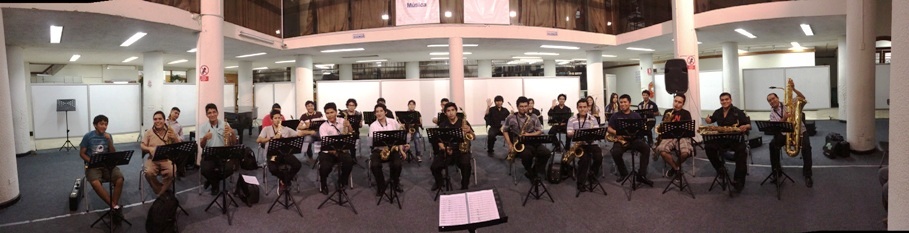
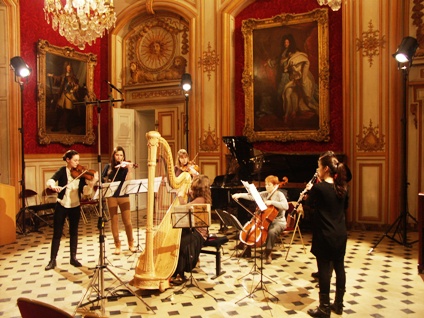
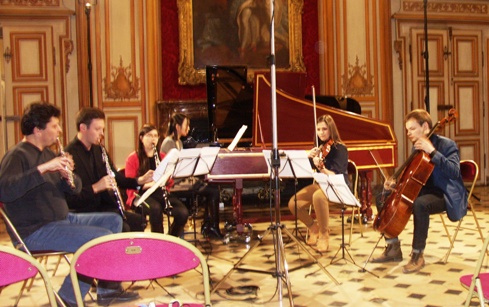
From January 16 to 24, 2014, the Paris Conservatoire hosted eight Sylff musicians from Vienna’s University of Music and Performing Arts and New York’s Juilliard School, who joined forces with four professors and six Paris Sylff fellows for a week of chamber music, culminating in a magnificent concert in the Invalides Army Museum’s historic seventeenth-century Grand Salon. The musicians, representing eight nationalities, performed works by Tomasi, Ravel, Jolivet, De Falla, Villa-Lobos, and Mozart.

“Playing music with new people is always a challenge,” said French fellow and flutist Mathilde Calderini of the experience, “because first you have to ‘find’ each other. But in the end it’s worth it!”

For French fellows Lomic Lamouroux and Carl-Emmanuel Fisbach, who participated in last year’s Viennese encounter, as well as pianist Antoine Alerini, who had gone to New York several years ago, being the hosts meant taking responsibility for sharing French culture. For Lomic, “The human aspect is essential, which is why I wanted to spend time with other fellows so they could better understand our country, our art, and who we are, much as had been the case for me when I went to Vienna.” In fact, for all involved, the cultural dimension proved as important as the music making.

For Juilliard’s Francesca dePasquale, “It’s one thing to speak about the French sound for French composers and completely another to be in France, see the incredible architecture, art, museums, and learn about the kind of sound here. For me, this was very valuable as an artist.” Vienna’s Georgina Oakes agreed, saying “I can’t get over the beauty of the city, which I’m sure will continue to inspire my artistry.”

The cultural aspect of the week got off to a vibrant start with an afternoon tour of the city, followed by dinner at the Auberge des Pyrénées-Cévennes. Traditional French cooking from the Southwest and from Lyon was featured, allowing for new culinary discoveries. Georgina Oakes, doubtless the most adventurous, chose a dish featuring pig’s feet, which she joyfully shared with those sitting close to her. For Georgina, “tasting” a culture seemed as important as hearing a new language and visiting historic monuments.

The project began weeks earlier with the sending of hard-to-find scores and parts to the visiting fellows. Upon their arrival, complex rehearsal schedules were distributed, and students were taken on a tour of the Invalides Army Museum. Of particular interest to the visitors was Paris’s system of reserving time and space for personal practice at the Conservatoire: something that the French students take for granted but that others felt could be incorporated in their home schools. Rehearsals began shortly thereafter, with the sounds of music, animated discussion in multiple languages, laughter, and music-making reverberating late into the night.

One feature of the Paris Sylff project is that students and teachers perform together. For oboist and chamber music professor David Walter, when you “play a program with students, their minds are fresh and full of hope regarding the music. They are ready to jump in if you invite them to do so. You must participate in much the same way they do, and expect from yourself what you expect from them—which is quite demanding and not always comfortable.”

Guitar professor Jean-Marc Zwellenreuther mused that the Brazilian composer Hector Villa-Lobos, “himself a great traveller and lover of Paris, would have been happy to see and hear these young musicians who were so enthusiastic, generous, and kind.” Cellist and professor Diana Ligeti commented, “Speaking and understanding the differences in musical pedagogy in our respective countries made us stronger and more able to give a personal, authentic interpretation.” Flute professor Vincent Lucas noted there were “many exchanges in which each musician listened to one another and engaged with real complicity and intelligence—just as one does with professional musicians.” And French harpist and fellow Maureen Thiébaut said, “For several days, we worked, played, discussed, and almost lived together—doubtless the best way to build both the human and musical cohesion of the ensemble.”

What did the different styles and cultures bring to the music? For Lomic, “The difference in styles was not a break in creativity but just the opposite: What can be better than trying to find a common way of playing, thinking, and sounding, despite individual, cultural, or stylistic differences? The concert was a perfect illustration of these riches: Many different sounds, styles, and nationalities . . . and in the end, a united sound and performance.” Juilliard’s oboist Max Blair found the experience a more interactive one in terms of teaching and rehearsing. “It made me think about the process of collaboration in a new way: striving to find a cohesive interpretation of a piece in which each one knows when to lead and when to follow.”

The presence of unusual instruments—especially the Viennese oboe and French bassoon—was treasured by Juilliard’s Anton Rist: “I have learned about different playing and detaching styles as well as different instruments, and these have helped me to develop my ear for timbre and blend.” Above and beyond this, as Carl-Emmanuel suggested, coming together constituted an opportunity to develop a “healthy distance from one’s own culture, to listen, communicate, and interact fully.”

What did each learn from the other? For Juilliard’s Trevor Nuckols, “from my colleagues in Paris and Vienna, an incredible regard for exchanging ideas both musically and nonmusically, gaining thus a much more open-minded and wordly perspective.” For Lithuanian musicians Gleb Pysniak and Dalia Dedinskaite studying in Vienna, “from the Americans, friendship, care, precision in music; from the French: freedom, optimism, inspiration in music.” Or as French violist Marina Capstick put it, “the language of music is universal, and I could see this clearly during the seminar.” Anton Rist felt he developed his skills as a chamber musician, whereas Mathilde Calderini felt the experience provided an excellent opportunity to build her international professional network. As Georgina Oakes noted, “Music connects us all!”

The seminar experience led to enthusiastic suggestions for the future, such as adding a second concert or even a mini-tour. Vienna’s Julia Zulus suggested finding a work that would allow all members of the group to perform together. . . . All thoughts to take into consideration for future sessions!

As Vincent Lucas said, the “souvenir of this music-making is a lovely one,” and speaking for all the fellows, American Trevor Nuckols waxed eloquent: “Thank you for everything! I’d love to participate in another such international exchange opportunity. It has been a magical and life-changing experience!”

Gretchen Amussen
Born and raised in New York City, the Franco-American Gretchen Amussen studied music and French at university and then organ with Xavier Darasse at the Toulouse Conservatoire. Since 1992 she has worked at the Paris Conservatoire, where as Director for External Affairs and International Relations she has helped promote the Conservatoire, its students and teachers through an extensive worldwide network of educational and cultural organizations.

Cars and Capitalism in Contemporary Hanoi

May 1, 2014
By 19597

Streets clogged with motorbikes in Hanoi have become familiar sights, as images are frequently featured in posters and magazines. Is there any room in this city now for automobiles, whose numbers are on the rise? Arve Hansen, a Sylff fellow at the University of Oslo in Norway, explores the socioeconomic transformation taking place in Vietnam through the lens of the nascent transition in the prevailing mode of personal transport from motorbikes to cars.

* * *

Vietnam has undergone a radical socioeconomic transformation during the last three decades under a program of economic reforms known as Doi Moi (“renovation”), officially adopted in 1986. Vietnam has grown from being one of the poorest countries in the world into to a middle-income, emerging economy, and the country is now frequently cited as a success story in economic development. Vietnam has moved from a planned to a market economy under a model described by the Vietnamese government as a “market economy with a socialist orientation.”

These changes make Vietnam an extremely interesting case in the study of both development and consumption. My PhD research into this topic in Vietnam focuses on what appears to be an ongoing transition away from motorbikes as the principal form of transport toward four-wheel automobiles in Hanoi. (It was thanks to Sylff Research Abroad that I was able to conduct long-term fieldwork in Hanoi, something absolutely vital to my project.)

My research approaches the trend as seen from the perspective, respectively, of the government, industry, car dealerships, and consumers. I have particularly emphasized the view of the consumer, using the car both to illustrate the ongoing changes in Hanoi as well as to analyze consumption trends more generally.

“Land of the Honda”

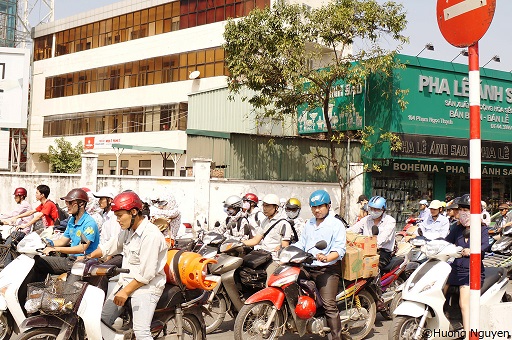
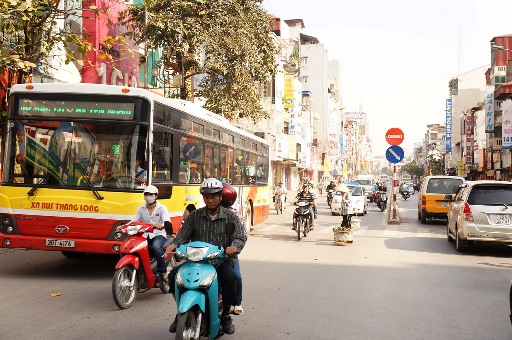
Motorbikes in downtown Hanoi_photo by Huong Nguyen

Motorbikes in downtown Hanoi (photo by Huong Nguyen)

Vietnam used to be a country of bicycles but quickly became the “land of the Honda” during the 1990s following the start of the Doi Moi reforms. Today, in a country of 88 million people, there are around 35 million motorbikes. The sea of motorbikes in Vietnamese cities is now an iconic image of the country and one of the most popular motives for photographs by tourists. It has also created a highly individual transport situation, in contrast to the collective ideals of socialism.

Now, the passenger car is increasingly making its way into the streets, in the process clogging up traffic and making the motorbike more dangerous. My interest in Vietnamese automobility started several years ago while riding around the narrow streets of Hanoi on a motorbike and seeing how automobiles, struggling to make their way through traffic, were unfit for those streets. I asked myself why anyone would choose to drive a car there.

The answer is, of course, quite complex. It can also be very interesting as a starting point for understanding the socioeconomic changes and development challenges Vietnam is facing. The automobile is still a very expensive luxury; in fact, Vietnam is one of the most expensive places to buy a car due to high taxes. This, at the same time, makes the car a powerful expression of the inequalities embedded in the new economic system. The limited availability of the car also strengthens its position as a potent status symbol. A striking sight in the narrow streets of Hanoi is the frequency of very big luxury cars. This is a sharp break with the country’s socialist past, when displays of personal wealth were frowned upon and could lead to serious trouble.

In post–Doi Moi Vietnam, the automobile is one of the most obvious symbols of the new reality, in which getting rich is considered glorious and displaying personal wealth has become normal. In contemporary Hanoi, expensive cars are used actively to display wealth—sometimes strategically to show business partners that you are successful.

Advantages and Drawbacks

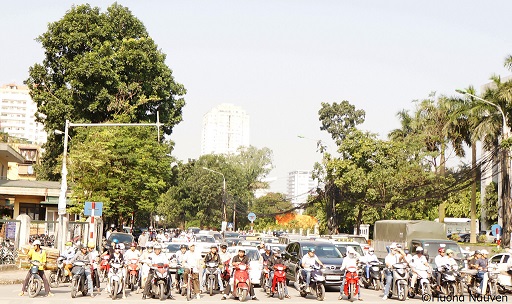
 The new traffic in Hanoi (photo by Huong Nguyen)

The new traffic in Hanoi (photo by Huong Nguyen)

Although the car is very much a status symbol, this is not the only reason that people buy them. Most of the purchasers with whom I talked report they were motivated more by safety and family reasons, as transporting one’s family on a small motorbike can be dangerous. The car also allows you to stay cool (and white!) under the scorching sun and dry during the frequent periods of heavy rain. There is also a paradoxical relationship between air pollution and car consumption: riding in a car allows you to temporarily escape the dangerously deteriorating urban air quality. The car is thus both a powerful agent in causing air pollution and a means of escaping from it.

The private car has had a central place in capitalist (and sometimes socialist) development and industrialization around the world. In Vietnam, the car in many ways represents a development dilemma. The car industry is targeted to play a leading role in scaling up Vietnam’s industrialization, with foreign investment (particularly from Japan) leading to positive linkages with, and technological diffusion to, the rest of the Vietnamese economy.

Among many other things, this requires a larger domestic market for cars. Studies have shown, however, that the streets of Vietnam’s cities cannot accommodate a transition to private cars as a predominant means of transportation. In Hanoi, the growing number of cars is already significantly increasing the frequency of traffic jams and further deteriorating the toxic air quality. Greener cars, though, are part of neither the transportation nor industrial plans of Vietnam.

In global discourse, the automobile is frequently (and deservingly) attacked as being one of the most environmentally destructive aspects of private consumption. In Hanoi I spoke with foreign environmentalists who argued that Vietnam needs to realize that the car belongs to the past.

The Car as the Future

Traffic and street vendor in Hanoi (photo by Arve Hansen)

Traffic and street vendor in Hanoi (photo by Arve Hansen)

Moving beyond private car consumption may be a worthy ideal, but the argument that the car is history fundamentally fails to understand the position of the car in an emerging economy like Vietnam. In this context, the car represents the future. From the government side, moreover, the car industry and private car ownership are symbols of economic success. And for the growing ranks of the middle class, replacing the motorbike with a car is emerging as one of their main aspirations.

The motorbike is still king in the streets of Hanoi, although it is increasingly being forced into an interesting coexistence with four-wheel vehicles. Most car owners keep their motorbikes as well and choose their mode of transport in a flexible manner, with motorbikes being used for shorter distances and to go downtown, while the car is used for travelling with the family, attending important meetings, or leaving the city. In this way the car also supports the creation of new practices among the middle class, such as travelling outside the city for a weekend holiday.

While people often heap blame on the motorbike for all traffic problems in Hanoi, in a city with very limited public transport options and lack of infrastructure, the motorbike is the main reason why mobility is still fairly good. The government has decided that it will limit the number of motorbikes in the future. Given the lack of alternatives, this may pave the way for the car. It will be interesting to see what the future holds for the two-wheeled icon of contemporary Hanoi.

Response of Indian Industries to Global Environmental Sustainability

April 6, 2014
By 19659

How does the response of one industrial sector affect other sectors of an economy? To gain insights into this question, Shyamasree Dasgupta, a Sylff fellow at Jadavpur University in India, has been analyzing the response over the past four decades of India’s industry to the country’s climate change action plan. In this article, she reports on her research conducted in the United States with an SRA grant has broadened her perspective.

* * *

As a student of social science I always wondered how the response of an individual decision maker shapes up in conjunction with the responses of the bigger community to which the decision maker belongs. It became more interesting to me as I initiated my doctoral research to explore the responses of Indian industries to climate change mitigation goals.

As reduction of carbon emissions is a “global goal,” the most aggregated pledges are taken at the international level (such as the Kyoto Protocol, Copenhagen Accord). Specific climate change mitigation policies are, however, mostly formulated and implemented by the national government or a set of national governments in line with such global pledges. Finally, different economic sectors take their decisions with regard to the pattern of their operations to curb energy use and emissions in line with the pledge and policies.

The response of a particular economic sector (such as the industrial sector) is not a stand-alone phenomenon. The responses are triggered by the actions of other sectors of the economy and at the same time have an impact on the rest of the economy. In fact, the aggregate impact of the decisions taken by one economic sector depends on its relation with the rest of the economy. For example, if an industry substitutes coal by electricity as an energy input, then emissions from that particular industry will come down, but from a macro perspective, aggregate emissions will be reduced only when electricity is produced with a fuel that is less carbon intensive than coal.

My doctoral research seeks to understand how Indian industries have responded during the past four decades under various domestic policy domains, with a special emphasis on the country’s recent climate change mitigation policies. Having estimated such response parameters (for example, price elasticity of energy demand—the change in industrial energy demand when energy price changes), I wanted to explore how the same industrial sector can be expected to behave in a future time horizon while interacting with other sectors in the global economy if some global emission reduction pledge becomes binding.

I got the opportunity to explore this issue with my SRA award along with mentoring and support from my home institute, Jadavpur University in India, and my SRA host institute, the Joint Global Change Research Institute (JGCRI, a collaborative institute of the Pacific Northwest National Laboratory and the University of Maryland in the United States).

An Integrated Assessment Model for India

The author working on the Global Change Assessment Model at JGCRI

The author working on the Global Change Assessment Model at JGCRI

JGCRI has developed the Global Change Assessment Model (GCAM), an integrated assessment model representing the world economy that explores the links between energy, land use, water resource sectors, and a climate model. It incorporates both energy producing (such as electric power) and energy consuming sectors (such as industry). It creates a market where all the sectors are recursively solved for price and quantity, and the amount of carbon dioxide and other greenhouse gases emitted are estimated. The model could be used to explore responses of these sectors to several climate change mitigation pledges and policies.

GCAM divides the world into 14 regions, and India is one of them. The existing model employed the aggregated data for the Indian industry sector. Hence the responses towards any mitigation policy—can be so far analyzed only for the aggregate industry sector for India. My aim was to further develop the model with disaggregated industrial sectors for India, breaking up the industry sector into subsectors such as iron and steel, chemicals, and cement, along with a residual subsector named “other industries.” This would enable the user to analyze responses not only at the aggregate level but also for different subsectors in the context of Indian industry. The challenge was to break up the aggregate industry sector in an appropriate manner supported by authentic data so that the model would offer plausible solutions for years up to 2100 for all sectors and regions.

Being new to integrated assessment models, this was a true learning experience for me requiring several trials with different adjustments to obtain valid results! It was a stimulating experience solving the unforeseen errors cropping up during each trial run until I succeeded. I was greatly supported by my mentors and other colleagues at JGCRI in the process. In the course of my research, I came across fellow visiting scholars who were working on or had worked on several other sectors in other countries, including China and Brazil.

The research was greatly supported by the mentors and other colleagues at JGCRI

The research was greatly supported by the mentors and other colleagues at JGCRI

The model also used average values regarding how demand changes in response to changes in price in different industrial sectors. I substituted the average values for those specific to India that I had estimated prior to my SRA. Data were derived from the “Energy Statistics” and “Annual Survey of Industries,” published by the Ministry of Statistics and Programme Implementation, Government of India. The scenario demands a sharp decline in emissions from nonenergy-intensive industries, the phasing out of coal, and a significant increase in the use of clean electricity in industrial production. The use of biofuel emerged as one of the most effective medium-term solutions for Indian industries to meet the mitigation target.

Case Study in Climate Mitigation

Another objective of my SRA was to visit an energy-intensive industrial unit in the United States in order to compare its production and mitigation practices with its Indian counterparts. I was put in touch with the US Department of Energy through my mentor at the home institution, enabling me to visit such a facility. Things shaped up well, and I got a chance to accompany members of the American Forest and Paper Association on a visit to a pulp and paper company in Virginia. The day-long visit to the paper mill and discussions with the managers provided insights into their production processes and mitigation practices.

Visiting a paper mill with the members of the American Forest and Paper Association

Visiting a paper mill with the members of the American Forest and Paper Association

The mill was established in 1914 and has gone through changes in ownership and technology. It mainly produces corrugated paper from both raw wood and recycled paper. The pattern of energy utilization became a major issue of concern, as a result of which the mill became more energy efficient with greater emphasis on recycling and enhanced use of renewable energy. Over 80% of the electricity used by the mill is generated internally using multiple fuels, including black liquor, wood waste, and sludge. According to the company, it was the rise in fuel prices, rather than any particular energy or climate policy at the federal or state level, that drove it to reduce its dependence on purchased energy.

The SRA experience was extremely enriching for me. It not only helped me to augment my doctoral dissertation, which I am aiming to finalize in the coming few months, but at the same time provided me with an opportunity to work in the multidisciplinary and multiethnic environment of my globally renowned host institution.

The Arts in Crisis and their Survival in the Twenty First Century:
A View from Sociolinguistics

March 27, 2014
By 19604

Can the liberal arts maintain its value in society despite losing both popularity and funding to such practical disciplines as the sciences, engineering, and business administration? Christopher Lees, a Sylff fellow while at National and Kapodistrian University of Athens, offers steps that can be taken by arts scholars to maintain the relevance of their discipline in society, using examples from Greece and sociolinguistics.

* * *

Introduction

The author deilvering a speech at Sylff ceremony at the University of Athens

The author deilvering a speech at Sylff ceremony at the University of Athens

At last year’s anniversary marking Sylff’s 20-year presence at the University of Athens in Greece, I was given the opportunity to speak about the crisis the liberal arts face today in the context of the economic crisis. Ever increasingly, the arts are brushed to the sidelines, considered of secondary importance compared to the sciences, technology, and business studies. This is apparent the world over with numerous departments being merged, reduced, or even threatened with closure. In Greece too, the infamous and narrowly averted Athina Plan proposed by the Ministry of Education saw it fit to heap foreign language departments together so as to create one giant “Department of Foreign Languages,” apparently with no regard for the academic integrity and significance of each department’s work and research as a separate entity.

In part, this stance towards the arts and their subjects is borne out of today’s predominant philosophy that only visibly practical things are worth people’s time, money and investment. As far as degree courses are concerned, this is often translated to mean that students tend to select a course that they see to be directly linked to the job market. This perhaps explains the popularity of business management and finance-related courses, which, according to David Williams (n.d.), are the most popular among Greek students (but not only Greek students) pursuing postgraduate education.

While students themselves cannot be blamed for choosing a degree course that they envisage will provide them with good employment prospects, this devaluation of arts subjects runs the risk of creating a sense that they are simply not worth studying. I myself, as a former undergraduate student in the UK, was frequently met with bewildered expressions on the faces of those who learned of my intention to study foreign languages at university.

Furthermore, this ever increasing lack of appreciation for the arts also poses the threat of subjects not being given the funding they deserve to carry out important research projects, and this is something which is being increasingly felt on an international level, where students find it difficult to get scholarships, and academic staff face increasing hurdles in publishing their work.

Arts subjects cannot, however, be entirely absolved from blame in relation to the regard in which they are held in society. While a doctor may not need to convince society about the importance of medicine and medical research, and an economist may not need to validate his work by highlighting the significance of sound finance, the arts scholar needs to and should take it upon him- or herself to inform society of the relevance of his/her subject. Quite often, knowledge generated by the arts subjects is confined and recycled within the academic circles of universities, which in turn are often treated as monasteries of knowledge and, indeed, even referred to as not being “the real world.”

Arts subjects and their scholars should, therefore, make the extra effort to share the knowledge they generate with the wider circles of society so that they too may benefit from what these subjects have to teach and offer us. This, I believe, is a general principle by which universities should operate: not to exclude nonmembers of what sometimes resembles the academic elite but to involve them in the work being carried out and to show them how this work is relevant to our lives. In this article, I intend to show how the arts are relevant to society and how scholars may make their work more accessible. I shall do this from the perspective of my own field, sociolinguistics, and then show how the arts can be made more accessible to ordinary members of society.

Sociolinguistics and Society

The relationship between language and society is well documented in linguistics. Just as language reflects social structures, ideologies, and stances, so too does language have the ability to influence and shape society, its structures, and its perceptions (Dittmar 1976, Lucy 1992, Wardhaugh 1992). That is to say that, while the speakers of a language coin or adopt phrases to express themselves linguistically, these same linguistic expressions, through repeated contextualized instances of usage, subsequently contribute to the way speakers think and view the world around them, evidenced by the fact that many linguistic expressions, proverbs, and idioms are unique to specific languages and reflect and form the mentalities of their speakers. Consequently, it is possible for us to refer to the relationship between language and society as being a two-way one: society depends on language to express itself, and language depends on society in order to develop and lexically reflect social structures and values.

According to Kakridi-Ferrari (2005: 53), many sociolinguists feel the need to use their specialized knowledge in order to offer something of practical use to society. As such, one of the main aims of sociolinguistic scholarship is to highlight what language can show us about society, its issues and problems, and how this can then be applied for practical purposes in various areas, from solving issues of inequality and prejudice to better understanding social norms and improving education.

Linguistic sexism, for instance, is an example of how social inequality is mirrored and redistributed linguistically. Sociolinguistic researchers, especially during the US feminist movement of the 1970s, have attempted to highlight some of the features of language that undermine or even exclude the role of women in society. In inflected languages such as Greek, where gender is morphologically marked, this is a particularly problematic issue, especially apparent in nouns denoting professions, for which many still only use a masculine noun ending.

In addition to this, generic references to groups comprising more than one person also, by and large, use exclusively masculine noun endings, thus linguistically excluding women from many sectors of society and creating a sense of a need to adopt male values and practices imposed on them by society and reflected and redistributed linguistically (see Pavlidou 2002). Sociolinguistics is therefore in a position to use its findings to highlight aspects of how language demonstrates sexism in society and to attempt to suggest, at least from a linguistic point of view, how this may be resolved. Once this has been done, both findings and suggestions can be forwarded to the relevant government departments, who may in turn make changes to the existing legislation.

Another area of social inequality visible through language is that of racism. Van Dijk’s (1993) seminal study of how elite discourse, notably that of the press, constructs and disseminates racial prejudice, shows us both how language mirrors a society’s mindset and also how this is then negotiated and propagated though a process of social cognition, that is to say, repeated exposure to expressions of racial sentiment, which then becomes etched in the minds of speakers.

I myself have researched the ways in which Greek newspapers make use of intricate linguistic strategies so as, on the one hand, to represent what they view as mainstream Greek public opinion and, on the other, to fuel feelings of racial tension (Lees 2012). This latter instance serves as a very good example of how the two-way relationship between language and society can be viewed in action against the background of political change in Greece, where older perceptions are being constantly challenged, thus creating a dynamic mix of opinion represented in the language of the press.

As was the case for linguistic sexism, sociolinguistics can again here uncover the linguistic practices of journalists and raise awareness of how these may not always be as objective as one might be inclined to think but are directly related to political and social ideology. Again, by highlighting this, pressure can be brought to bear on the government of the day to make changes to policies concerning racism.

Another important area to which sociolinguistics can contribute is that of education. The foundations of how the social aspects of language interact with education were laid by Basil Bernstein (1971) and his theory of restricted and elaborated codes. Despite the criticism he received, Bernstein was the first to draw attention to the fact that a child’s success at school is directly linked to the linguistic interaction he or she engages in at home. The logical consequence of this is that those children who engage in linguistic interaction at home that closely resembles that of the language taught in schools will be in a better position to do well in education.

It is worth noting that there is often a marked difference between the language taught in schools and the varieties spoken in even a small local community. The emphasis in education should, therefore, be placed on assisting speakers of regional and social varieties to adapt to the standardized language used in schools for the purpose of education, while acknowledging and respecting language rights. This was clearly shown by Labov (1972) in his influential work on the language of the African American community, known then as BEV (Black English Vernacular) and now called African American Vernacular English (AAVE). He concluded that schools should not treat AAVE as substandard, as was often the case, thus placing its speakers at a distinct disadvantage in comparison to those who at home speak the standard form of English taught in schools, but as a distinct social variety of English with its own grammatical rules.

Due to the fact that sociolinguistics, by nature of its subject, is in a position to research and highlight social aspects of language and because language is a social phenomenon, its role in education is particularly crucial. Just as is the case with social prejudice reflected and propagated through language, so is there linguistic prejudice against language varieties. Sociolinguists can work with education policymakers to assure that—while a standard language form is necessary for education and indeed for communication purposes—regional and social varieties of a language are respected and even taught, especially when used by pupils.

A case in point is the research I am currently involved in regarding the language used by Greek teenagers on Facebook (Lees et al. 2014). Since computer mediated language practices have become an inseparable part of teenagers’ lives, and since these computer mediated language practices have their own unique features, we feel that they needed to be treated as a variety of Greek and incorporated into the school curriculum. This is not to say that computer mediated language practices should be taught as standard, merely that it can be used to increase pupils’ critical awareness of the social aspects of language and how, why, and in which contexts these differ from the language taught as standard in schools.

A group of Greek teenagers the author works with.

A group of Greek teenagers the author works with.

In sum, the role that sociolinguistics does and can play in society is apparent and the benefits clear. As previously noted, these benefits need not (and should not) be confined to within the walls of universities and research centers but practically applied to all areas of society where language has an impact. This will ensure that the values and significance of sociolinguistics are known on a much wider scale. The same logic can and, in my opinion, must be applied to all arts subjects so that they may regain some of the prestige and deference lost in the wake of the economic crisis and so that the notion that the arts are not practical subjects and, therefore, not worth investing in can be dismissed. In the next section, some ways in which this can be done are briefly outlined and discussed.

Bringing the Arts Home

There are several ways in which the significance of the arts can be shared with the wider community. For example, scholars may choose to write their research findings in popular newspapers and magazines. Quite different from an academic journal, such mediums allow the scholar to target a much wider audience with various interests. Of course, the style of writing and content must be simplified and even, perhaps, popularized. However, publishing through the popular media allows the scholar to present, discuss, and share their research with a variety of people, many of whom may not even know that fields like sociolinguistics exist, let alone what they do.

Aside from showcasing research, the arts scholar may also use the media of newspapers and magazines to highlight, even on a regular basis by means of a column, the relevance of their topic. For the sociolinguist, this could involve the social aspects of language, including anything from language minority issues to language policy and even street art and graffiti, much of which, especially in Greece, is of a highly political nature. Writing in newspapers and magazines also serves the purpose of dispelling many of the myths concerning language that are often written by nonlinguists who lack the appropriate background to offer academically informed opinions.

Another area in which the arts can be promoted is through the organization of talks in local communities. This can be done either through local community centers or local education authorities. Informal in nature, such talks provide a good opportunity for local community members to come together and learn of the work and research being carried out in any given field. As with the use of the media, talks also allow disadvantaged members of the community to participate in learning in ways that may have previously been inaccessible to them.

Depending on the research interests of the scholar, it may even be possible for local members of the community to actively participate in a research project. In terms of sociolinguistics, a valuable aspect of having community members participate in such projects is that it will enable them to better understand the value of their cultural and linguistic attributes, which in many cases are highly stigmatized.

Finally, another way in which the arts and their subjects can be shared with the local community is through reading groups and free seminars. More formal in nature compared with local talks, such groups generally target people with an academic interest in the field. They may be offered on a volunteer basis and could be integrated into a wider context of volunteer work to provide free education for disadvantaged members of the public or anyone with an interest in the areas discussed. Such groups have been recently introduced in Greece and have so far proved to be a great success.

In conclusion, the fate of the arts and the prestige and respect they deserve largely depends on what we, as scholars, make of them ourselves. It would seem apparent that knowledge and research carried out at universities around the world should be made more transparent and accessible to all members of society, rather than belonging to a select few, especially since such members are the ones who, more often than not, fund such research.

In this article, I have outlined several ways in which this can happen. As opposed to merely complaining about the diminishing regard for arts subjects, those of us in these disciplines should first ask ourselves why this is the case and what we can do both individually and collectively to reverse this trend.

References

Bernstein, Βasil. 1971. Class, Codes and Control (Vol. 1). London: Routledge & Kegan Paul.

Dittmar, Norbert. 1976. Sociolinguistics. A Critical Survey of Theory and Application. London: E. Arnold.

Kakridi-Ferrari, Maria. 2005. Glossa kai koinoniko perivallon: Zitimata koinonioglossologias (A Meros) [Language and Social Environment: Issues in Sociolinguistics: Part 1]. Contribution 64: Parousia Journal. Athens.

Labov, William. 1972. Language in the Inner City. Philadelphia: University of Pennsylvania Press.

Lees, Christopher. 2012. Glossikos ratsismos: mia kritiki analisi arthron apo ellinikes efimerides. [Linguistic Racism: A Critical Analysis of Articles in Greek Newspapers]. Master’s thesis. University of Athens.

Lees, Christopher (In press: 2014) “Psifiakes glossikes praktikes kai topoi koinonikis diktiosis: mia proti parousiasi” [Digital Language Practices and Social Networking Sites: An Initial Presentation] Proceedings of the 11th International Conference on Greek Linguistics. Rhodes: University of the Aegean.

Lucy, John. 1992. Language Diversity and Thought: A Reformation of the Linguistic Relativity Hypothesis. Cambridge: Cambridge University Press.

Pavlidou, Theodossia-Soula. 2002. “Glossa-Genos-Fylo: Provlimata, Anazitiseis kai Elliniki Glossa” [Language-Gender-Sex: Problems, Questions and Greek Language] in Pavlidou, T.S. (2002) (ed.) Glossa-Genos-Fylo [Language-Gender-Sex].15–64. Thessaloniki: Institute of Modern Greek Studies: Manolis Triantafillidis.

Van Dijk, Teun. 1993. Elite Discourse and Racism. Newbury Park, CA: Sage.

Wardhaugh, Ronald. 1992. An Introduction to Sociolinguistics. Oxford: Blackwell.

Williams, David. n.d. “Study Choice: A Look at the Most Popular Subjects for Greek Graduate Students.” Web article available at: http://www.look4studies.com/default.asp?pid=19&langID=1&nwid=249 (accessed on February 20, 2014).