Pandemic Condition in Mongolia
December 7, 2021
By 29370


December 6, 2021
By 29593
December 3, 2021
By 23904
During the COVID-19 pandemic, the Association of Leipzig University Sylff Fellows (A.L.U.S.) held its annual meeting online, making the best of a challenging situation. This led it to organize “Eastern Europe at Lunch,” an online forum in which current and former fellows could discuss their projects. W. Arno Trültzch, a 2017–18 Sylff fellow and president of the A.L.U.S. board, reports on how this came about.
* * *
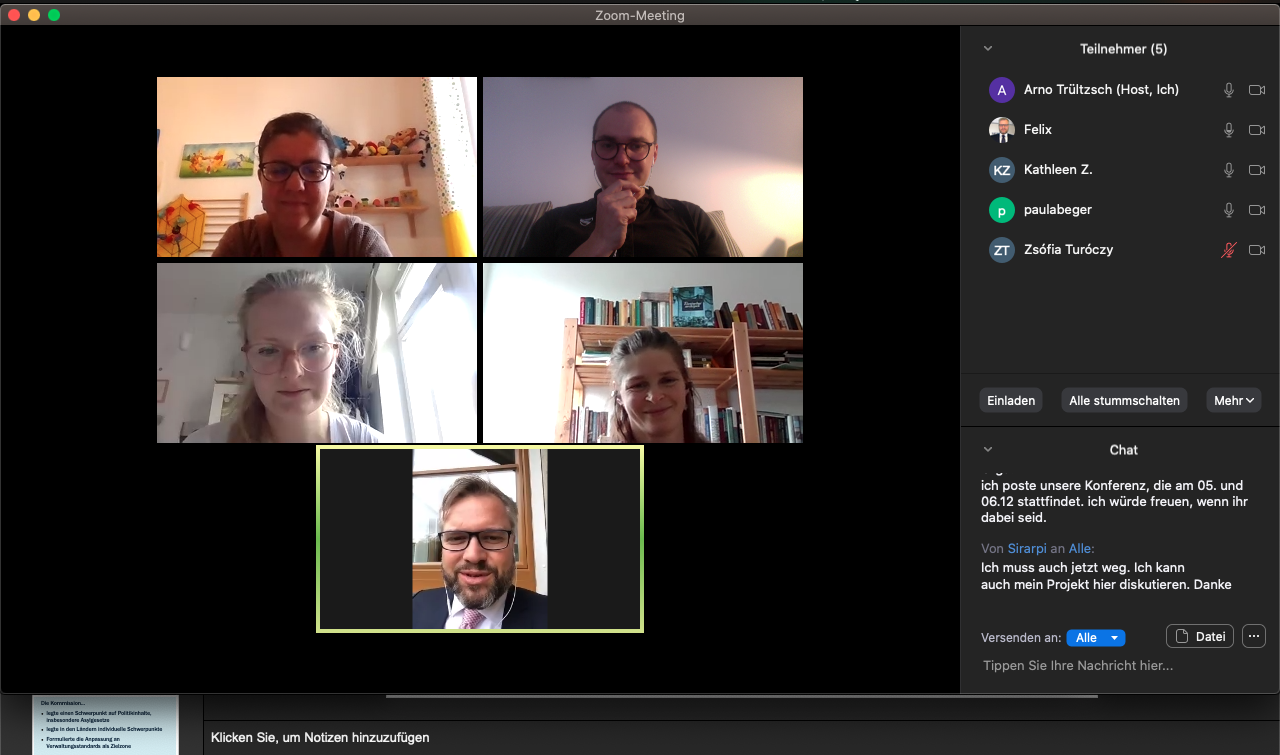
The first online colloquium “Eastern Europe at Lunch” on November 2, 2020, at the closing of the final discussion after Paula Beger’s presentation. (Clockwise from upper left corner) Kathleen Zeidler, W. Arno Trültzsch, Zsófia Turóczy, Paula Beger, (below) Felix Böllmann.
In March 2020, the coronavirus pandemic hit Europe for the first time. As in the rest of the world, life was affected negatively in serious ways. Besides familiar working environments, having colleagues around in one spot, and various leisure activities, academic and all other social events were canceled or had to be moved into the world of online meetings, phone calls, and cloud computing.
Our local association of former and current Leipzig University Sylff fellows usually met in person at least once a year for our annual meeting, always on our common ground in the city of Leipzig. Due to the pandemic, the meeting—which should have taken place in April or May 2020—was canceled. Surrounded by the daily struggles that the lockdowns and other restrictions imposed on our daily lives, like nursing or home-schooling children, we continued working from our very own desks, trying to cope with the situation. The current Sylff fellows could not start their research abroad and, during the most severe restrictions, could not even use the university’s library to study and write. The canceled annual meeting was postponed without a fixed date.
As we are a full legal entity under German law, a legal notification of the responsible “Amtsgericht” (district court), which manages our association records, reminded us of the still outstanding annual meeting in July 2020. They told us that we are obliged to either elect a new board or confirm the current members by a vote during our fixed annual meeting, mentioning that online gatherings and voting are acceptable during the pandemic. The existing board, consisting of Felix Böllmann, Paula Beger, and me, used this external impetus and scheduled an online meeting.
We met via Zoom on September 29, 2020, with a record-breaking attendance of nine members. Although attendance at our annual meetings has always been good, some of us had hardly managed to make the journey to Leipzig even once a year, living too far away. The pandemic thus surprisingly made attendance easier. During the annual meeting, we confirmed the existing board with a clear majority of votes in favor of it. We also engaged in some creative brainstorming on what to make out of the situation. Having thought about a LANS (Local Association Networking Support) or other form of workshop for the Sylff members in Europe, we decided to downsize our plans and expectations. Instead, we used our experience gained from the various online forms of work, meetings, and discussions that we were already exposed to in our daily lives.
Thus, we as the board of A.L.U.S. initiated an online forum in the form of a Zoom colloquium, giving our members and the current Sylff fellows the opportunity to discuss their PhD projects or other current undertakings that they would like to share. During the preparations, our board member Paula Beger came up with the catchy title “Osteuropa in der Mittagspause” (“Eastern Europe at Lunch”) for the endeavor. Although the procedure of finding a common date proved to be rather lengthy, we met for the first time on November 2, 2020, for about an hour from 12 pm.
This very first colloquium was led by our board member Paula Beger, who presented her well-advanced PhD topic on the development of asylum policies of the so-called Visegrád states (Czechia, Slovakia, Hungary, and Poland) prior to and shortly after their accession to the European Union. With a maximum of nine participants, we had a good head start and concluded with an insightful discussion. Two of the current three Sylff fellows at Leipzig University joined us in the colloquium, which means that it was more than a typical alumni association event. Given this positive outcome, we—the three board members—decided to continue this format.
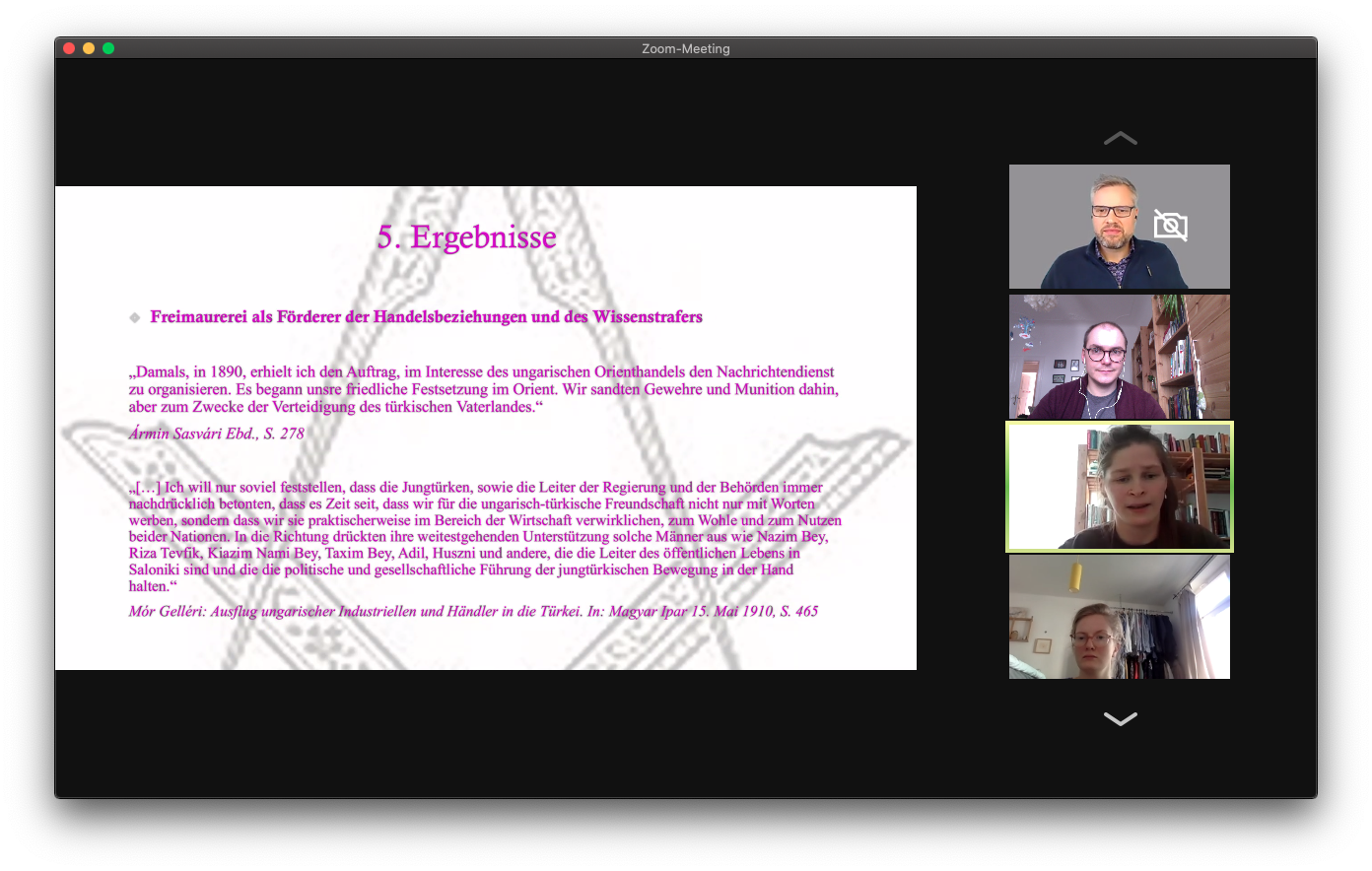
The second online colloquium “Eastern Europe at Lunch” on March 2, 2021, during the presentation of Zsófia Turóczy’s PhD project. (Back to front) Felix Böllmann, W. Arno Trültzsch, Zsófia Turóczy, Paula Beger (missing in the screenshot: Makhabbat Kenshegalieva).
After initial problems in finding a suitable second date to gather as many alumni and current fellows as possible, we wrapped the process up and agreed on a date a little further into 2021. Thus, on March 2, 2021, we held our second colloquium, this time with former fellow and A.L.U.S. member Zsófia Turóczy talking about her particular PhD project on the freemason networks in Southeastern Europe around the turn from the nineteenth century to the twentieth. Her focus is on the connections between the Hungarian and Ottoman freemason lodges and how their entanglements corresponded with current events in the region, especially in trade, politics, and culture. With five participants, the setting was a little more modest. However, we greatly enjoyed Zsófia’s presentation and could again engage in an insightful discussion. We are determined to continue with the format, hoping to make it a regular event every two to three months.
We love to engage with the Sylff community, even if only online. Further participants and guests are very welcome, although talks and discussions are usually in German. In this vein, we have made the best out of the challenging situation of the global pandemic, hoping to keep the spirit of Sylff alive in our Leipzig-centered network.
November 30, 2021
By 29549
November 17, 2021
By 28522
September 14, 2021
By 29373
Violinist Gabriele Slizyte, a 2019 Sylff fellow, discusses how the COVID-19 pandemic has impacted professionals and students in culture, including herself, and poses existential questions that the pandemic has raised for her. In the latter half of the essay, Slizyte contemplates the future of culture, referencing an article by Leon Botstein that offers answers to some of her questions.
* * *
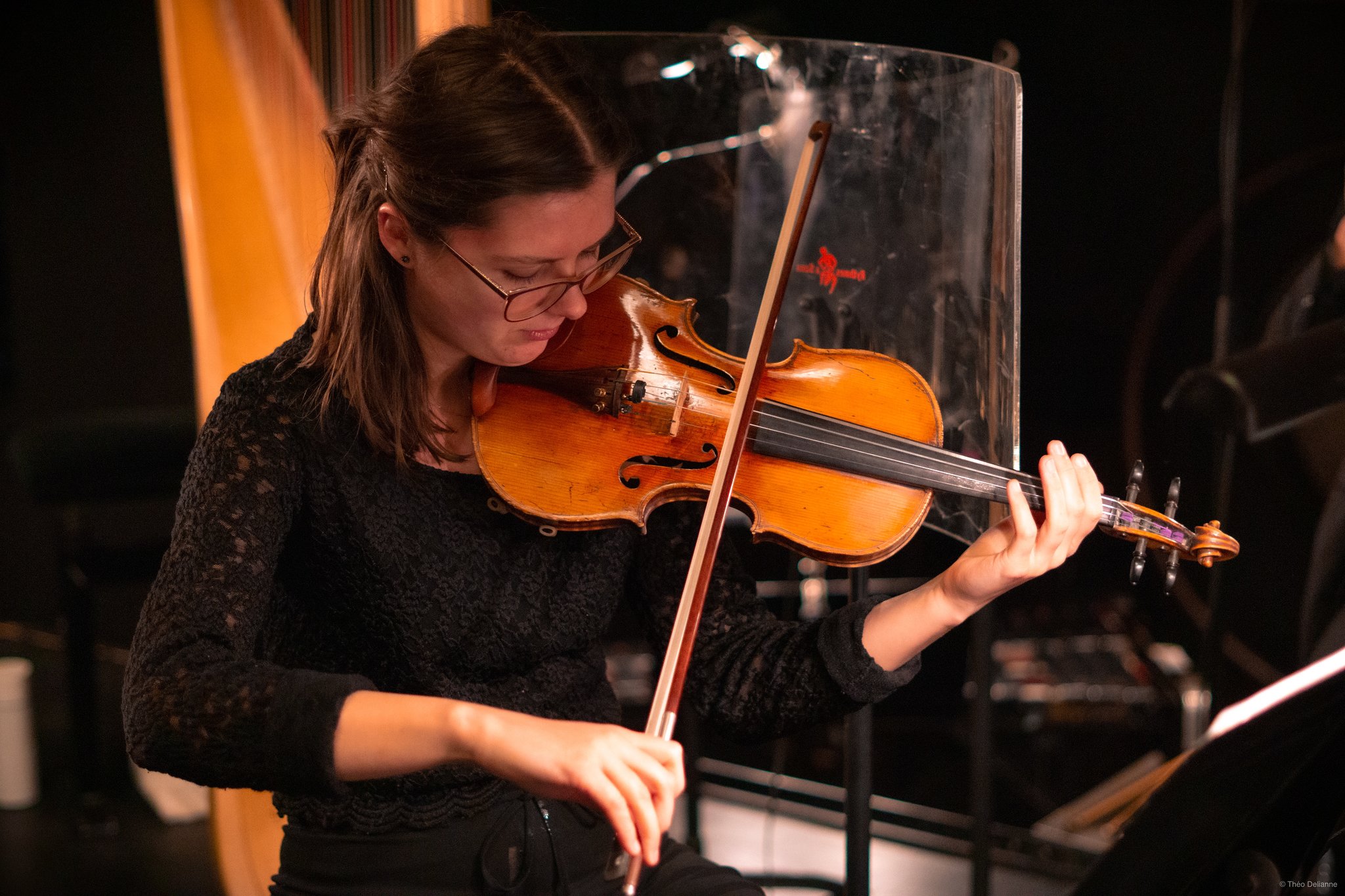
Gabriele Slizyte
As a violinist, student in musicology at the Conservatoire national supérieur de musique et de danse de Paris, and Sylff fellow since 2020, I would like to share some thoughts about the future of culture in our post-COVID society. Conceived in two parts, this essay first poses some personal questions I have been asking myself during this pandemic and then turns to an article by Leon Botstein titled “The Future of Music in America: The Challenge of the COVID-19 Pandemic,” which shares some hypotheses about the future of culture.
The Impact of COVID-19 on Cultural Workers and Students
How does it feel to work in a field that has been considered “nonessential” for more than a year now? For students and young adults, this pandemic made it difficult to visualize a professional integration someday, somehow. After we had lost all our landmarks and convictions about what our daily life should be like, it became clear that culture will still play a role in the “new normal” post-COVID world. However, as we reemerged from this forced break, we found that we have changed. Cultural events, as they might return someday, will gather a public that is already slightly different from the one we have known. How can we prepare ourselves for these changes, and how can we create a safe and interactive environment for cultural gatherings between total strangers who lived confined and in the fear of getting infected for more than a year now?
By its primary conception, culture never was an essential activity, firstly by virtue of its nonmaterial value. It is something we seek only when all the other things—stable and basic things—are assured. However, during the lockdown, we all consumed cultural products in order to stay motivated. So how do we save this nonessential activity? And wait, since when did sense and sensibility become nonessential?
After a great shock and cancellation of everything that was ongoing, cultural workers adapted themselves. Some strayed to Internet broadcast systems, rarely advantageous for classical musicians, some of whom even went viral. Some could not pay their rent, and some took forced vacations from everything to meditate on some big project they never had time to do before. And then there were students who got caught in the middle of a system they did not create. I am thinking about young professionals who just graduated, those who are still looking for jobs in a field where a long-term contract has already expired as a concept.
In France, the voice of depressed and impoverished students took almost a year to be heard. From the beginning of the pandemic, students became one of the most economically vulnerable groups of persons, directly touched by this pandemic. The social impact is here to stay, as well as an existential crisis, the one that no one is talking about because of its nonessential, more personal character. Even if we put aside the economic impact, some questions must be answered. How do we build a network since everything has gone online? How do we stay efficient and take action if you cannot practice your activity? How do we reinvent the way we work and have an impact while still sitting at home, knowing nothing about what the future folds?
On a personal level, this pandemic made me think from a more philosophical and less self-centered point of view. After so many years spent thinking about the big picture of life, we were forced to focus on details, to look after our near future more than just expecting something to happen. While deeply frustrating, this situation can also be perceived as an invitation to think about new ways of making things. Can culture be less international and more local? Could cultural workers also have an ecological impact in the era of the new green deal? Can we create more social impact for our communities?
Botstein’s Action Plan for Music in the Post-COVID World
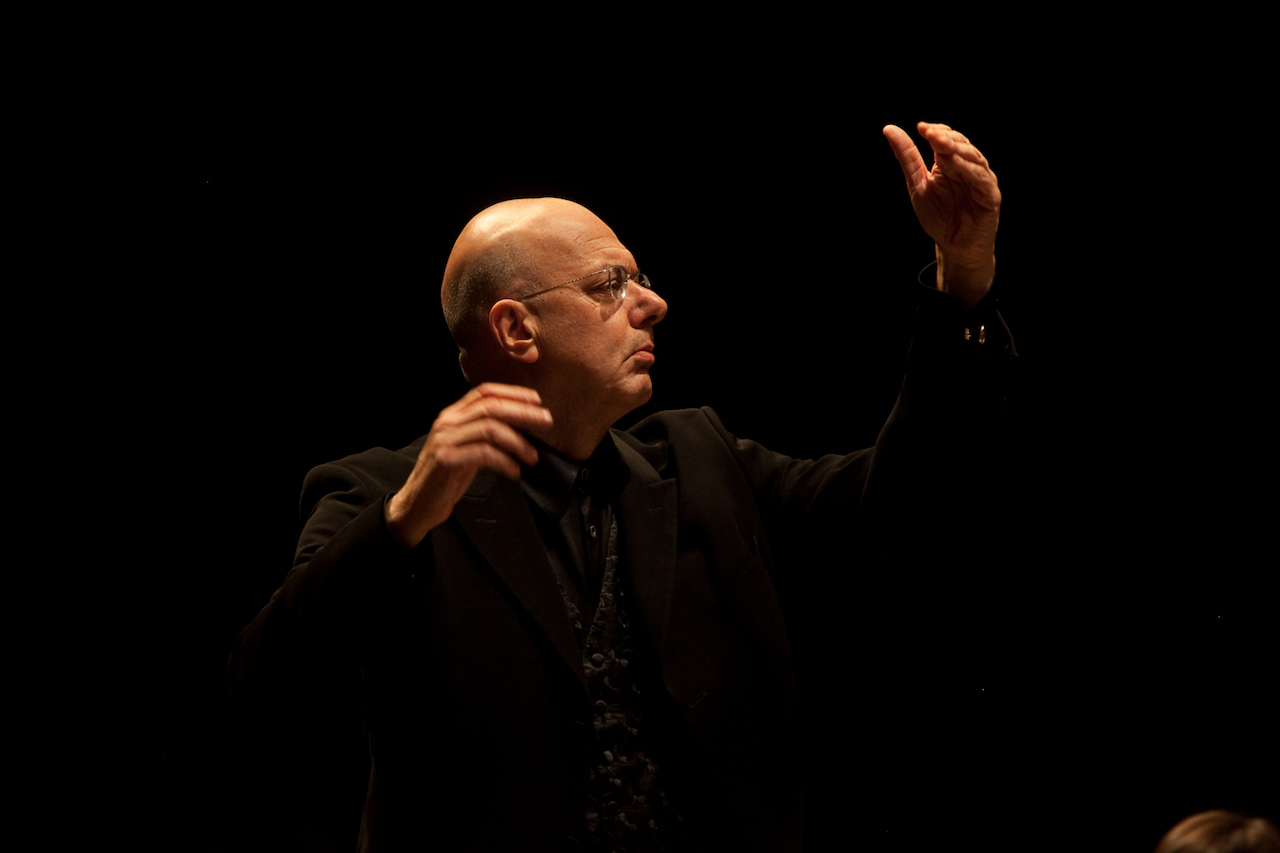
Leon Botstein, Conducting the American Symphony Orchestra - photo by Matt Dine.
In the second part of this short essay, I would like to review an article titled “The Future of Music in America: The Challenge of the COVID-19 Pandemic”1 by Leon Botstein, which, in my opinion, is worthy of our attention. The discourse of this paper inspires comments because it puts into words things that are sometimes difficult to formulate. More than an action plan, it makes us rethink our conception of culture and can actually be transposed to any field.
Swiss-American conductor, academic administrator, and president of Bard College, Leon Botstein is an editor of the Musical Quarterly. This scholarly musical journal is one of the most important and renowned publications, offering brilliant, neat, and critical papers that are shaping the musical domain.
Naturally enough, Mr. Botstein does not limit himself to just offering an immersion into a dramatic situation that has been shaking American cultural workers. He proposes a seven-point action plan that could help “to prevent the 2020 pandemic from devastating, for future generations, the practice and place of music in American life.”[1] Let us just extend this geographical approach to any country in the world that has a tradition of art music.
“Music must become intensely local,”[2] begins Botstein, proposing a conception opposite of worldwide concert tours that could be applied to any popular band or singer. And why not, because an artist has the power to create a dynamic community where a collaboration and exchange between listeners and music makers could replace a wall syndrome in which both are separated as in the traditional conception of a scene. Music should be “perform[ed] in public spaces” and more often leave traditional concert halls.[3] We should encourage a “direct interaction between performer, composer, and the audience, before, between, and after performances.”[4] Culture needs the public because, by its definition, it is a social activity where reception plays a final role. However, our public must be encouraged to take a real place in music making.
After reading Botstein’s article, I felt as if I was being invited to take more concrete action besides my activities as a musicologist, researcher, and performer—to conceive a project, to create a new learning tool, to dynamize our old conception of culture. I am not sure whether it could prevent us from devastating the practice and place of music, but it could, I hope, help us to be more ready and more awake the next time a dark cloud comes over our path.
Written in Paris in February 2021.
1 Leon Botstein, “The Future of Music in America: The Challenge of the COVID-19 Pandemic,” The Musical Quarterly 102, no. 4 (Winter 2019): 351–360.
[1] Botstein, “The Future of Music in America,” 357.
[2] Botstein, “The Future of Music in America,” 357.
[3] Botstein, “The Future of Music in America,” 358.
[4] Botstein, “The Future of Music in America,” 359.
