Tag Archives: Public Policy

NEW

  • HOME
  • タグ : Public Policy

Beyond the Black Box: Unveiling the Nurturing Bonds in Indonesia’s Juvenile Detention Centers

June 30, 2026
By 32894

Behind the walls of Indonesia’s juvenile detention centers, correctional officers play roles that go far beyond enforcing rules. Jesika Juliana (Universiti Malaya, 202224) reveals how they also act as mentors and parental figures guiding youth toward rehabilitation and reintegration.

*     *     *

According to data from the Directorate General of Corrections (Ditjenpas), there were 1,574 juvenile inmates in Indonesia as of May 27, 2025 (Ridwan 2025). This figure represents minors serving sentences at juvenile detention centers, most commonly for narcotics-related offences, sexual violence, and involvement in mass brawls (tawuran). These juveniles are detained at specialized correctional facilities throughout Indonesia (Ditjenpas 2015).

Prison is often described as a “black box”—an impenetrable and opaque institution that operates beyond the reach of public oversight, legal accountability, and academic analysis (Kerr 2019). It functions as a closed system, where the transition from “input” (admission of inmates) to “output” remains hidden. Existing scholarship on carceral systems exhibits a distinct asymmetrical focus, predominantly prioritizing the lived experiences and demographics of the incarcerated population while leaving the correctional staff largely unexamined.

Furthermore, the extant literature concerning correctional personnel is geographically and demographically skewed, characterized by a Western-centric bias and a focus on adult facilities. This creates a theoretical vacuum when applied to the Indonesian context, where operational realities and regulatory frameworks differ significantly. Consequently, the experiences and occupational challenges faced by officers in Indonesian juvenile institutions remain underexplored.

In my previous research, I found that, from the perspective of juvenile offenders, correctional officers play a primary role within the rehabilitative system, influencing both rehabilitation outcomes and the likelihood of recidivism (Juliana, Nor, and Hutagalung 2025). They are pivotal agents of socialization and behavioral intervention whose daily interactions and discretionary authority directly shape the trajectory of a juvenile offender’s reintegration.

Funded by Sylff Research Grant 2025, my study investigated the lived experiences of correctional officers in Indonesia to provide a comprehensive phenomenological account of their professional realities. My aim was to delineate the systemic challenges, daily operational nuances, and officers’ perceptions of the rehabilitation process, while also highlighting areas for institutional reform.

By focusing on the officers’ perspective, this research sought to demystify the “black box” of the carceral system and shift attention from purely custodial functions to the human complexities of correctional work. This complements my previous research on Indonesia’s juvenile offenders, contributing much-needed empirical depth to localized contexts and exploring ways to enhance both officer and inmate well-being.

During my extensive fieldwork across four juvenile correctional institutions in Indonesia, I engaged in immersive observation to analyze the lived experiences of incarcerated youth and the intricate nature of staff-inmate interactions. This approach provided firsthand insights into the institutional climate.

(©Hendri via Getty Images)

(©Hendri via Getty Images)

In contrast to common perceptions of carceral congestion, the facilities I observed were relatively uncrowded and featured expansive green spaces. Each had a low occupancy rate, with a typical population of only 20 to 30 juveniles per detention center. These conditions served as a backdrop for a structured rehabilitative regimen where the juveniles were actively engaged in a comprehensive suite of prosocial activities, primarily formal academic schooling and vocational training programs.

The multifaceted responsibilities of correctional officers range from mentorship and administrative oversight to ensuring strict adherence to institutional schedules and actively designing and facilitating diverse rehabilitative programming. Furthermore, these officers proactively pursue community engagement by frequently collaborating with external volunteers to expand the developmental opportunities available within the facility. Beyond their custodial duties, they often serve as parental figures, providing vital emotional support and functioning as trusted confidants for the juveniles.

This relationship is reflected in the way juveniles habitually address them: bu or bapak. These linguistic markers directly mirror the nomenclature used by Indonesian youth to address their own parents. This indicates a shift away from a strictly punitive authority toward a more supportive and nurturing model.

My previous research indicated that juveniles within these institutions frequently perceive correctional officers as primary caregivers (Juliana, Hutagalung, and Nor 2025), a sentiment that appears to be reciprocated. Through qualitative interviews, I observed that officers often adopt a parental orientation, viewing the residents as their own children rather than merely individuals under state custody. Officers reported a distinct absence of fear in their interactions, contrasting this experience with the high-tension dynamics often found in adult correctional facilities.

However, these professional realities are not without significant complexities and systemic pressures. Managing a juvenile population is inherently challenging, given the logistical demands of institutional management and the rigid requirements of standard operating procedures (SOPs) and key performance indicators (KPIs). Officers must navigate a delicate balance between emotional engagement and professional boundaries, maintaining the nurturing environment essential for rehabilitation while also adhering to the formal mandates of institutional security and bureaucratic accountability.

(©Rizky Panuntun via Getty Images)

(©Rizky Panuntun via Getty Images)

The officers exhibit a prosocial commitment to the welfare of the juveniles, driven by a conviction that targeted interventions can significantly enhance their developmental trajectories. However, this rehabilitative intent is frequently stymied by budgetary constraints and further complicated by inter-departmental friction that creates a fragmented operational environment.

Consequently, officers must engage in administrative improvisation and creative problem-solving to maintain a functional suite of activities, leveraging limited resources to bypass systemic and logistical barriers. In qualitative interviews, correctional officers explicitly articulated that the primary source of occupational strain was not the juveniles themselves but systemic, bureaucratic inefficiencies and chronic fiscal under-resourcing by the state.

Voting booths at the Bandung Juvenile Detention Center were decorated with superheroes to encourage residents to participate in the February 2024 Indonesian presidential election. (©Ryan Suherlan/NurPhoto via Getty Images)

Voting booths at the Bandung Juvenile Detention Center were decorated with superheroes to encourage residents to participate in the February 2024 Indonesian presidential election. (©Ryan Suherlan/NurPhoto via Getty Images)

These findings contrast with the established literature on adult correctional facilities, which often identifies the inmate population as the primary source of occupational stress. In juvenile settings, bureaucratic inefficiencies play a more significant role. Furthermore, the data suggests high levels of intrinsic motivation, with officers reporting that they feel their professional efforts are validated when former residents successfully reintegrate into society and are accepted as productive members.

To enhance the psychological well-being and professional efficacy of correctional staff, greater attention should be given to increasing fiscal allocations, streamlining management practices, and preventing overcrowding. Support measures, such as fostering public recognition and providing opportunities for professional development, stress management, and self-care interventions, will likely further cultivate a synergistic institutional environment and ultimately optimize the rehabilitative outcomes for the juveniles under state care.

References

Direktorat Jenderal Pemasyarakatan (Ditjenpas). 2015. Transformasi sistem perlakuan anak lapas anak menjadi lembaga pembinaan khusus anak (LPKA). Kementerian Hukum dan HAM Republik Indonesia. August 4. https://www.ditjenpas.go.id/transformasi-sistem-perlakuan-anak-lapas-anak-menjadi-lembaga-pembinaan-khusus-anak-lpka.

Juliana, Jesika, Fonny Dameaty Hutagalung, and Azmawaty Mohamad Nor. 2025. “How Detainment Reshapes the Interpersonal Relationships of Indonesian Incarcerated Youth: A Qualitative Study.” The Prison Journal 105 (6): 807–829.

Juliana, Jesika, Azmawaty Mohamad Nor, and Fonny Dameaty Hutagalung. 2025. “‘I Don’t Want to Do That Anymore’: Motivation and Strategies to Desistance Among Juvenile Offenders in Indonesia.” Pertanika Journal of Social Sciences and Humanities 33 (1).  http://pertanika2.upm.edu.my/pjssh/browse/regular-issue?article=JSSH-9124-2024.

Kerr, Lisa. 2019. “How the Prison Is a Black Box in Punishment Theory.” University of Toronto Law Journal 69 (1): 85–116.

Ridwan, Akbar. 2025. “Ada lebih dari 1.500 narapidana anak di Indonesia per 27 Mei 2025.” Databoks. May 27. https://databoks.katadata.co.id/demografi/statistik/68352eb9d6245/ada-lebih-dari-1500-narapidana-anak-di-indonesia-per-27-mei-2025.

I have adjusted the URL, as the original hyperlink (applied to the in-text citation) appeared to point to an offline local file, rather than a web address.

  • HOME
  • タグ : Public Policy

Do Tax Breaks Actually Fuel Innovation? Evidence from China’s Factory Floors

June 23, 2026
By 32095

China has built one of the world’s most comprehensive fiscal incentive systems for innovation. But whether these instruments reach the entrepreneurs who need them depends less on policy generosity than on policy design, argues Zhe Li (Ristumeikan Asia Pacific University, 2025) based on fieldwork in China’s advanced manufacturing sector.

*     *     *

Advanced manufacturing is the driving force behind China’s transformation into a global powerhouse and an important pillar in building a modern economic system. The sector encompasses industries that are not only economically important but also strategically significant, including high-end intelligent equipment, new energy vehicles, semiconductors, and aerospace components.

Yet innovation in advanced manufacturing is structurally hard to finance. Research and development activities are characteristically high risk and capital intensive, with long development cycles and uncertain returns, leaving enterprises facing significant financing constraints. When a company decides to innovate, it must first solve the problem of who bears the cost of trying and failing.

This is where government policy enters the picture. Measures such as value-added tax refunds for R&D activity, super deductions for R&D expenditures, and direct innovation financial subsidies can alleviate the financial constraints faced by innovative firms.

China’s fiscal support architecture for innovation is among the most comprehensive in the world. A more pressing question—one that policy designers in every country grapple with—however, is whether these incentives reach the companies that need them and whether they function as effectively as intended. It is this gap between policy design and policy reach that motivated my choice of research topic.

A Combined Quantitative and Qualitative Approach

This SRG-supported study, drawing on fieldwork conducted in China, combined quantitative analysis with in-depth qualitative inquiry—an approach designed to capture both statistical patterns and the human dynamics behind them.

On the quantitative side, I assembled a balanced panel dataset for advanced manufacturing listed enterprises, using data from the China Stock Market and Accounting Research (CSMAR) database and annual financial reports covering 2016–23. Key variables included R&D expenditure, patent filings disaggregated by type, government subsidies, and tax relief.

A two-stage least squares (2SLS) strategy was adopted to address the endogeneity inherent in the relationship between R&D personnel and innovation output: skilled researchers both produce innovation and are attracted to firms that are already innovative.

On the qualitative side, I conducted several on-site interviews with R&D directors, financial officers, and senior engineers at manufacturing firms across the technology intensity spectrum. I also visited relevant government departments that design and optimize the financial incentive policies to understand how programs are designed and monitored from the administrative side. A series of in-depth case studies tracked individual companies’ innovation trajectories across multiple policy cycles—a longitudinal lens that panel data cannot provide.

In addition, I participated in several stakeholder workshops in which enterprise representatives and academic researchers collectively reviewed preliminary findings. These interactions served both to validate interpretations and to highlight policy recommendations grounded in lived experience rather than theoretical assumptions.

Fiscal Incentives Work—Unevenly

The quantitative analysis confirmed that fiscal incentives do improve innovation outcomes. Advanced manufacturing enterprises benefitting from R&D super deductions showed significantly stronger growth in invention patent filings—the most meaningful measure of genuine technological originality. VAT refunds, by reducing immediate cash flow pressure, also enabled firms to maintain multi-year research programs that would otherwise have been limited by budget constraints.

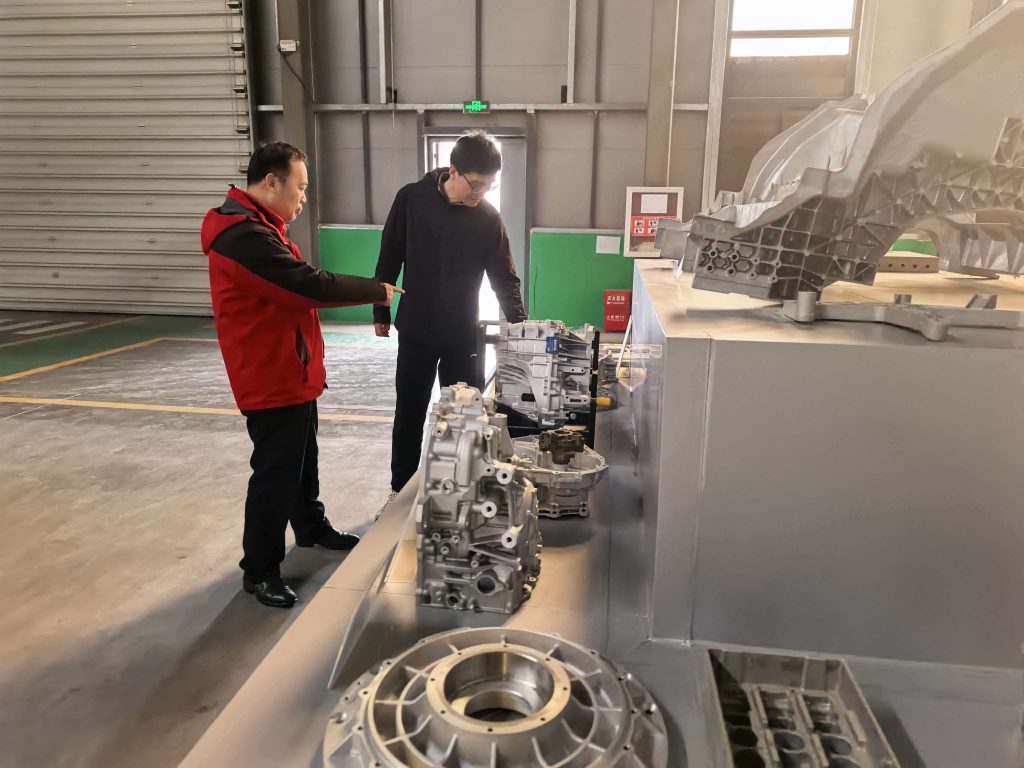
Visiting the manufacturing floor to engage in in-depth discussions with frontline workers.

Visiting the manufacturing floor to engage in in-depth discussions with frontline workers.

But these benefits are unevenly distributed. High-technology firms—those with established R&D departments and sophisticated tax compliance teams—absorbed incentives most effectively. For mid-level enterprises, the effects were more limited and conditional on internal capabilities. In some medium-technology sectors, the incentive policies produced no significant increase in innovation outputs, though some companies successfully used subsidies to fund equipment upgrades and process improvements.

This uneven impact is not surprising and consistent with broader findings. KPMG’s industry report (2023), for example, notes that policy incentives often carry eligibility thresholds—tax compliance requirements, talent registration standards, certification processes—that might exclude firms at the most critical stage of growth: large enough to have innovation ambitions but lacking the administrative infrastructure to access policy benefits.

The Talent Bottleneck: A Cycle That Reinforces Itself

Among the field research’s most significant findings was a mutually reinforcing relationship between R&D personnel and innovation, as confirmed statistically through the 2SLS framework. Firms with stronger research teams produce better innovation outcomes, which in turn help attract and retain higher-quality talent. This creates a virtuous cycle for those companies, but it also leads to wider gaps with less innovative firms.

This finding has direct implications for policy design. The 2025 Urban Manufacturing Quality Development Report (CAICT 2025) documents a similar pattern at the city level: regions with higher R&D intensity tend to attract more innovation talent, further boosting R&D capacity. Enterprises that had built credible innovation records were able to offer competitive salaries and genuine research opportunities to engineers who might otherwise migrate to coastal clusters. Firms without such track records struggled to attract talent, limiting their ability to translate fiscal support into research output.

This suggests that fiscal incentives alone are not enough; breaking this self-reinforcing cycle requires complementary policies to support talent attraction, university-industry collaboration, and personnel development.

State-Owned and Private Enterprises Respond Differently

The research also found differences between state-owned enterprises (SOEs) and private firms. SOEs maintained stable R&D investment across policy cycles, reflecting both their access to patient capital and their responsiveness to institutional mandates. But their innovation outputs—measured by commercially significant patents and new product revenues—were less elastic with respect to fiscal incentives than those of private firms.

Private enterprises proved more responsive. When incentives were accessible and the process manageable, they invested aggressively in R&D; when conditions were less favorable, they pulled back. Research by Qian (2023) on China’s new energy vehicle industry reaches a similar conclusion: tax incentives show stronger innovation efficiency effects on private enterprises than on SOEs. This asymmetry suggests that private firms may offer the greatest potential return for policy support—but are also the most vulnerable to implementation challenges.

A BYD dealership in Shanghai. The electric carmaker has benefited greatly from subsidies, policy financing, and other fiscal incentives to achieve many innovation breakthroughs. (© Robert Way via Getty Images)

A BYD dealership in Shanghai. The electric carmaker has benefited greatly from subsidies, policy financing, and other fiscal incentives to achieve many innovation breakthroughs. (© Robert Way via Getty Images)

The “Last Mile”: Where Policy Design Meets Practice

A relatively consistent finding, regardless of firm type or technology intensity, was the gap between how incentive programs look on paper and how they function in practice for individual enterprises. While these programs may have been designed with realistic budgets and sincere intentions, awareness of available programs at the firm level was uneven. Some application processes proved to be complicated, and disbursement timing often failed to align with R&D planning cycles—undermining the intended incentive effect even for firms that qualified.

Some companies reported learning about subsidy programs only after the application window had closed. Others committed R&D expenditures in anticipation of support but faced liquidity pressure when complicated application processes caused approval delays. The KPMG report identifies analogous institutional barriers, describing problems of unbalanced policy design, insufficient digital governance capacity, and incomplete strategic planning that prevent enterprises from effectively accessing available support. My fieldwork confirmed these observations at the individual firm level, across city types and ownership structures.

Implications for Policy

The policy challenge this research examines—how to design fiscal instruments that genuinely stimulate corporate innovation—is one that every government pursuing a technology-intensive growth strategy confronts. The findings from fieldwork have several implications for concrete and actionable approaches.

The first implication concerns accessibility. The evidence is clear that fiscal generosity does not automatically translate into policy reach. Simplifying application procedures, developing dedicated intermediary services for smaller firms, and building proactive information systems that notify enterprises of approaching program windows would substantially expand the reach of existing measures.

The second implication concerns the need for integrated policy design. The positive feedback loop between R&D personnel and innovation performance suggests that policies should focus on creating sustainable innovation ecosystems rather than one-off interventions. This would be consistent with the logic of China’s long-term strategic planning approach, which considers key aspects of the R&D process in a comprehensive manner to help firms build cumulative innovation capabilities.

The third implication concerns differentiation. The heterogeneity of technology intensity levels argues against uniform incentive structures. Calibrating eligibility thresholds, deduction rates, and complementary support measures to the specific innovation challenges of different technology tiers would generate better outcomes at equivalent fiscal cost.

More broadly, the study illuminates something fundamental about the relationship between public policy and the production of knowledge. Innovation is structurally difficult to finance privately: it requires resources committed today for returns that may not materialize for years. Tax incentives and subsidies are society’s mechanisms for sharing that risk—a collective commitment that the aggregate benefits of technological progress justify absorbing part of its cost. The success of fiscal incentives depends on whether they truly reach the entrepreneurs who need them most.

In short, the fieldwork supported by SRG proved to be far more than an on-site academic survey. The material and perspectives accumulated during the fieldwork have directly shaped my first academic article to be published in Economies, a Scopus-indexed journal, and have inspired the analytical framework I will bring to a second research project examining how fiscal and policy instruments shape corporate export behavior.

Bibliography

Bloom, Nick, Rachel Griffith, and John Van Reenen. 2002. “Do R&D Tax Credits Work? Evidence from a Panel of Countries 1979–1997.” Journal of Public Economics 85 (1): 1–31.

China Academy of Information and Communications Technology (CAICT). 2025. Urban Manufacturing Quality Development Research Report. Beijing: CAICT Information Technology and Industrial Development Institute.

China Electronics Information Industry Development Research Institute (CCID) and China Electronic Information Industry Federation (CEIF). 2024. 2023–2024 China Advanced Manufacturing Development Blue Book. Beijing: Publishing House of Electronics Industry.

Guo, Di, Yan Guo, and Kun Jiang. 2016. “Government-Subsidized R&D and Firm Innovation: Evidence from China. Research Policy 45 (6): 1129–1144.

Hall, Bronwyn and John Van Reenen. 2000. “How Effective Are Fiscal Incentives for R&D? A Review of the Evidence.” Research Policy 29 (4-5): 449–469.

KPMG China and Yunhui Capital (V Fund). 2023. “Digital and Intelligent Transformation for Advanced Manufacturing: An Observation Report on China’s Industrial Technology Enterprises.” Beijing: KPMG China.

Qian, Binhua. 2023. “Financial Subsidies, Tax Incentives, and New Energy Vehicle Enterprises’ Innovation Efficiency: Evidence from Chinese Listed Enterprises.” Plos One 18 (10): e0293117.

Song, Li and Yating Wen. 2023. “Financial Subsidies, Tax Incentives and Technological Innovation in China’s Integrated Circuit Industry. Journal of Innovation & Knowledge 8 (3): 100406.

Wu, Aihua. 2017. “The Signal Effect of Government R&D Subsidies in China: Does Ownership Matter?” Technological Forecasting and Social Change 117: 339–345.


  • HOME
  • タグ : Public Policy

From Electric Fleets to Agentic Mobility: Aligning Transport with Societal Needs

June 12, 2026
By 27797

Drawing on three studies, Jônatas Augusto Manzolli (University of Coimbra, 2019) examines how electric mobility, system integration, and AI-enabled “agentic” vehicles are reshaping transportation. These developments point to new pathways toward lower emissions, greater resilience, and more human-centered urban systems.

Introduction

On a cold winter morning in Montreal, waiting for a bus can feel longer than it should. The air is sharp, the streets are busy, and even small delays matter. Public transportation is not an abstract system; it is what people rely on every day to reach work, school, and essential services.

Yet behind this everyday experience lies a complex network of decisions, technologies, and constraints that shape how mobility functions in our cities. For decades, public transportation has depended on diesel-powered vehicles, contributing to air pollution and climate change. The shift toward electric mobility offers a promising alternative, with the potential to reduce emissions and improve urban environments.

As I began working in this field, though, it became clear that electrification is not simply a matter of replacing engines. It changes how fleets are planned, how energy is consumed, and how infrastructure must be designed. This realization shaped the central motivation of my Sylff Research Grant project: to develop tools and frameworks that help decision-makers navigate the transition to electric mobility in a realistic and informed way.

Over the course of the project, this initial focus expanded into a broader investigation of how transportation systems can become more adaptive, resilient, and aligned with human needs. During this period, I published three scientific papers, each addressing a different layer of this transformation. One focused on the operational challenges of electric fleets (Manzolli et al. 2026a), another explored the role of mobility systems in urban resilience (Manzolli et al. 2026b), and a third introduced the concept of agentic vehicles as a new paradigm for intelligent transportation (Yu et al. 2025).

Together, these works form a continuous narrative, moving from practical challenges to system-level integration and, ultimately, to a rethinking of mobility itself.

From Electrification to System Complexity

Electric buses are often presented as a straightforward solution to urban emissions. In practice, however, their deployment introduces new layers of complexity. Unlike diesel vehicles, electric buses depend on charging infrastructure, battery capacity, and electricity markets. Their performance is influenced by external factors such as weather conditions, traffic patterns, and operational schedules.

In earlier stages of my research, I focused on understanding these challenges. Coordinating charging schedules, for example, is not only a technical problem but also an economic one. Charging at the wrong time can increase costs and create peaks in electricity demand that strain the grid. Similarly, battery degradation is influenced by how and when vehicles are charged, affecting long-term fleet performance and investment decisions.

These insights revealed that electrification is fundamentally a system problem. Decisions about vehicles, infrastructure, and energy are interconnected, and optimizing one element in isolation can lead to inefficiencies elsewhere. Addressing this complexity requires integrated approaches that consider the entire system.

The photo below illustrates an example of electric bus charging infrastructure, capturing the interface between transportation and energy systems, where operational decisions directly translate into energy demand. This physical connection is at the heart of the transition to electric mobility.

Overhead fast-charging infrastructure used for electric bus operations illustrates the integration between mobility systems and power networks.

Overhead fast-charging infrastructure used for electric bus operations illustrates the integration between mobility systems and power networks.

Optimizing Electric Fleet Operations

The first major outcome of this research relates to strategies for improving the operation of electric fleets. Using optimization models, approaches were developed to coordinate charging, minimize energy costs, and account for battery degradation. These models drew on real-world data, including trip schedules, energy consumption patterns, and electricity prices.

One key finding was that smart charging can significantly improve system performance. By aligning charging activities with lower electricity prices and favorable grid conditions, operators can reduce costs while avoiding demand peaks. At the same time, incorporating battery degradation into the decision-making process helps extend battery life, which is one of the most expensive components of electric vehicles.

These results demonstrate that operational strategies are critical to the success of electrification. Even with the same vehicles and infrastructure, different charging approaches can lead to very different outcomes. This highlights the importance of providing decision-makers with tools that make these trade-offs visible and manageable.

Mobility as a Component of Urban Resilience

While operational improvements are essential, they represent only part of the picture. Transportation systems are embedded within broader urban and energy systems, and their importance becomes especially evident during disruptions.

In a second study, an examination was made of how shared autonomous electric vehicles can contribute to urban resilience. Using a case study based on real-world data from Montreal, a framework was developed to analyze fleet performance under disruptive conditions, such as power outages. The findings show that electric vehicles can serve not only as transportation assets but also as mobile energy resources.

During disruptions, these vehicles can help supply electricity to critical locations, support emergency services, and maintain essential mobility. This transforms the role of transportation systems from passive energy consumers to active participants in maintaining urban stability.

This perspective is particularly relevant in the context of climate change, which is increasing the frequency and severity of extreme events. Cities must adapt to these challenges by developing flexible systems capable of responding to uncertainty. Integrating mobility and energy systems offers one promising pathway toward this goal.

Toward Agentic Mobility Systems

The third component of this research moves beyond optimization and system integration to explore the future of mobility systems. Recent advances in artificial intelligence have enabled the development of systems that can reason, adapt, and interact with users in increasingly sophisticated ways.

Building on these trends, this research advances the concept of agentic vehicles, which are capable of making decisions based on goals, context, and interactions. Unlike traditional automated systems, which follow predefined rules, agentic vehicles can respond dynamically to changing conditions. They can interpret user needs, coordinate with other systems, and operate under uncertainty. This represents a shift from automation to intelligence.

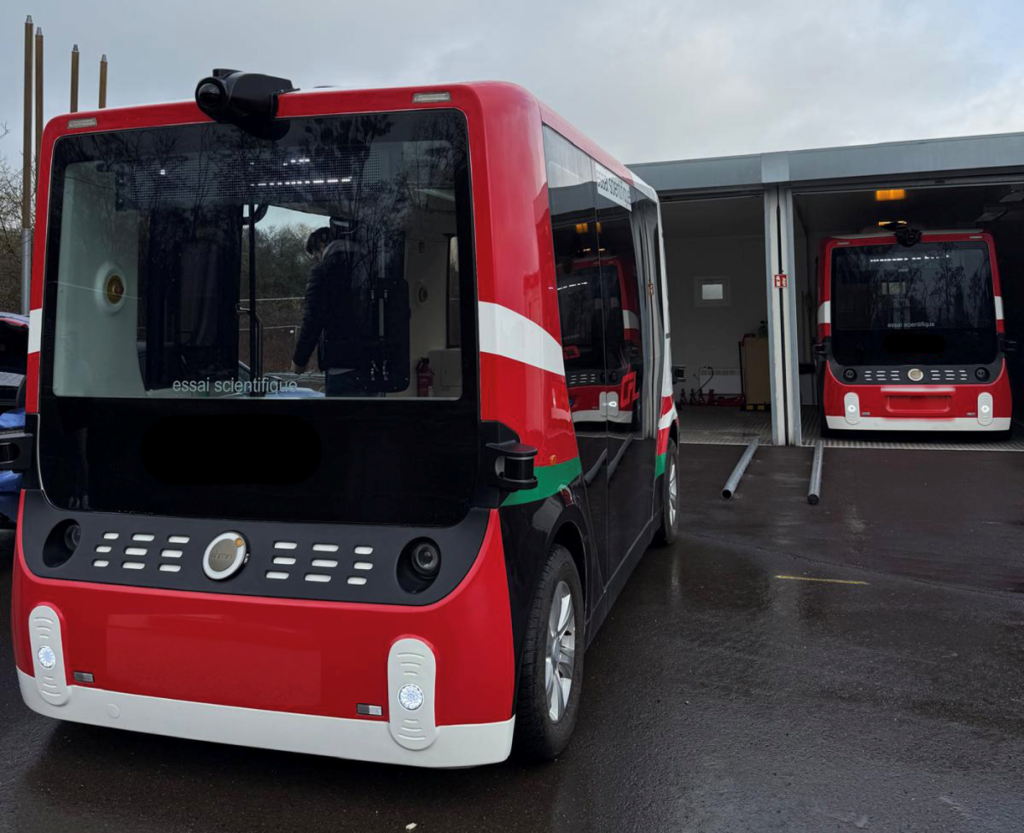
The photo below shows an experimental autonomous vehicle platform used in this research. While still in a controlled environment, such platforms provide a glimpse into how future mobility systems may operate.

The experimental autonomous vehicle platform used to investigate interactions between automation, electrification, and operational strategies.

The experimental autonomous vehicle platform used to investigate interactions between automation, electrification, and operational strategies.

The concept of agentic mobility also raises important questions. How should these systems be governed? How can they be designed to align with societal values? Addressing these questions requires collaboration across disciplines, including engineering, social sciences, and public policy.

Connecting the Layers: Operations, Systems, and Intelligence

Taken together, these three research directions illustrate a progression. At the operational level, improving charging strategies and fleet management enhances efficiency and reduces costs. At the system level, integrating mobility with energy systems increases resilience and flexibility. At the intelligence level, developing adaptive and interactive systems opens new possibilities for how mobility can function.

This progression reflects a broader transformation in engineering and technology. Systems are becoming more interconnected, data-driven, and responsive. Designing them requires not only technical expertise but also an understanding of human needs and societal contexts.

Contribution to Society

The contributions of this research extend beyond technical advancements. Improving the efficiency and feasibility of electric fleets supports the transition to lower-carbon transportation systems. This has direct implications for reducing emissions and improving air quality in urban areas.

The integration of mobility and energy systems also enhances urban resilience, helping cities respond to disruptions and maintain essential services. This is particularly important for vulnerable populations, who are often the most affected by infrastructure failures.

At the same time, the development of decision-support tools empowers operators and policymakers to make informed choices. By making trade-offs explicit, these tools promote transparency and alignment with broader societal goals.

Finally, the concept of agentic mobility emphasizes the importance of designing systems that are not only efficient but also accessible, equitable, and responsive to the needs of the communities they serve.

Final Remarks

The transition to electric mobility is often described as a technological change. In reality, it represents a broader, systemic transformation that requires new ways of thinking about transportation, energy, and decision-making.

This research contributes to that transformation by connecting operational efficiency, system integration, and intelligent behavior. It shows that improving mobility is not only about reducing emissions but also about creating systems that are more resilient, adaptive, and aligned with human needs.

Looking ahead, the challenge is not only to develop new technologies but also to ensure that they are implemented in ways that benefit society. This requires collaboration, innovation, and a sustained focus on the human dimension of mobility.

References

Manzolli, Jônatas Augusto, Alessandro Vissarios D’Apice, Praveen Pandey, Francesco Ciari, and Luis Miranda-Moreno. 2026a. “Planning Resilient Electric Bus Operations in Cold Regions: An Agent-based Simulation–Optimization Framework.” Applied Energy 413: 127735.

Manzolli, Jônatas Augusto, Jiangbo Yu, Alessandro Vissarios D’Apice, and Luis Miranda-Moreno. 2026b. “Balancing Energy Resilience and Mobility: A Multi-Objective Framework for Shared Autonomous Electric Vehicles.” NPJ Sustainable Mobility and Transport 3 (1): 13.

Yu, Jiangbo, Jônatas Augusto Manzolli, et al. 2025. “Agentic Vehicles for Human-Centered Mobility: Definition, Prospects, and Synergistic Co-Development with Vehicle Autonomy.” arXiv: 2507.04996.

  • HOME
  • タグ : Public Policy

Strengthening Inclusive Pathways into Economic Research in Latin America

April 15, 2026
By 33417

Using SLI funding, Gabriela Sofia Lecaro Calle (University of Michigan, 2023) coordinated a project designed to help Latin American students from diverse backgrounds gain access to high‑quality economic research, offering mentorship and targeted training in preparation for graduate study and academic careers.

*     *     *

Access to high-quality training in economics and to information about academic and research careers remains highly unequal across Latin America. Many talented undergraduate students—particularly those at public universities and from low-income or first-generation backgrounds—have limited exposure to research, few opportunities to develop technical skills beyond the classroom, and little guidance on how to pursue graduate study.

In response to these gaps, EconThaki was created with the goal of building an inclusive pipeline into academic and applied economic research, not only as a matter of equity but also to increase the quality and scope of the discipline. I am a cofounder of this community-led initiative and have served as a mentor and instructor for previous program editions.

With support from a Sylff Leadership Initiatives grant, EconThaki implemented a set of complementary activities during 2024–25 structured around three pillars: (1) hands-on research apprenticeships, (2) structured mentorship, and (3) targeted skill-building and exposure opportunities.

Together, these components aimed to strengthen students’ technical capacity, professional networks, and understanding of academic career pathways, while ensuring that financial constraints did not prevent participation.

At the center of the project was the EconThaki Fellowship and Research Apprenticeship Program, which matched selected fellows with active researchers working on ongoing projects and integrated them into real research teams. Fellows contributed to a wide range of studies, including randomized controlled trials with small retail stores in Lima, research on financial inclusion in Ecuador, and applied policy evaluations.

Rather than serving only as assistants on narrowly defined tasks, fellows engaged in multiple stages of the research process. Their responsibilities included cleaning and consolidating large datasets, programming in Stata and other statistical software, constructing survey instruments, preparing reproducible workflows, conducting exploratory analysis, and participating in research meetings.

This immersion into research practice allowed fellows to see how abstract methods learned in coursework translate into empirical evidence. Many reported substantial growth in their ability to manage data, write organized and replicable code, and interpret results. Equally important, fellows gained a clearer sense of how academic research is iterative, collaborative, and shaped by practical constraints such as data availability and fieldwork conditions.

An online session of the mentoring program.

Alongside apprenticeships, EconThaki emphasized structured mentorship as a core element of the program. Fellows met regularly with mentors and program staff to discuss research progress, career goals, and next steps. These conversations often extended beyond technical issues to include topics such as preparing for master’s or PhD programs, identifying predoctoral opportunities, and building a competitive academic profile. For many participants, this was their first sustained interaction with researchers who could demystify the academic path.

A recurring theme in students’ reflections was a shift in expectations: what once felt distant or unrealistic now appeared attainable with appropriate preparation. This change in mindset was a critical outcome of the program. By providing both role models and concrete guidance, EconThaki helped students envision themselves as future researchers and graduate students.

The project also invested in complementary training to benefit a broader set of students beyond the fellowship cohort. SLI-supported English classes were offered across multiple EconThaki programs, strengthening academic reading, writing, and speaking skills. These skills are essential for engaging with the international research community, reading frontier literature, communicating with mentors, and preparing graduate applications.

Lima Summer School of Economics, 2025.

In addition, selected students participated in the Lima Summer School of Economics, a selective program jointly organized by the University of British Columbia and the University of Piura that offers intensive short courses in modern economic theory, econometrics, and applied methods taught by international and regional faculty. Full-tuition scholarships were provided by the two universities, while Sylff funding played a crucial role in covering travel expenses. This support ensured that students from outside Lima and from low-income backgrounds could take advantage of this opportunity. Exposure to a demanding academic environment and to instructors from leading institutions further reinforced students’ preparation for graduate-level work.

The project’s activities have generated many tangible and intangible outcomes. Tangibly, students have strengthened technical skills in statistical programming, data management, and research organization. Intangibly, they have gained confidence, professional aspirations, and a sense of belonging in academic spaces. Several participants are now preparing applications to master’s programs, predoctoral positions, or research assistant roles, and many continue to collaborate with mentors after the end of the fellowship period.

Beyond individual trajectories, this project contributes to a broader objective: building a more diverse and locally grounded community of economists who can produce high-quality research on the region’s most pressing challenges. Latin America faces persistent issues related to poverty, inequality, informality, and limited state capacity. Expanding the pool of researchers who have the tools to study these problems rigorously is essential for improving the evidence base that informs policy.

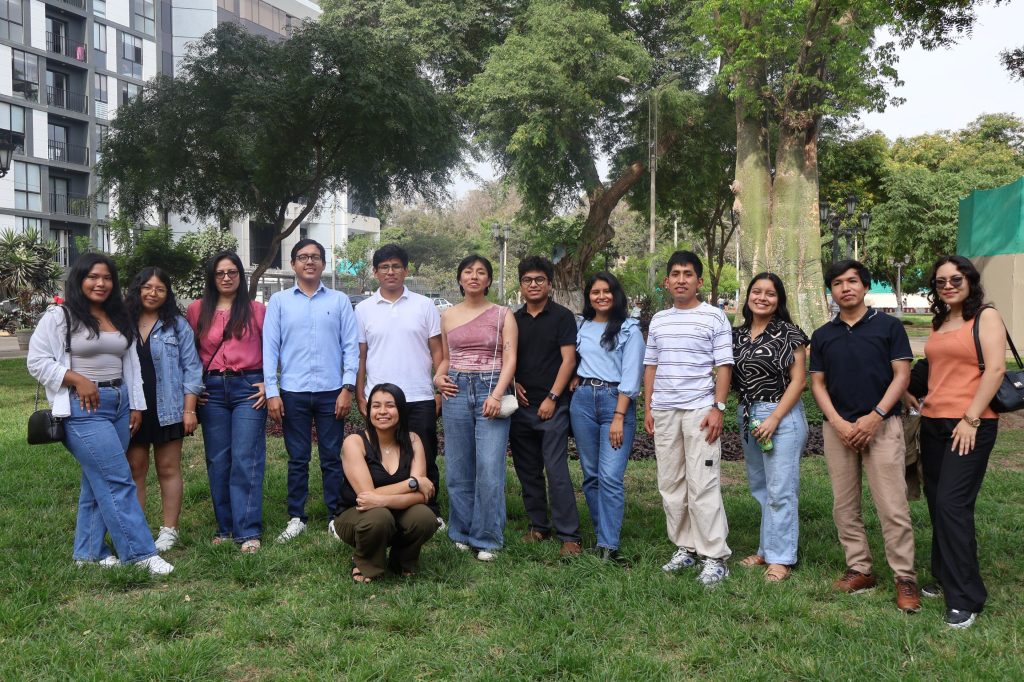
An alumni gathering.

Looking forward, EconThaki aims to scale and refine this model by increasing the number of fellows, strengthening partnerships with researchers and institutions, and deepening complementary training offerings. The SLI grant has shown that targeted funding can generate meaningful changes in students’ skills, expectations, and opportunities. By supporting this project, Sylff has helped transform potential into preparation and aspiration into concrete pathways. EconThaki is grateful for this award and remains committed to building an inclusive pipeline into economic research that reflects the talent and diversity of the region.

  • HOME
  • タグ : Public Policy

Service Learning as an Innovative Pedagogy in Indonesian Higher Education

January 19, 2026
By 32013

SRG 2024–supported research led by Obby Taufik Hidayat (Universiti Malaya, 2023) examined the first pillar of the Golden Indonesia 2045 vision, proposing the adoption of service learning as an innovative pedagogy to strengthen students’ knowledge, skills, and character.

*     *     *

Education is widely recognized as a fundamental factor in developing well-rounded individuals. Indonesia’s aspiration to become a leading nation across various sectors by the centennial of its independence in 2045—as outlined in its Golden Indonesia 2045 vision—rests on equipping individuals to tackle diverse challenges. According to economic data from the Ministry of Education and Culture, Indonesia is projected to benefit from a demographic bonus, providing an ample source of human capital for development. Between 2030 and 2045, approximately 70% of the population is expected to be of productive age (15–64) (Irfani et al. 2021). Educational transformation will thus be essential for developing intelligent and principled citizens to achieve the vision’s goals.

In 2020, the ministry introduced the Merdeka Belajar Kampus Merdeka (MBKM), or Freedom of Learning and Independent Campus, policy, which emphasizes experiential learning. One program that operationalizes this aspect of MBKM is Kuliah Kerja Nyata (KKN), or the Community Service Program. While KKN has often been identified as a service-learning initiative, its current implementation at Indonesian universities does not adequately incorporate the essential components of service learning, instead primarily emphasizing community service or volunteerism and often lacking integration with university courses or curricula (Hidayat and Balakrishnan, 2024). There has thus been reduced emphasis on student learning outcomes.

In contrast, service learning aims to enhance students’ mastery and understanding of theoretical knowledge acquired in the classroom by providing hands-on experience in community service projects and fostering meaningful reflection on these experiences. Strengthening the connection between academic content and community engagement can ensure that student learning is not only maintained but also enriched through service initiatives (Salam et al. 2019). Accordingly, this study aims to improve KKN by integrating service-learning principles to develop value-based graduates in a diverse environment.

A qualitative multiple-case study design was employed to explore the application of service learning within the KKN program. Data collection involved semi-structured interviews, observations, and document reviews involving two KKN groups: one following the usual approach and the other implementing service-learning elements introduced by the researcher. The researcher then compared the two groups, and the data were analyzed using content analysis and manual thematic analysis.

Semi-structured interviews and observations of participants in this research.

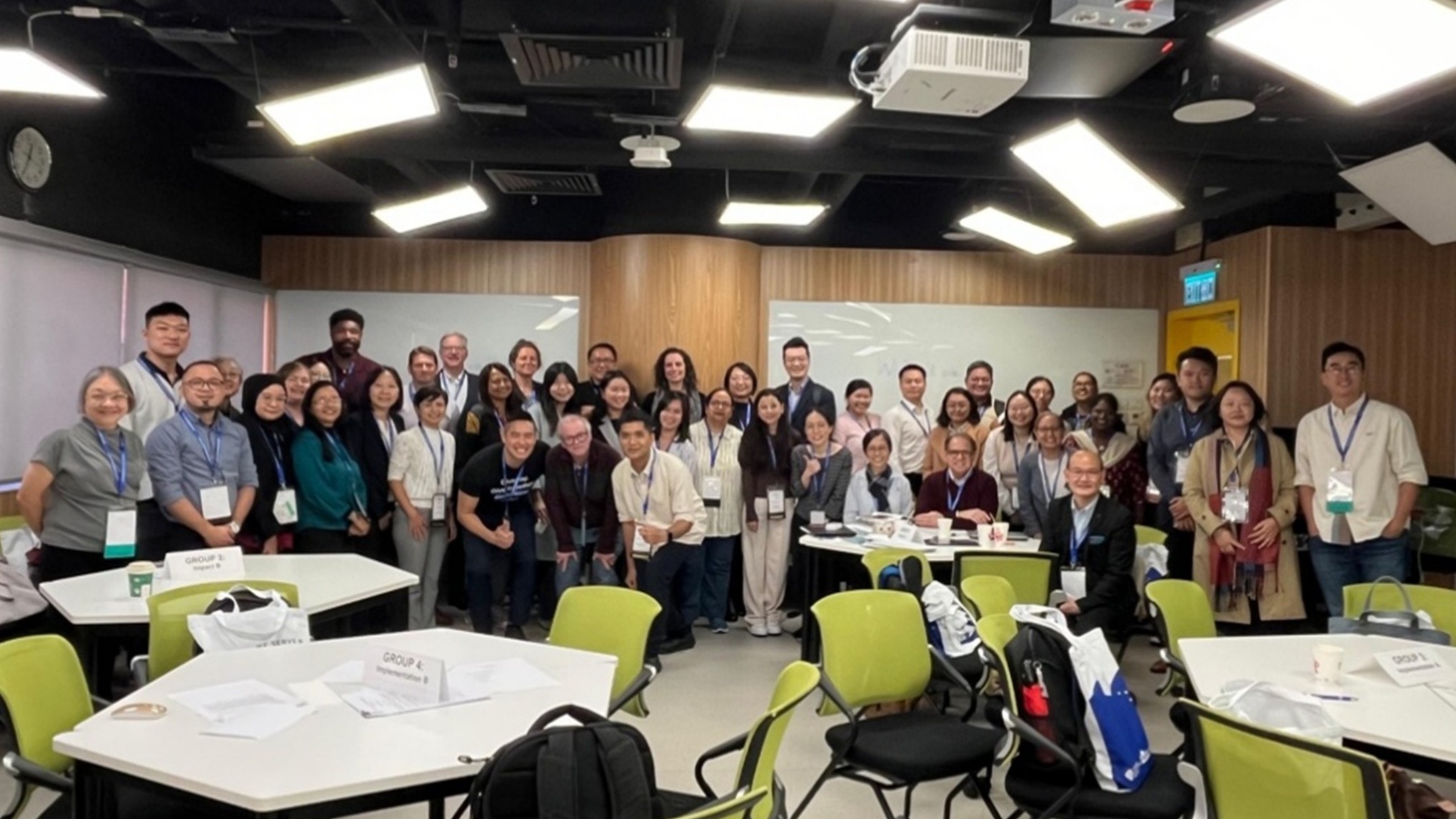
Furthermore, during data collection, given the limited research on service learning in Indonesia and the need to enhance international understanding, the researcher attended the 2024 IARSLCE Asian-Pacific Conference X International Conference on Service-Learning at Hong Kong Polytechnic University (PolyU) as both a presenter and participant in several workshops. This event represented a collaborative initiative among international associations dedicated to advancing service-learning research and promoting community engagement in the Asia Pacific region.

In addition, the workshop shown below was part of the preconference session at the international conference. During this event, the researcher gained new insights into service learning from several international experts in the field. These discussions helped broaden understanding of the philosophy, key elements, and objectives of service learning. They also facilitated comparative analysis of service learning across several countries, yielding new perspectives that have become a crucial part of service-learning research in Indonesian higher education.

The preconference workshop on Setting a Global Research Agenda for Service Learning at PolyU, Hong Kong.

Meaningful Experiences: Findings from Community Projects

Both the lecturer and students in this study reported that service learning, as an experiential approach, strengthens compulsory, community-service-based courses like KKN. Although KKN incorporates hands-on learning, service learning is seen as more structured and effective for integrating experiential learning in community service settings. This observation aligns with Tan and Soo (2020), who assert that academic experiential learning plays a key role in cultivating responsible citizenship. Therefore, service-learning programs are designed to deepen students’ understanding of theoretical concepts introduced in the classroom through practical application.

The findings of this study indicate that a defining characteristic of service learning is its emphasis on experiential learning, which integrates community-service activities with students’ prior classroom knowledge. This aligns with experiential learning theories advanced by several scholars. Dewey (1938) advocated for “learning by experience” and examined the broader role of academic institutions in community development. Kolb (1984) conceptualized experiential learning as a holistic process integrating observation, empowerment, reflection, experience, and action through behavioral development across diverse contexts.

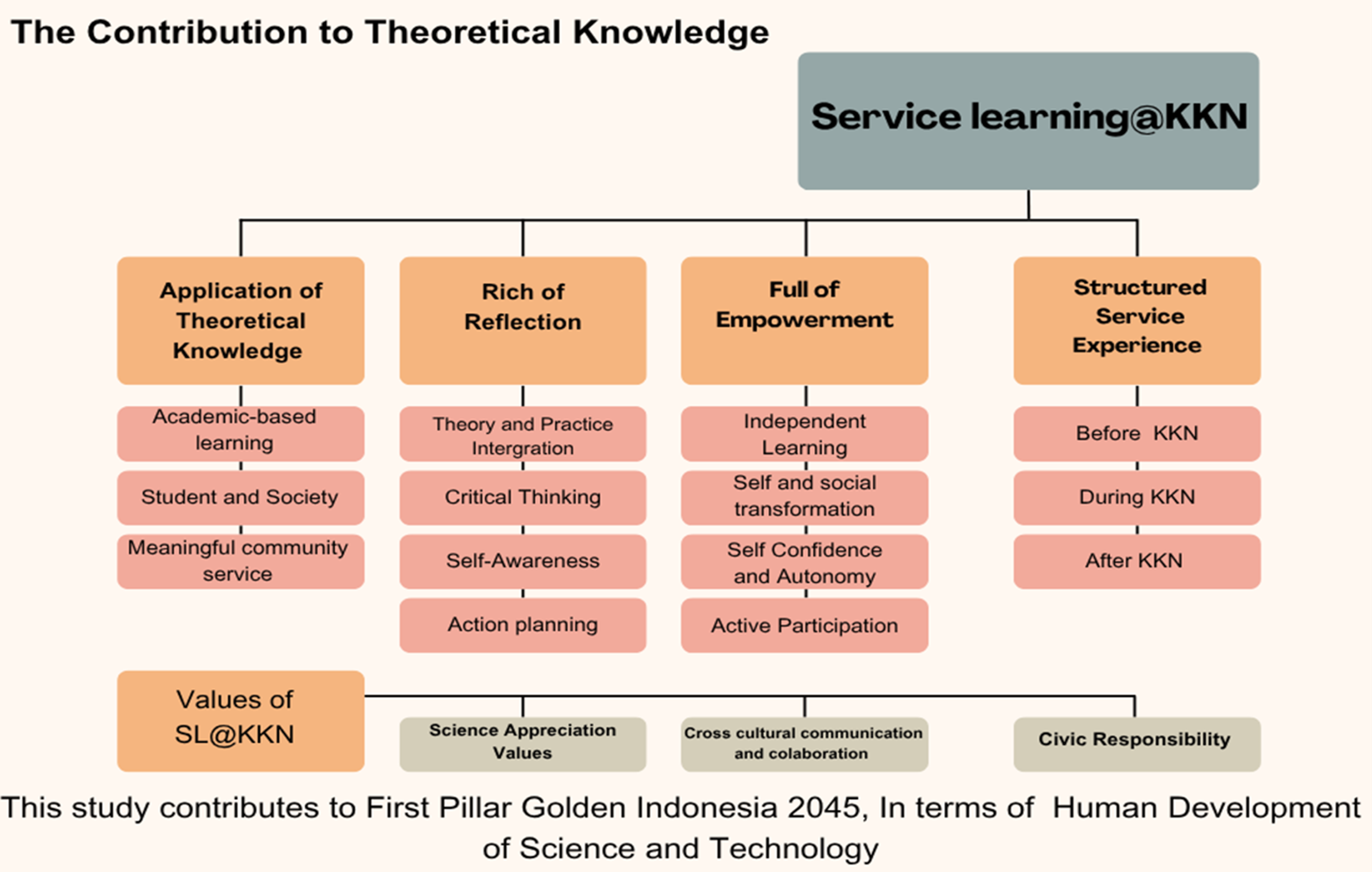
Kolb further defined experiential learning as a process of exploration and engagement that connects prior knowledge with new understanding, encouraging sharing, reflection, and cognitive processing. In the context of service learning in Indonesia (see figure below), learning is more effectively sustained through conceptual and process-oriented approaches, which sharpen critical thinking skills and enhance intrinsic motivation for discovery. Experiences that contribute positively to the learning process are considered valuable.

The characteristics of service learning in the KKN program begin with students identifying societal problems or issues they intend to address. Next, students engage directly and meaningfully with the community. In the third stage of experiential learning, they integrate their personal experiences with the theoretical knowledge acquired in the classroom. This process enables students to generate new knowledge by developing original ideas or concepts, which are then shared to address community challenges. In the final stage, students reflect on their societal experiences through critical and creative thinking. According to Hinchey (2004), students who reflect on their learning experiences become active learners, and those who engage in extensive reflection continue to expand their knowledge. Balakrishnan et al. (2022) noted that increased experiential engagement enhances students’ capacity for reflection, thereby facilitating the development and accumulation of knowledge, values, and skills.

Implications for Pedagogy and Policy

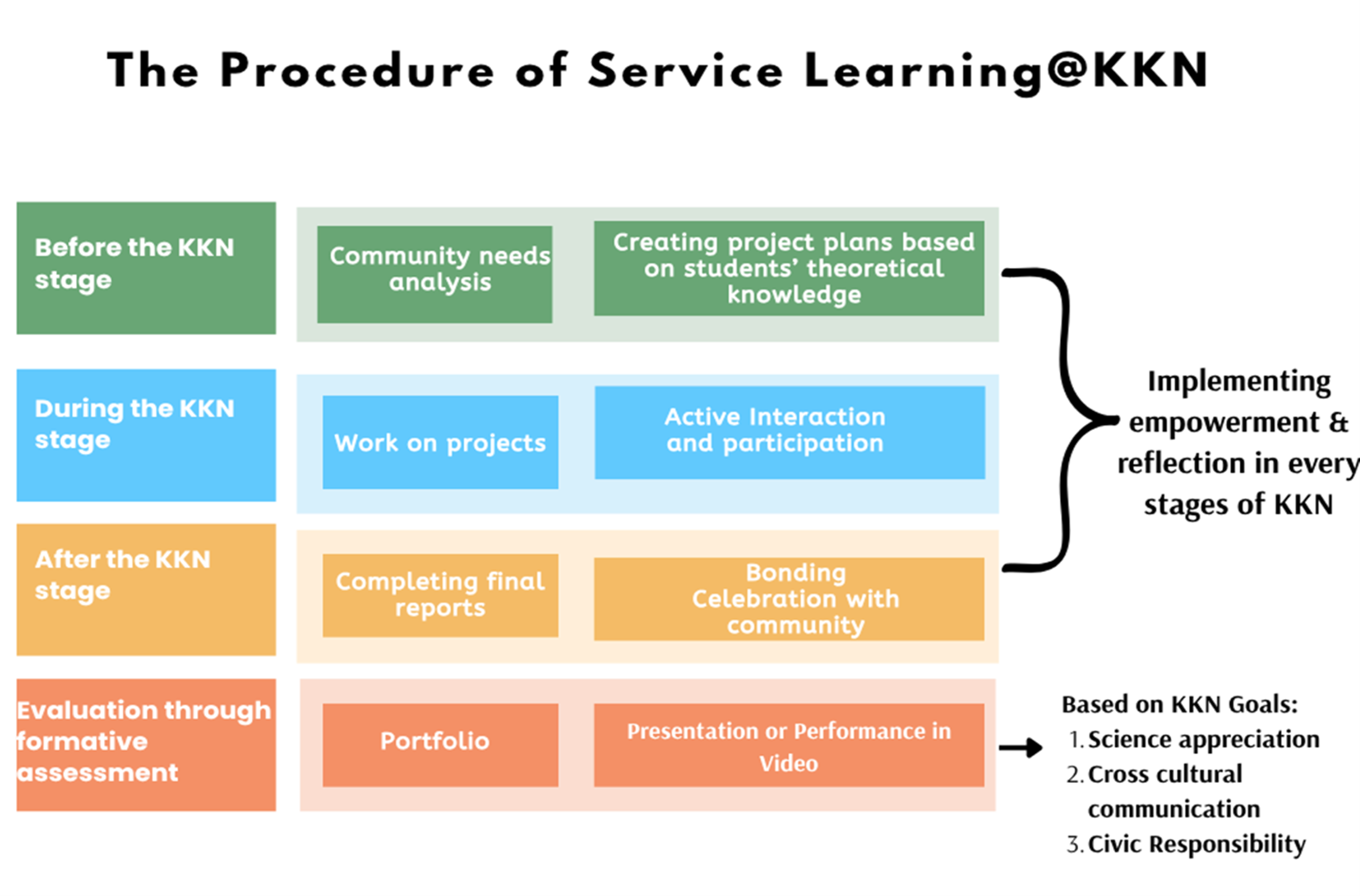
The findings of this study suggest procedures for improving KKN implementation in higher education, which could strengthen its role as a service-learning approach in Indonesia. Service learning encourages students to apply theoretical knowledge, values, and skills within real-world community contexts, thereby supporting and strengthening local communities. The figure below presents an overview of the study’s results and outlines a procedure for implementing service learning in Indonesia. This approach seeks to enhance KKN by transforming it into an innovative pedagogy that positively impacts both students and the community.

Service-learning pedagogy is essential because it provides a structured environment in which students can apply classroom knowledge to real community situations. Through direct engagement, students gain practical experience and insights. Their active participation encourages reflection and empowerment and enhances the learning process. By engaging in reflection, students reconstruct knowledge and deepen their understanding (Balakrishnan et al. 2022). In a multicultural society, such reflection plays a vital role in cultivating individuals who embody the core values of Pancasila—the five principles that form Indonesia’s foundational ideology—an attribute that will be critical for future graduates.

Therefore, it is crucial to recognize and integrate service learning into KKN programs. Specifically, these programs should incorporate hands-on community engagement, reflection activities, and collaborative problem-solving, consistent with the philosophy and principles of service learning. Findings from this study can provide a valuable reference for shaping educational policies in Indonesia. University rectors, deans, and lecturers can use these findings to help design policies that prioritize these elements. Such policies will elevate KKN to international standards of service learning.

Incorporating service learning into KKN programs will help produce graduates with strong academic qualifications who are well-prepared to contribute to a multicultural society. This effort matches the broader goal of transforming higher education and supports the realization of the first pillar of Golden Indonesia 2045: advancing human development and the progress of science and technology.

References

Balakrishnan, Vishalache, Yong Zulina Zubari, and Wendy Mei Tien Yee. 2022. Introduction to Service Learning in Malaysia. Kuala Lumpur: University of Malaya Press.

Dewey, John. 1938. Experience and Education. New York: Kappa Delta Pi.

Hidayat, Obby Taufik, and Vishalache Balakrishnan. 2024. “Service Learning in Higher Education Institution towards Character Education Curriculum: A Systematic Literature Review.” Jurnal Kurikulum & Pengajaran Asia Pasifik 12 (2): 9–21.

Hinchey, Patricia H. 2004. Becoming a Critical Educator: Defining a Classroom Identity, Designing a Critical Pedagogy. Counterpoints Education Series, vol. 224. Peter Lang.

Irfani, Sabit, Dwi Riyanti, Ricky Santoso Muharam, and Suharno. 2021. “Rand Design Generasi Emas 2045: Tantangan Dan Prospek Pendidikan Kewarganegaraan Untuk Kemajuan Indonesia.” Jurnal Penelitian Kebijakan Pendidikan 14 (2): 123–34. https://doi.org/10.24832/jpkp.v14i2.532.

Kolb, David. A. 1984. Experiential Learning: Experience as the Source of Learning and Development. Englewood Cliffs, NJ: Prentice Hall.

Salam, Maimoona, Dayang Nurfatimah Awang Iskandar, Dayang Hanani Abang Ibrahim, and Muhammad Shoaib Farooq. 2019. Service Learning in Higher Education: A Systematic Literature Review. Asia Pacific Education Review 20 (4): 573–93. https://doi.org/10.1007/s12564-019-09580-6.

Tan, Soo Yin and Shi Hui Joy Soo. 2020. “Service-Learning and the Development of Student Teachers in Singapore.” Asia Pacific Journal of Education 40 (2): 263–76. https://doi.org/10.1080/02188791.2019.1671809.

  • HOME
  • タグ : Public Policy

Ghana’s Renewable Energy Policies: Addressing Policy Implementation Challenges

October 24, 2025
By 30648

Ghana’s renewable energy ambitions highlight Africa’s clean energy paradox: technically sound policies coexist with persistent implementation barriers, writes Seth Owusu-Mante (Fletcher School of Law and Diplomacy, 2019), hindering progress toward energy security, sustainability, and inclusive growth.

*     *     *

Climate change has emerged as one of the most pressing threats to sustainable development, compelling governments worldwide to adopt ambitious policies to accelerate the global transition to clean energy.

In Africa, the stakes are especially high: as the region most vulnerable to climate impacts (IEA 2023a), African countries must adapt to intensifying climate risks and at the same time contribute meaningfully to global mitigation efforts, all against the backdrop of persistent socio-economic challenges.

Crucially for the continent, mitigating the climate crisis by leveraging its abundant renewable energy resources is not only a climate imperative but also a pathway to job creation (IEA 2023b; Hanna et. al. 2024), enhanced energy access (Fagbemi 2025; Alex-Oke et al. 2025), and inclusive economic growth for millions currently without electricity (GIZ 2024; Alex-Oke et al.).

Ghana’s experience encapsulates both the promise and the pitfalls of Africa’s clean energy transition. Over the past decade, the country has developed one of the most comprehensive renewable energy policy frameworks on the continent, guided by policies and legislation, such as the Renewable Energy Act, 2011 (Act 832), the Renewable Energy (Amendment) Act, 2022 (Act 1045) , the Renewable Energy Master Plan (2019), and the National Energy Transition Framework (2022). These were designed to diversify the national energy mix, enhance energy security, expand energy access, and align the country with global energy and decarbonization targets under the Paris Agreement.

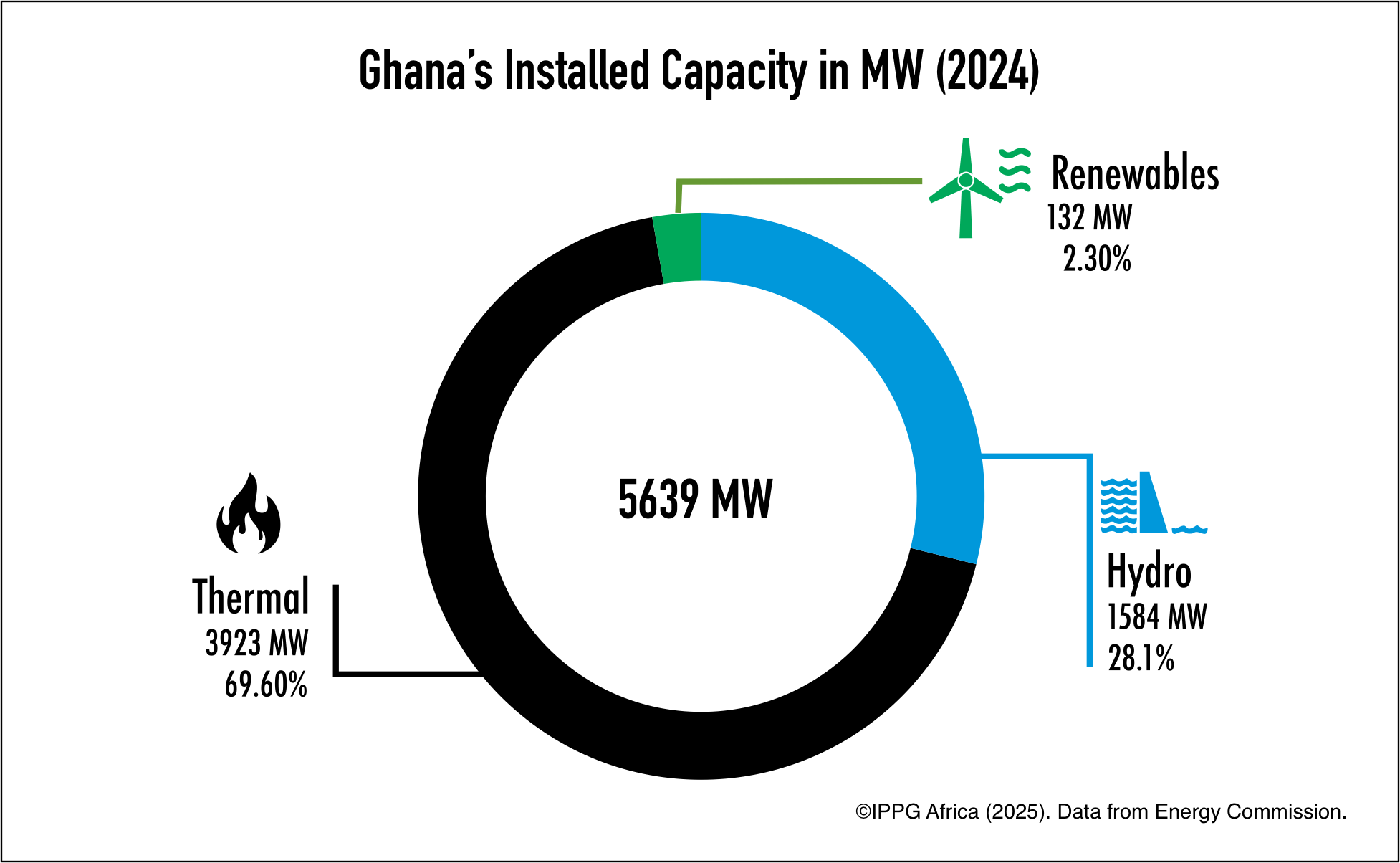
However, despite the technical soundness of these policies, Ghana’s renewable energy deployment remains far below expectations. As of 2025, only 132 MW of non-hydro renewables have been installed, representing just 2.3% of national capacity (see figure below), compared to the 1,363 MW target set for 2030 by the Renewable Energy Master Plan (2019). This stark gap between ambition and reality provided the central motivation for my research.

Source: International Perspective for Policy Governance (IPPG Africa 2025).

Sound Policy Design

The study set out to investigate both policy and implementation gaps within Ghana’s renewable energy sector and to assess their implications for energy access, reliability, security, and climate goals. To accomplish this, a mixed-methods approach was employed.

First, a documentary review examined Ghana’s major renewable energy frameworks, situating them within the broader African and global policy context. Second, a survey of energy experts was conducted, and the results were further investigated through interviews with policymakers, regulators, government officials from the Ministry of Energy and Green Transition, Bui Power Authority, Volta River Authority, Electricity Company of Ghana, as well as project developers, academics, civil society experts, and community representatives. This combination of qualitative and quantitative data enabled a robust assessment of the perceived effectiveness of existing policies, the most critical barriers to their success, and the lived realities of government officials tasked with implementation.

The findings reveal that Ghana’s policy frameworks are widely regarded as comprehensive and well-structured. Stakeholders highlighted the Renewable Energy Master Plan and the National Energy Transition Framework as the most effective policy initiatives, indicating the country’s capacity to adopt technically sound strategies.

Yet, the findings also demonstrate that the country’s sound policy design is undermined by persistent policy gaps. Chief among these is the absence of adequate policy instruments, such as tax credits, subsidies, and other financial incentive policies, that could attract private investments to make renewables competitive with conventional sources.

Respondents also pointed to weak integration of renewable energy into broader national energy planning, the absence of systematic policy review mechanisms, and the lack of policy provisions in emerging areas such as storage and battery utilization. Collectively, these omissions have created a fragmented policy environment that fails to adapt to technological changes and evolving market dynamics.

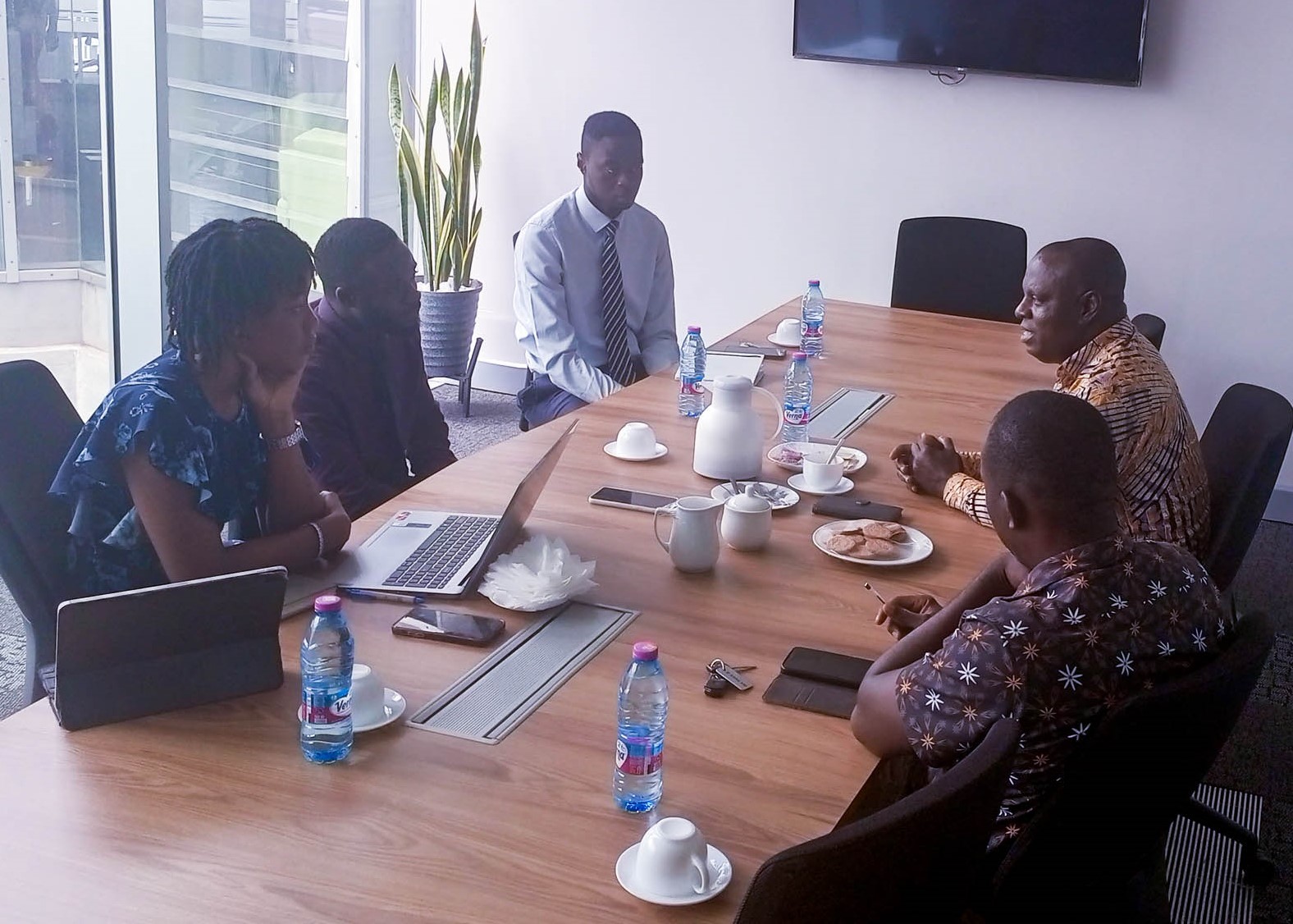
A group photo following an interview with Director of Renewable Energy Ing. Peter Acheampong of Bui Power Authority, second from left, flanked by project field supervisor Eric Agyemang, far left, and research assistants Nii Ayikwei Quaye, far right, and Emmanuella Biney.

Barriers to Implementation and Institutional Challenges

The study also uncovered a set of equally significant implementation gaps. The most frequently cited implementation barrier was limited access to financing mechanisms, with nearly 90% of the survey respondents emphasizing the inability of developers to secure long-term, affordable finance. Local banks view renewable projects as high-risk ventures, and the absence of government guarantees or innovative financing instruments further limits investment. Political interference and inconsistent leadership also emerged as recurring themes, with stakeholders noting how renewable energy initiatives are often tied to particular administrations and lose momentum when political priorities shift. Weak regulatory enforcement compounded these challenges, as institutions tasked with oversight often lack the capacity or authority to ensure compliance and accountability. Together, these implementation gaps erode investor confidence and slow down the deployment of projects that could otherwise contribute meaningfully to Ghana’s energy transition.

The consequences of these gaps extend well beyond missed megawatts. They jeopardize Ghana’s energy security by leaving the country over-reliant on hydropower, which is vulnerable to seasonal fluctuations, and on imported fossil fuels, which expose the economy to volatile international markets, resulting in the country’s over $3 billion energy sector debt. They also threaten Ghana’s ability to meet its nationally determined contributions (NDC), which include reducing greenhouse gas emissions by 64 MtCO₂e by 2030.

Moreover, the lack of progress undermines opportunities for job creation, industrial development, and equitable access to modern energy services. Although Ghana has one of the highest electricity access rates in Sub-Saharan Africa at nearly 90%, the persistence of implementation failures means that energy remains unreliable, expensive, and insufficiently sustainable.

This research carries important implications for both academic scholarship and societal practice. For scholars, it contributes to the growing body of literature on renewable energy transitions by clearly distinguishing between gaps in policy design and failures in policy implementation. Previous research has often emphasized technical potential or legislative frameworks without interrogating why outcomes remain consistently underwhelming. Through the integration of empirical evidence from surveys and interviews with government officials, policymakers, and other key energy experts, this study offers a more nuanced understanding of the institutional, financial, and political dynamics that constrain energy transitions in developing country contexts.

Project RAs Emmanuella Biney and Nii Ayikwei Quaye with their field supervisor Eric Agyemang, left, interviewing Manager for Renewable Energy Edward Ochire and Assistant Electrical Engineer Osborn Amoh of the Electricity Company of Ghana Limited, right.

For society, the findings highlight the urgent need to shift the focus from policy formulation to effective implementation by government officials. Addressing financing barriers is paramount. Instruments such as sovereign guarantees, green bonds, and put-call option agreements could reduce investor risk and unlock private capital for renewable projects. Strengthening regulatory institutions, enhancing inter-agency coordination, and insulating energy policy from partisan politics are equally critical steps. A more transparent and participatory approach, including periodic policy reviews and stronger community engagement, would ensure that renewable energy strategies remain responsive to technological changes and societal needs. Without these measures, Ghana risks perpetuating a cycle of ambitious targets and underwhelming results.

Lessons and Implications for Ghana and Beyond

In sum, this study demonstrates that Ghana’s renewable energy transition is not merely a technical project but a deeply institutional and political endeavor. The country possesses abundant renewable resources, proven policy ambition, and a demonstrated ability to execute large-scale energy programs, as shown by its electrification achievements.

What remains lacking is the translation of policies into bankable projects, enforceable regulations, and resilient institutions. Bridging this gap will not only strengthen Ghana’s energy security and economic resilience but will also position the country as a continental leader in renewable energy.

The lessons from Ghana resonate beyond its borders, offering insights for other African nations grappling with similar challenges. Moving decisively to address policy and implementation gaps would allow Ghana to transform its renewable energy sector from a story of missed opportunities into one of genuine leadership in sustainable development and inspiration for other African countries.

References

Alex-Oke, Temidayo, Olusola Bamisile, Dongsheng Cai, Humphrey Adun, Chiagoziem Chima Ukwuoma, Samaila Ado Tenebe, and Qi Huang. 2025. “Renewable energy market in Africa: Opportunities, progress, challenges, and future prospects.” Energy Strategy Reviews 59: 101700.

Deutsche Gesellschaft für Internationale Zusammenarbeit (GIZ). 2024. The Renewable Energy Transition in Africa: Powering Access, Resilience and Prosperity. https://www.giz.de/en/downloads/Study_Renewable%20Energy%20Transition%20Africa-EN.pdf.

Fagbemi, Bomi. 2025. “Africa’s Green Energy Transition.” The Africa Center, May 29. https://theafricacenter.org/news/detail/Africa-s-Green-Energy-Transition.

Hanna, Richard, Philip Heptonstall, and Robert Gross. 2024. “Job creation in a low carbon transition to renewables and energy efficiency: a review of international evidence.” Sustainability Science 19, no. 1: 125–50.

International Energy Agency (IEA). 2023a. Africa Energy Outlook 2022: Special Report. Revised version, May 2023. Paris: IEA. https://iea.blob.core.windows.net/assets/220b2862-33a6-47bd-81e9-00e586f4d384/AfricaEnergyOutlook2022.pdf.

International Energy Agency. 2023b. World Energy Employment 2023. Paris: IEA. https://iea.blob.core.windows.net/assets/8934984a-0d66-444f-a36f-641a4a3ef7de/World_Energy_Employment_2023.pdf.

International Perspective for Policy & Governance (IPPG Africa). 2025. “The Case for Ghana’s Renewable Energy Transition: A Path to Sustainability and Economic Resilience.” (Authored by Seth Owusu-Mante.) April 25. https://www.ippgafrica.org/blog-post/the-case-for-ghanas-renewable-energy-transition-a-path-to-sustainability-and-economic-resilience/.

  • HOME
  • タグ : Public Policy

Building Digital Resilience in Indonesia’s Vulnerable Communities

September 8, 2025
By 32013

Digital threats like online lending and gambling are on the rise in Indonesia. An SLI-supported digital resilience project led by Obby Taufik Hidayat (Universiti Malaya, 2023) offers strategic solutions through education, community collaboration, and policy reform to protect vulnerable groups in West Java.

*     *     *

In today’s interconnected world, rapid advances in digital technology have revolutionized numerous aspects of our lives, including communication, commerce, education, and social interaction. However, this digital revolution also brings significant challenges, particularly in the form of digital threats, such as cybercrime, identity theft, digital fraud, and cyberbullying. These threats compromise the security and privacy of individuals, posing a significant risk to the stability and well-being of communities worldwide. Addressing these issues requires proactive and comprehensive strategies that empower individuals and communities to navigate the digital landscape safely and effectively.

The alarming increase in online lending in West Java is a pressing issue that underscores the importance of such strategies. By early 2024, total debt from online lending in the region had reached a worrying IDR 16 trillion. This significant financial burden indicates broader digital vulnerabilities faced by communities. Many individuals, particularly those with limited financial literacy, fall victim to predatory lending practices and digital fraud associated with online lending.

The ease of access to quick online loans, combined with a lack of understanding of terms and conditions, often leads to debt cycles and financial instability. Additionally, the digital nature of these transactions makes it easier for fraudulent actors to exploit unsuspecting borrowers, exacerbating the problem further.

The Building Digital Resilience program that I initiated is aimed at addressing these challenges by providing communities with the knowledge, skills, and resources necessary to combat digital threats. This initiative aligns with the Sylff goal of identifying and nurturing leaders who can transcend differences in nationality, language, ethnicity, religion, and political systems.

By enhancing digital literacy and resilience, the program seeks to empower community members to safeguard themselves and others against digital threats, thereby fostering safer and more secure societies.

The primary objectives of the Building Digital Resilience program are to raise public awareness, foster digital literacy, promote safe online practices, enhance community collaboration, and empower vulnerable groups.

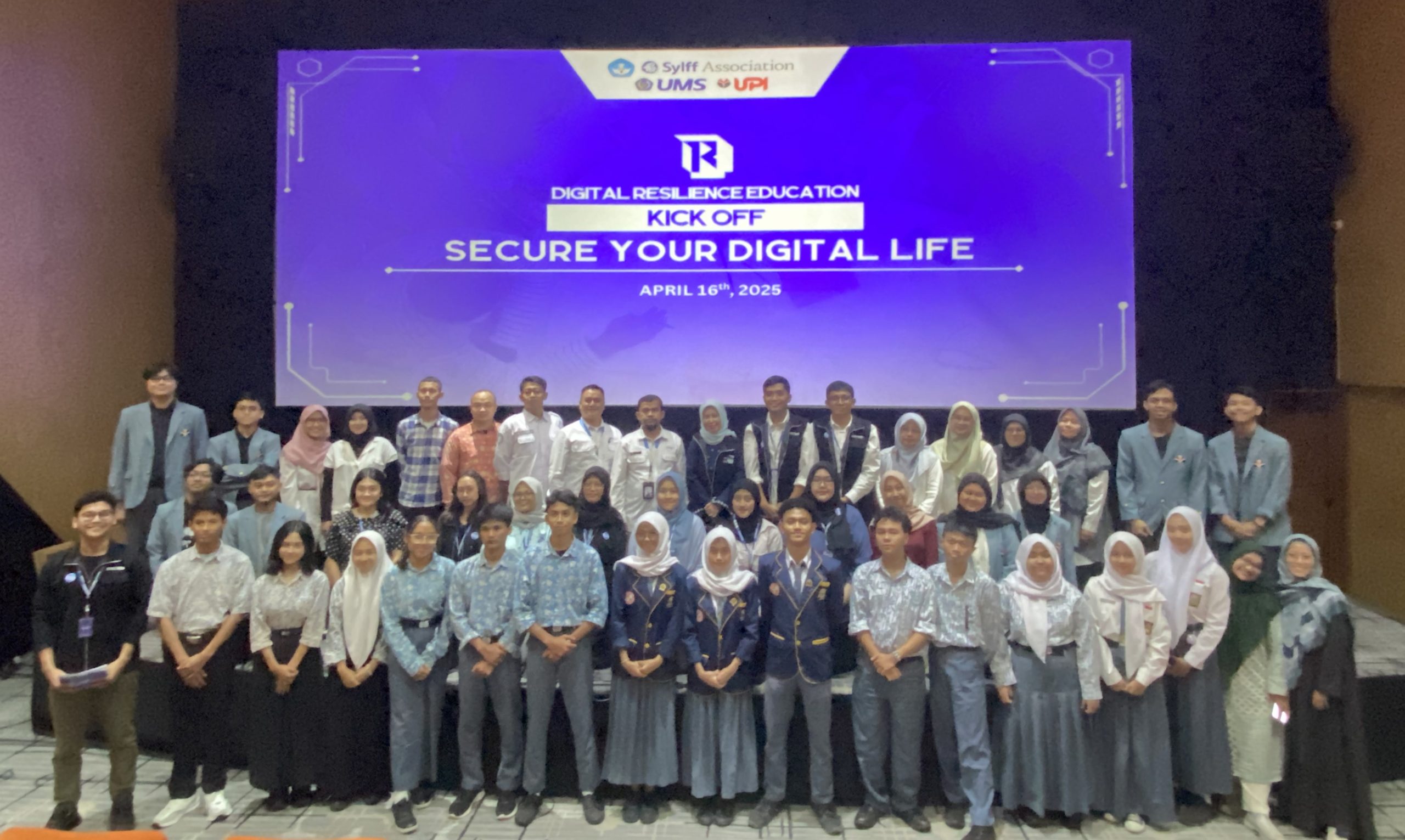
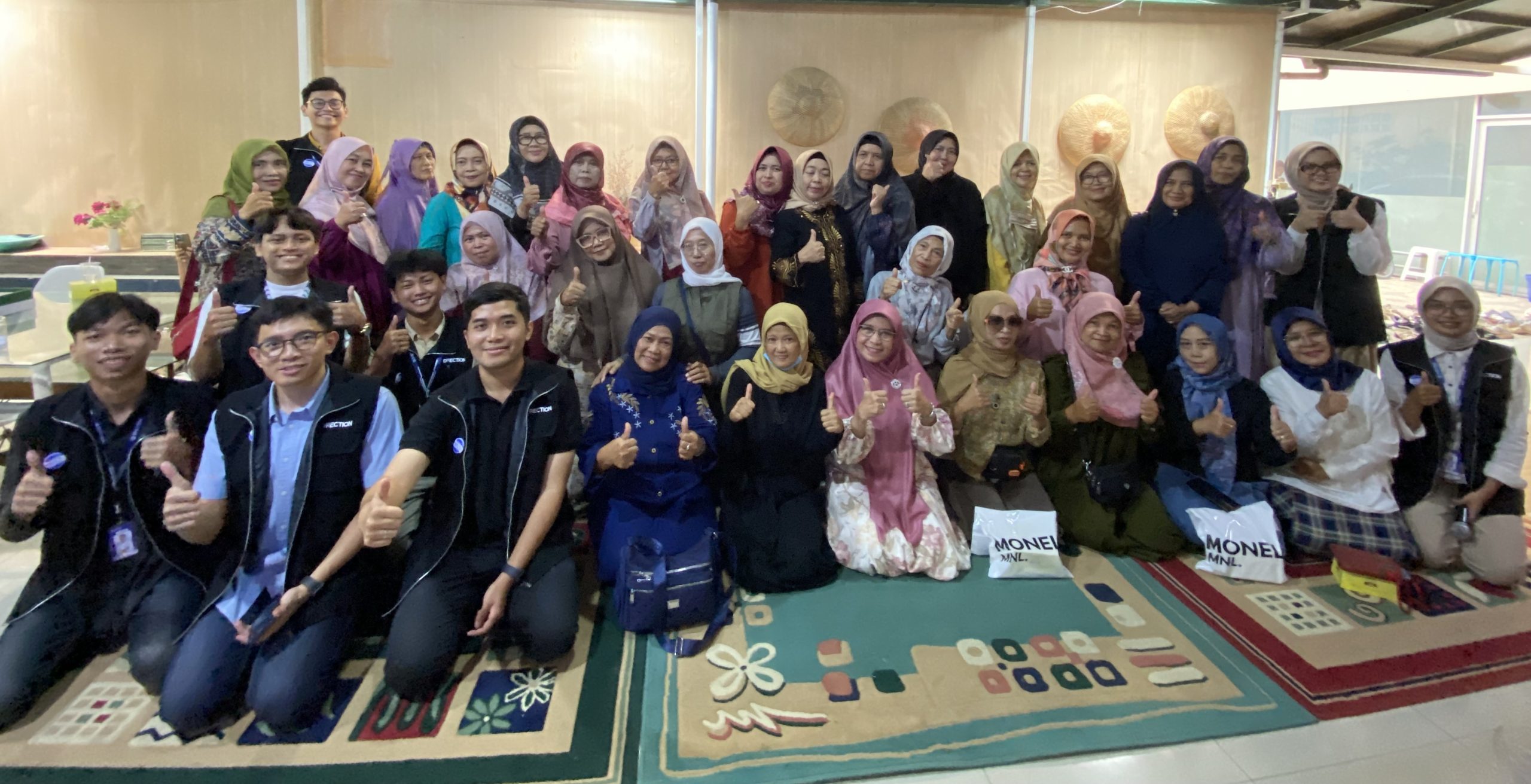
The official launch of the SLI project was held at Bandung Creative Hub and was attended by a diverse group of teachers and students.

Specifically, the program conducts workshops to raise awareness about digital threats, develops online resources to provide ongoing digital literacy education, and runs campaigns to encourage safe online behavior. Additionally, partnerships are being established with local schools, community centers, and nonprofit organizations to broaden the program’s reach and impact.

Digital Portrait of Indonesia: Findings from Various Social Strata

This project was launched at a Kick-Off event in Bandung, followed by educational visits to elementary schools, junior high schools, senior high schools, and community centers. At the high school level, activities were conducted at five schools in the Bandung metropolitan area and one in Bogor Regency.

During these school visits, students demonstrated varying levels of engagement and understanding in response to the activities. Those from densely populated areas with lower-middle-income backgrounds tended to be more passive. According to one teacher, this may be due to economic hardships and challenging family circumstances.

Conversely, students from upper-middle-income environments responded enthusiastically and demonstrated a range of cognitive engagement, actively asking questions and adopting a critical attitude, as evidenced by the exceptionally lively responses during the gamification session.

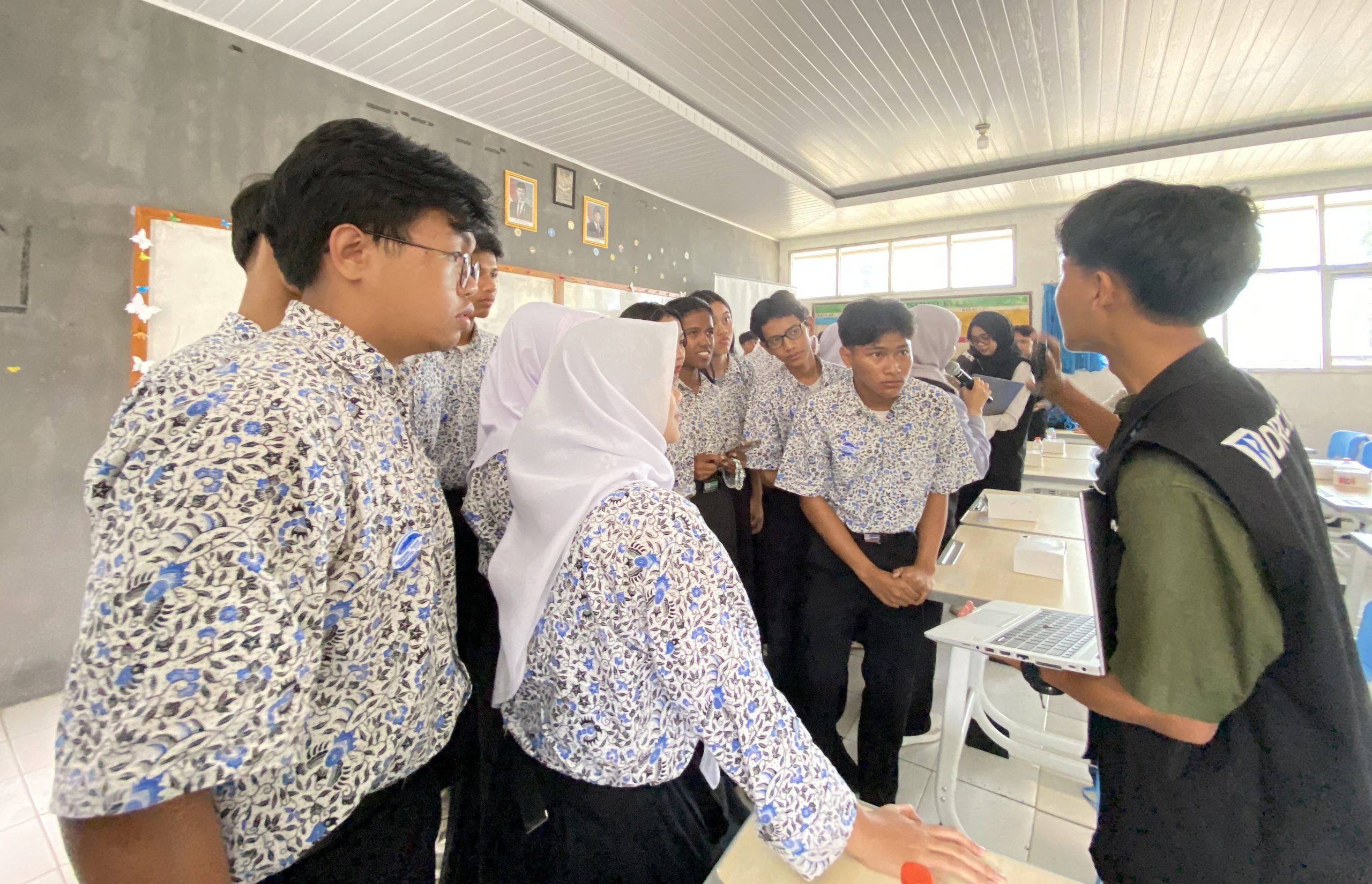
An interactive gamification activity at a senior high school.

Teachers at a senior high school in Bogor Regency showed high interest in this project, as evidenced by their invitation to collaborate on the school’s podcast. This indicates that many teachers are also grappling with digital issues and recognize the need to enhance their digital literacy. The differences observed among schools highlight the impact of socioeconomic disparities on digital resilience, suggesting the importance of tailoring interventions to specific individual and community contexts.

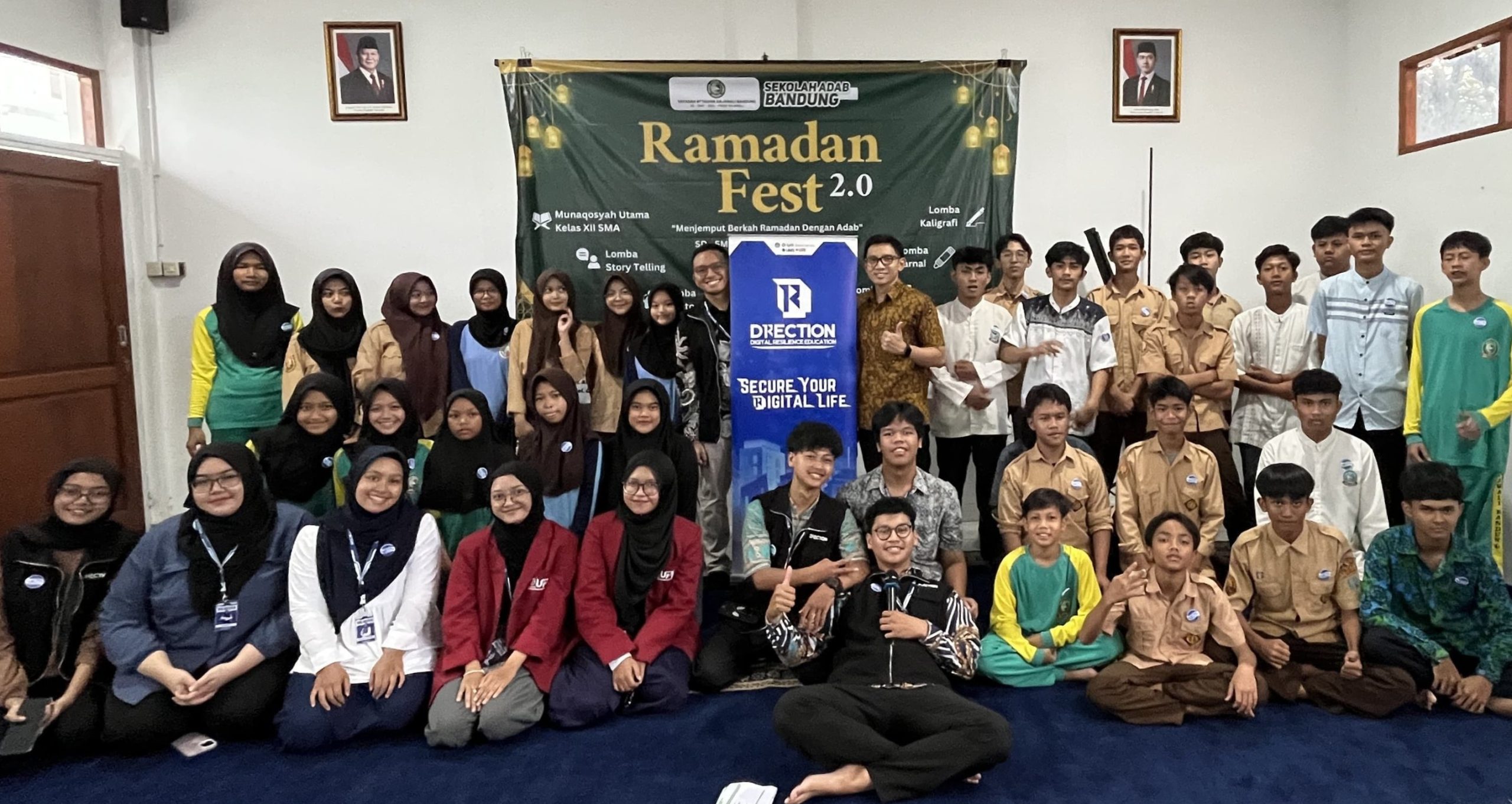
Group photo at a junior high school following a series of engaging activities.

At the junior high and elementary school levels, the activities proved to be quite energy intensive. Participants at junior high schools, particularly those affiliated with Islamic boarding schools, were observed to be passive and lacked adequate digital literacy, despite the inclusion of computer science in the curriculum. This highlights the gap between formal education and practical digital literacy skills.

In the elementary schools visited, which were often located near marginalized residential areas, most activities were filled by fifth-grade students. Despite some students having limited reading and writing skills, many were actively engaged with the digital world, though often in ways considered inappropriate, with reports of some accessing harmful content, such as online gambling sites.

Pre-activity bonding interactions with students at a primary school.

According to one teacher, this behavior is influenced by the family environment, with many students imitating family members who engage in online gambling. One concerning finding was that nearly 80% of the elementary school students in these areas come from divorced families, which results in limited digital supervision at home. A low understanding of digital dangers makes children more vulnerable, and family instability further creates a void in parental supervision.

In one densely populated village in Bandung, residents were found to be actively involved in online gambling and quick loan schemes. A neighborhood association leader expressed serious concern about the illegal collection of funds, suggesting that these digital activities may be fostering corruption—or perhaps are themselves driven by corrupt practices. This finding highlights the intricate link between digital financial risks, socioeconomic status, and unlawful activities, including corruption.

Group photo with local community members in a densely populated area of Bandung Regency.

International Dissemination of the SLI Project

Another important aspect of the SLI project was the dissemination of its outcomes by the fellow at the 13th European Conference on Education, organized by the International Academic Forum (IAFOR), held in July 2025 at University College London, United Kingdom. The fellow received valuable feedback through knowledge exchange with academics from various countries, which contributed to achieving the objectives of the SLI project: enhancing digital literacy and cybersecurity awareness.

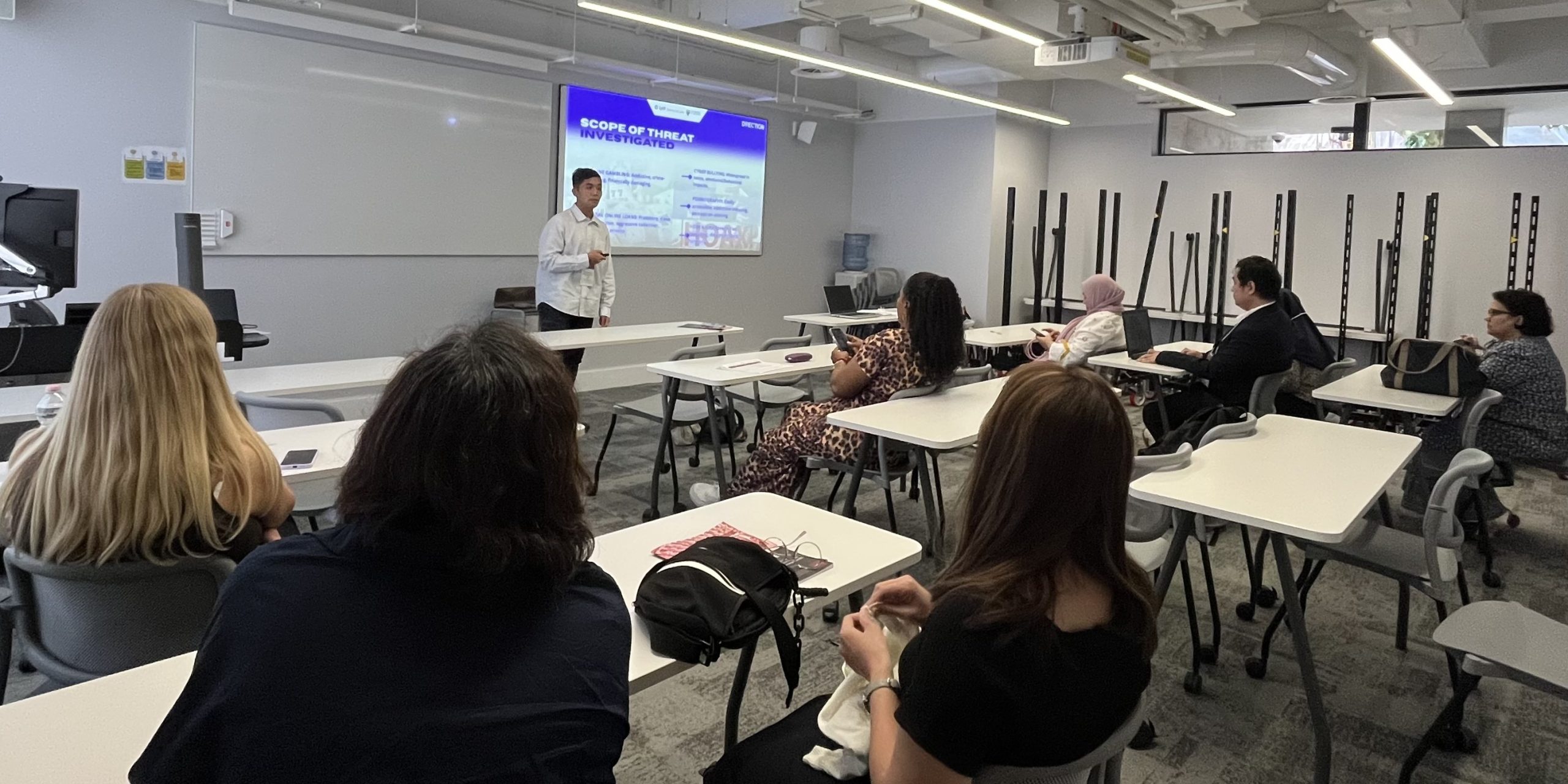
Presenting the results of the Building Digital Resilience project at IAFOR 2025.

Ronald William, a PhD student from Japan, provided insights into online gambling and other cybercrimes, saying that in Japan, the focus is not on eliminating gambling in general but on educating children from a young age to develop moral character and ethical self-awareness. He also noted that Japan has stringent financial transaction rules. Both domestic and international bank transfers, for example, require detailed and precise information. As a result, digital financial transactions in the country are well-protected.

Scholars from Italy shared their expertise in digital literacy education and cybersecurity awareness through project-based learning. According to them, this approach effectively enables students to apply the theories they have learned in the classroom in real-world settings, resulting in numerous insights that bridge theoretical knowledge with practical experience. This reflective process fosters the development of new knowledge that benefits both students and the community, enhancing digital literacy and cybersecurity awareness.

There was also significant input from Puan Siti, a scholar from Sabah, Malaysia. She noted that strict government regulations in Malaysia, such as those aligned with Islamic prohibitions against online gambling, encourage widespread community compliance. For example, ethnic Malays who are Muslim tend to fully adhere to these rules without the need for additional persuasion. As a result, access to online gambling is limited among the Malaysian public, especially those who are Muslim, who are also guided by strong religious principles.

Many other suggestions were made at the UK conference that may prove valuable for policymakers in Indonesia in addressing online crimes. These recommendations are summarized in the section below.

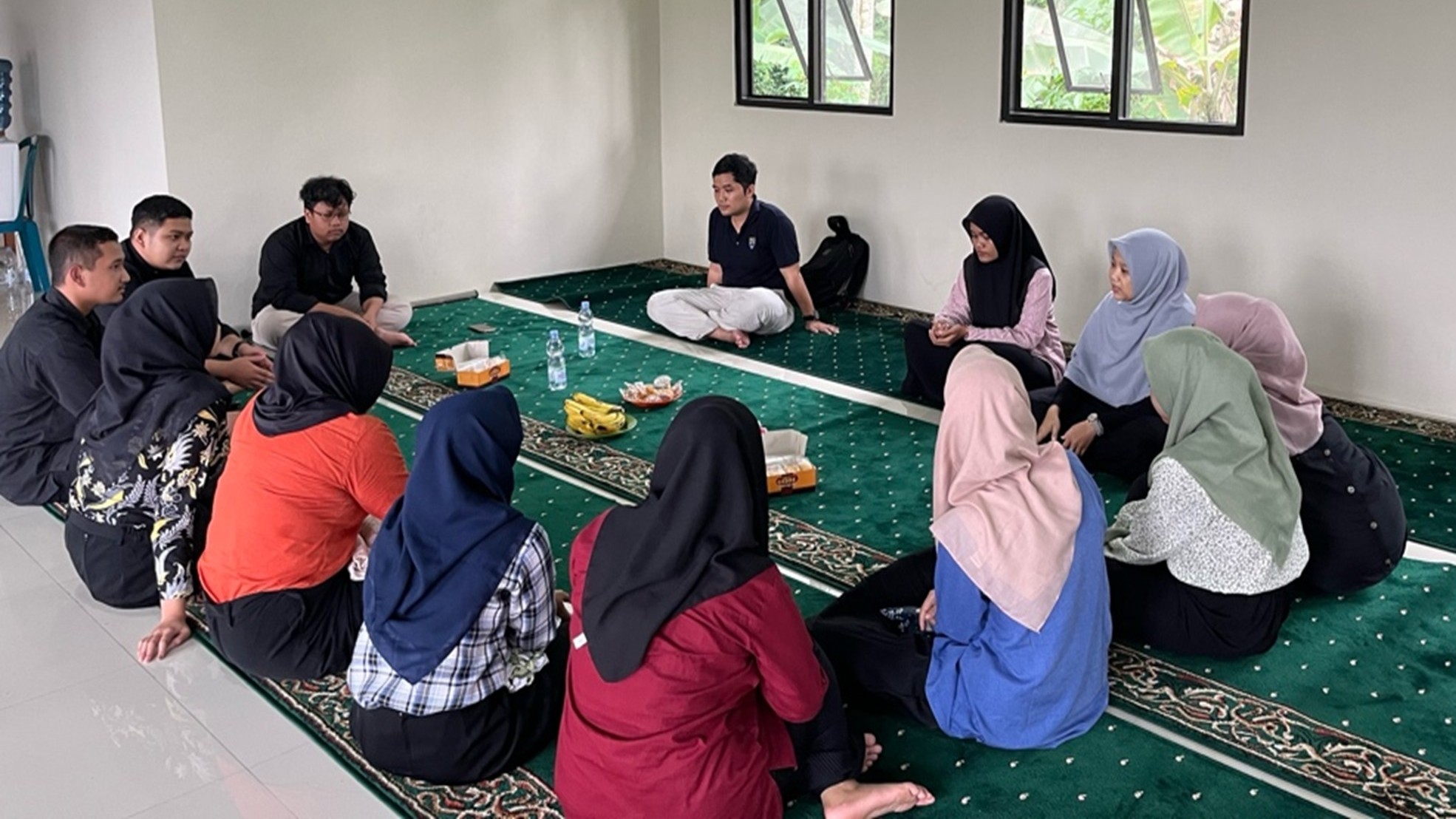
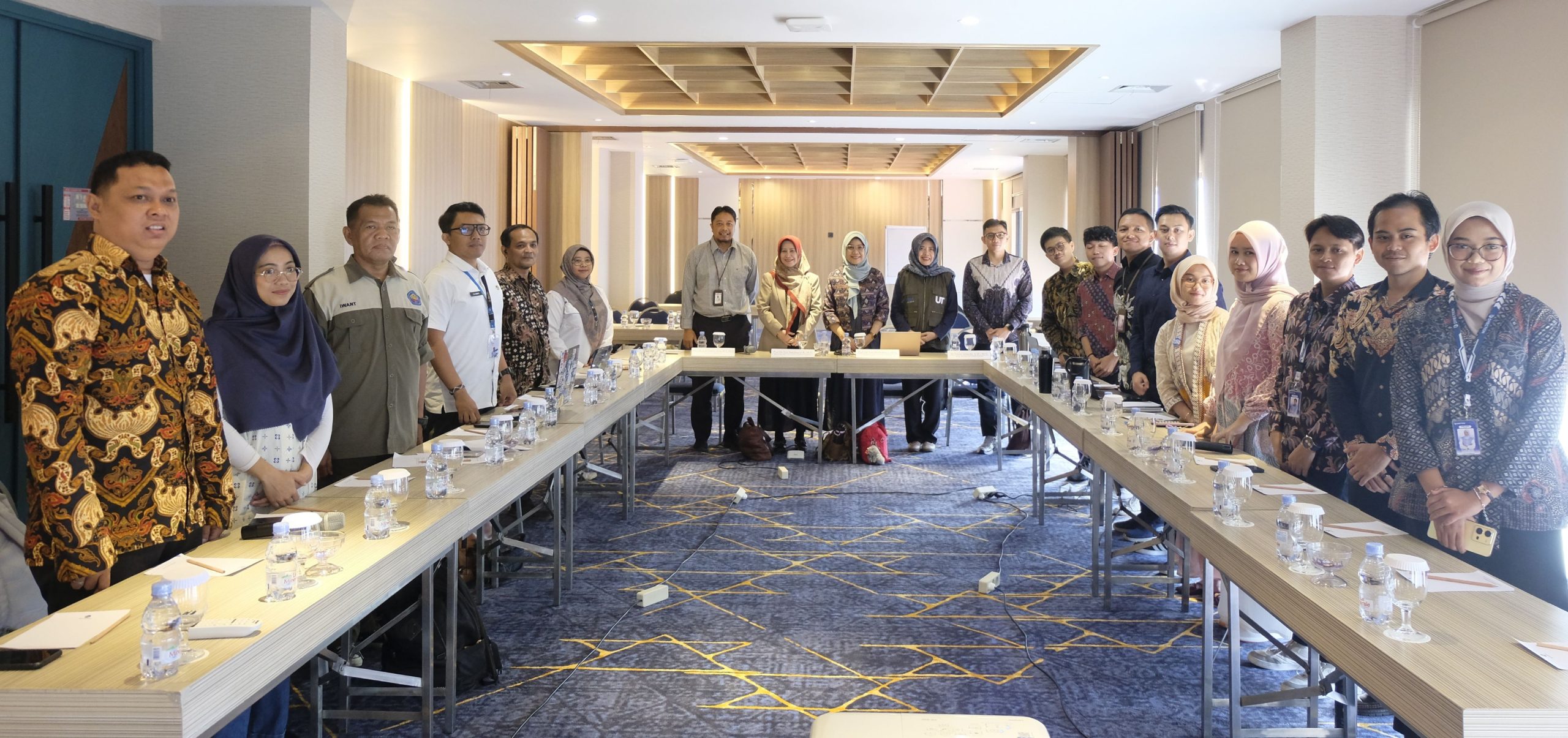
The Focus Group Discussion and Digital Resilience Workshop examined the information gathered during the school visits and explored opportunities for continued development.

The Focus Group Discussion and Digital Resilience Workshop examined the information gathered during the school visits and explored opportunities for continued development.

The results of this SLI project show profound policy implications for building digital resilience in Indonesia. Digital social deviance, such as online gambling addiction, is a growing issue that affects individuals across various socioeconomic backgrounds. While low-income groups are often targeted with promises of instant wealth, those from middle- and upper-income backgrounds may also engage in risky digital behaviors due to easy access to technology, limited digital literacy, peer and family influence, and such psychological needs as stress relief.

In schools, teachers and administrators play a crucial role in addressing digital deviance. However, many lack the necessary capacity, training, and policy support to effectively prevent or respond to these challenges.

Existing curricula, especially at the junior high school level, do not explicitly incorporate digital literacy, leaving schools to rely on informal programs, such as extracurricular activities or project-based learning. The heavy administrative burden on teachers further limits their ability to take on additional responsibilities related to digital risk prevention.

A multi-sectoral strategy is essential for building digital resilience. The pentahelix model, which brings together government, schools, families, communities, and academia, provides a framework for shared responsibility and collaboration. Parents need to be equipped with digital parenting skills, schools must integrate digital literacy into formal education, and governments are responsible for creating policies, providing resources, and establishing reporting mechanisms to combat harmful content. Community environments should also foster positive digital behavior through collective norms.

The Digital Resilience Education (DRE) module offers a structured approach to improving students’ ability to navigate the digital world safely. However, its implementation must be adapted to different educational levels, local cultures, and student needs. In primary schools, the focus may be on raising awareness, while at higher levels, the emphasis should shift toward developing critical thinking and digital self-control. Using Indonesia’s many local languages may enhance the relatability of messaging in specific regions. Nevertheless, external challenges persist, particularly family norms and peer influences that normalize deviant behavior.

The findings of the SLI project on Building Digital Resilience in West Java highlight the urgent need for a comprehensive strategy to address digital threats and promote digital literacy, especially among young people. Tackling socioeconomic disparities and integrating digital education into the school curriculum will be essential for creating a safer digital landscape. By adopting international best practices and fostering cooperation among educators, policymakers, and communities, Indonesia can build a more resilient digital society that protects vulnerable groups and promotes responsible, ethical online behavior.

  • HOME
  • タグ : Public Policy

Toward More Meaningful Inclusion of Indigenous Traditions in Nepal’s Climate Resilience Efforts

August 15, 2025
By 21457

An SLI forum organized by Shangrila Joshi (University of Oregon, 2008) in May 2025 explored how Nepal’s Machchhindra Nath Jatra exemplifies Indigenous climate resilience and how traditional governance can inform inclusive, sustainable policy in the face of growing environmental challenges.

*     *     *

That Indigenous Peoples’ rights, knowledge, and concerns should be an important consideration in climate policy and action is today undisputed. Both the current global climate treaty, the Paris Agreement, and the most recent report by the Intergovernmental Panel on Climate Change (IPCC) emphasize this sentiment in no uncertain terms.

However, it is one thing to assert that something or someone is important. It is an entirely different matter to translate such assertions into meaningful action. To explore how such inclusion might be realized, I organized an SLI forum aimed at identifying meaningful ways to integrate Indigenous Peoples into climate action and policy.

Following a two-year ethnographic study, I am currently writing a book on the Machchhindra Nath Jatra held annually in Nepal. This is an ancient festival tradition practiced by the Newa people indigenous to the Kathmandu Valley that is believed to have been initiated in the seventh century CE in response to a 12-year drought. The jatra reflects a deep interconnection between Indigenous ways of knowing, being, and governing.

The festival is centered on the deity Machchhindra Nath—also known as Karunamaya, Avalokiteswor, and Bungdya—who is regarded as being responsible for bringing monsoon rains to the valley following the drought and is entrusted with protecting the valley’s residents from catastrophes. The contemporary Newa communities responsible for planning and executing the jatra continue to maintain a deep faith in the deity and the surrounding mythology.

The Machchhindra Nath chariot during the 2082 BS (2025 CE) procession through the streets of Patan.

More than a dozen social groups with expertise in different functions have niche roles to play in sustaining this important festival. I argue that an Indigenous Newa governance institution called the guthi is integral to the continuity of the work of these groups and therefore of this culturally and ecologically significant tradition. Guthi associations mobilize members of particular caste and clan groups to fulfill their ancestral duties. Historically, guthis were self-governing groups that invested surplus resources from agriculture to build the art and architecture of the Kathmandu Valley.

Not to be mistaken with the Newa guthi, the Guthi Sansthan is the state apparatus that controls appropriated traditional guthi lands and their financial surplus. It mobilizes some of these funds to sponsor the jatra and to minimally compensate hereditary guthi members for their labor.

Yanwa builders placing the ceremonial gwaro bamwo rattan disc, left, atop the Machchhindra Nath chariot, made from rattan and wood by Yanwa and Barahi builders, April 28, 2025. Yanwa builders putting the finishing touches on the decorated chariot, right, just before embarking on the annual procession, or Rath Jatra, May 1, 2025. Both photos by Shangrila Joshi.

Bringing Together Diverse Voices for Climate Adaptation

My SLI forum project, titled “The Significance of the Machchhindranath Jatra and the Newa Guthi for Climate Adaptation in Nepal,” drew the attention of Nepalese decision-makers on climate policy and action in government and nongovernment spaces to the relevance of this tradition as well as to the Indigenous Newa governance institution for contemporary climate adaptation and resilience. It created an opportunity for disparate groups working within their own spheres of influence to exchange knowledge, perspectives, and experience and to understand the relevance of one another’s contributions to Nepalese society and to global climate discourse.

During the planning phase of the SLI project, I met on numerous occasions with Indigenous community leaders and both government and nongovernment representatives. These preparatory sessions culminated in two half-day workshops and a full-day forum in May 2025, attended by over 150 participants, including Indigenous community leaders, experts from environmental agencies and cultural institutions, and government representatives.

The workshops featured discussions on the historical context and contemporary relevance of the festival tradition and the guthis for climate resilience and highlighted the important contributions made by the Yanwa, Barahi, Ghakku, Paneju, and other groups in sustaining this intangible heritage: the Yanwa and Barahi build the chariot from wood and rattan, the Ghakku guide the movement of the chariot’s wheels during the procession, and the Paneju perform worship and tantric rituals.

Also noteworthy were discussions about the unique challenges faced by members of the separate festival communities. Several participants emphasized the meeting’s historic significance for bringing together disparate groups in one venue and for recognizing both their contributions to society and the difficulties they face in sustaining their traditions and roles.

The day-long forum drew 61 participants, including key members of the various festival committees, expert representatives from the Ministry of Forests and Environment and the Ministry of Agriculture and Livestock Development, and representatives of nongovernmental organizations focused on Indigenous issues, such as the Center for Indigenous Peoples’ Research and Development (CIPRED) and the Nepal Federation of Indigenous Nationalities (NEFIN). Special guests included a former Kumari (living goddess of Patan) and cultural expert Hari Ram Joshi.

The program enabled the sharing of expertise among a diverse group of participants and fostered interactive discussions on key themes of environmental and cultural sustainability, Indigenous knowledge, and the integration of both in the context of climate policy and action.

Feted scholar of Nepalese culture and history Hari Ram Joshi, left, inaugurating the multi-stakeholder forum on May 24, 2025, with past Kumari Chanira Bajracharya, Sylff fellow Shangrila Joshi, chair of the Paneju Sangh Yagya Ratna Shakya, and Dependra Shakya looking on.

Toward Integrated Climate and Cultural Policy

The forum concluded with government and civil society representatives reiterating the importance of viewing Indigenous traditions such as the jatra through the Indigenous point of view and acknowledging the need to significantly strengthen the implementation of international agreements such as the Indigenous and Tribal Peoples Convention (ILO 169) and the United Nations Declaration on the Rights of Indigenous Peoples (UNDRIP), both of which Nepal has endorsed.

Meanwhile, Indigenous community leaders reaffirmed their commitment to continue their ancestral traditions even as, according to their accounts, doing so has become increasingly challenging, given dwindling resources available to dedicate to this festival in light of the encroachment on guthi lands.

The interactive discussion among forum participants led to substantive recommendations, including the need to invest in research and documentation of this culturally and ecologically significant tradition, as well as to initiate proposals for land reforms that would enable the Indigenous groups responsible for sustaining the tradition to sufficiently draw on traditional guthi lands to sponsor their duties pertaining to the tradition. The different guthi associations connected to the tradition revealed unique circumstances and challenges toward sustaining their community functions but were in agreement that Indigenous representation within the leadership ranks of the Guthi Sansthan was integral to long-term sustainability.

A panel discussion on the role and inclusion of Newa traditional ecological knowledge in climate adaptation and resilience, with panelists, left to right, Shangrila Joshi, Pasang Sherpa (CIPRED), Lakpa Dhokpya (NEFIN), cultural preservation activist Alok Tuladhar, intangible heritage expert Monalisa Maharjan, session chair Matina Joshi (joint secretary and spokesperson at the Ministry of Agriculture and Livestock Development), and session moderator Sindhu Dhungana (climate expert and past-joint secretary, Ministry of Forests and Environment).

These recommendations underscore the urgent need to bridge traditional knowledge systems with modern climate policy, ensuring that Indigenous voices are not only heard but actively shape Nepal’s climate future.


  • HOME
  • タグ : Public Policy

Data Deserts and Drowning Cities

July 7, 2025
By 21711

In a commentary originally published in Mongabay, Soumya Bhowmick (Jadavpur University, 2014, 2015) argues that India’s urban future is at a crossroads, as data deserts threaten sustainability, resilience, and natural capital in the country’s rapidly growing metropolises.

*     *     *

Flood-affected areas in Amreli, Gujarat, in June 2015. Image by Indian Air Force, licensed under Government Open Data License–India (GODL).

India’s cities are racing into the future, swelling in size, complexity, and ambition. By 2030, more than 40% of the country’s population, around 600 million people, will call urban areas home.

Cities in India are engines of growth and already contribute over 70% of India’s greenhouse gas (GHG) emissions. Yet, for all this growth, India’s urban policymakers are flying blind. They are grappling with the monumental task of building resilient, inclusive, and sustainable cities. Still, they lack a clear understanding of crucial aspects like where vulnerabilities are high, where the opportunities lie, and the costs of inaction.

This is the crux of India’s urban paradox: a future unfolding at breakneck speed, guided by data that is outdated, fragmented, and incomplete. It has a direct impact on common people.

For example, the Praja Foundation reveals that in Mumbai, slum residents receive 45 litres of water per capita per day (LPCD), significantly below the recommended 135 LPCD. Furthermore, the absence of localised weather monitoring stations in populous cities like Noida and Ghaziabad leads to delayed or insufficient weather alerts, exacerbating vulnerability to extreme weather events. Without a serious overhaul of how we collect and use information, India’s cities risk becoming unmanageable, vulnerable, and unsustainable.

Mapping the Blind Spots

The problem runs deeper than just a lack of numbers. India’s cities are built on data deserts. Many still rely on the 2011 Census to make decisions about housing, transport, pollution control and public health. That’s a decade-old snapshot in a country where millions have migrated, new megacities have sprawled and the climate crisis has escalated. Entire neighbourhoods have emerged and others have been densified beyond recognition. Yet planners are left guessing about the basics: how many people live in which area, what services they need, and what risks they face.

A slum area in Goa. India’s urban policymakers are working in the dark, with a severe lack of data on people as decisions are made regarding housing, transport, public health and more. Image by urbzoo via Wikimedia Commons (CC BY 2.0).

While a step forward, the NITI Aayog’s SDG Urban Index tracks only a narrow set of indicators, overlooking critical aspects such as climate resilience, social inclusion, and environmental quality. An assessment by the Janaagraha Centre of Citizenship and Democracy (2023) found that many Indian cities suffer from serious gaps in long-term urban climate planning.

This is not just an academic problem. A city that doesn’t know its climate risks or the state of its natural assets cannot prepare for the floods, heatwaves, and storms already battering India’s urban centres. Without these insights, cities remain blind to the real pressures on their systems: who is most vulnerable to floods, where air quality is worsening, or whether green spaces are shrinking. The lack of disaggregated, city-level data means urban policy becomes a guessing game, prone to misfires and blind spots. And it is not just about measuring more, but it’s about measuring smarter.

That’s where frameworks such as natural capital accounting and the Inclusive Wealth Framework present a new way forward. These frameworks look beyond narrow fixes for GDP or infrastructure counts and pose a deeper question: what creates a wealthy, liveable, and resilient city? They look beyond roads and buildings to the entire range of assets that support urban life, from clean air and green spaces to wetlands, tree canopies, education, and access to healthcare. According to the United Nations Environment Programme (2021), India has already begun to shift this dynamic by adopting a national statistical framework for natural capital accounting based on the System of Environmental-Economic Accounting (SEEA). The SEEA framework gives policymakers a way to put a real economic value on ecosystems. It helps in accounting for benefits that often go unnoticed, such as the carbon stored in urban forests, the protection wetlands offer against floods, and rivers’ role in recharging groundwater.

It is essential to shift our perspective, as disregarding natural systems comes at a significant cost. India’s history offers a lesson. Between 1990 and 2008, India’s per capita GDP increased by an impressive 120%. However, during the same period, its natural capital—comprising forests, clean water, clean air, and other natural assets—decreased from 31% in 1990 to 15% in 2014 (of the total capital stock of the nation in 1990). This stark statistic, noted in the U.N. Inclusive Wealth Report (2018), illustrates how conventional economic measures conceal perilous trade-offs: cities can appear prosperous on paper while silently degrading the systems that support life and human flourishing.

A survey on sanitation being conducted in Bengaluru. A lack of city-level data to understand climate risks and the state of natural capital imply that cities are ill-prepared for extreme weather events and remain blind to who is most vulnerable to them. Representative image by SuSanA Secretariat via Wikimedia Commons (CC BY 2.0).

Sustainable Development Goal (SDG) 11 calls for inclusive, safe, resilient, and sustainable cities. It is particularly important for the way India’s urban future is unfolding. However, progress remains uneven and fragmented.

A 2023 study notes that an estimated 18% of Indian cities exhibit low efficiency in converting environmental gains into socioeconomic improvements, while nearly 55% fall short of their respective state-level SDG benchmarks. Despite their scale and significance, many urban centres operate without the data required to assess whether they are becoming more equitable, improving air quality, or effectively mitigating climate risks. The lack of granular, locally relevant metrics and the weak integration of environmental concerns into urban development planning have created systemic blind spots, undermining India’s ability to localise the SDG agenda effectively.

An integrated information system that combines economic, social, and environmental data is essential for progressing towards sustainable development. In India’s context, this means breaking down silos between city departments, creating a unified urban wealth dashboard that tracks everything from green cover and air quality to literacy rates and public health.

The Urban Ecology Equation

When cities adopt such an integrated approach, they gain the ability to identify trade-offs and make informed decisions. A plan to pave over wetlands for a new real estate project might seem like a quick economic win. However, when the loss of flood protection, carbon sequestration, and biodiversity is factored in through natural capital accounting, it becomes clear that the project may erode the city’s long-term resilience. Conversely, investing in tree planting or restoring river floodplains can be recognised as adding wealth, not just environmental value, but also economic and social benefits, such as cooler temperatures, improved health, and reduced disaster risk.

A polluted river bank in Pune district. An integrated information system combining economic, social, and environmental data is essential for sustainable development. For example, investing in restoring river floodplains can be recognised for its economic and social benefits, such as cooler temperatures, improved health, and reduced disaster risk. Image by DesiBoy101 via Wikimedia Commons (CC BY-SA 4.0).

This shift also requires transforming how cities govern. Many municipal bodies in India are under­resourced and fragmented and cannot collect, analyse, and act on data. Yet some promising models are emerging. The Smart Cities Mission has piloted Integrated Command and Control Centres since 2017- 2018 that utilise real-time data to manage urban services, such as traffic and waste management. These centres hint at what’s possible, but they are not enough. India’s cities need a complete change in the governance ecosystem where data is not an afterthought but a core part of how decisions are made, budgets are allocated, and progress is tracked.

Imagine a future where every major Indian city has an inclusive wealth dashboard that is regularly updated and made public, where residents can see not just how many kilometres of road have been built but also whether air quality has improved, whether tree cover has increased, and whether children’s access to education has expanded. Such transparency would make cities more accountable to their residents and empower communities to demand better outcomes. It would also help local governments prioritise investments that build long-term wealth, such as public transport, green infrastructure, renewable energy, affordable housing, and inclusive public spaces. By valuing natural and human capital alongside traditional economic assets, cities can make more intelligent choices that protect people and the planet.

Ultimately, this is not just about data but what we value as a society. India’s cities are at a crossroads. India’s cities face a choice. One path offers quick economic returns, but it also carries risks that damage the natural systems and community networks that support urban life. The other path calls for a deeper and more balanced approach, where development decisions consider not just infrastructure and income but also green spaces, clean air, public health, and long-term well-being. It is a chance to build cities that thrive today without compromising the future.

(Soumya Bhowmick is a Fellow and Lead, World Economies and Sustainability at the Centre for New Economic Diplomacy, Observer Research Foundation (ORF). This article is based on his PhD research at the School of Management, BML Munjal University, supported by the SYLFF Research Grant (SRG) from the Tokyo Foundation, for which he was eligible as a former SYLFF Fellow at the master’s level at Jadavpur University. The grant enabled him to advance his work on the Inclusive Wealth Framework through consultations at the UNEP headquarters in Nairobi.)

Citation

Huge population, but no IMD station for coordination & updates in Noida–Ghaziabad. (2025, May 23). The Times of India. https://timesofindia.indiatimes.com/city/noida/huge-population-but-no-imd-station-for-coordination-updates-in-noida-ghaziabad/articleshow/121347852.cms.

Janaagraha Centre for Citizenship and Democracy. (2023, October). Annual Survey of Inclusive City Systems 2023 [title corrected from Analysis of Sustainable Inclusive City Systems 2023, as cited in the original article]. https://www.janaagraha.org/wp-content/uploads/2023/10/ASICS-2023.pdf.

Ministry of Housing and Urban Poverty Alleviation, Press Information Bureau. (2018, June 14). Integrated Command and Control Centre of Naya Raipur Smart City inaugurated by Prime Minister. Government of India.

  • HOME
  • タグ : Public Policy

Integrating Technology for Efficient Justice Delivery in South Africa

January 22, 2025
By 28866

Leon Poshai (University of the Western Cape, 2020) examines the challenges and benefits of digitalizing South Africas judicial system. The electronic submission of court documents would enhance efficiency, transparency, and access, but full adoption is being hindered by cybersecurity concerns and limited ICT skills among some users.

*     *     *

The aim of my SRG study was to analyze the challenges and prospects associated with the implementation of digitalization in South Africa’s justice delivery systems and to propose measures for addressing obstacles to the effective adoption of digital capabilities in the judicial sector. I conducted qualitative, exploratory research targeting participants in the litigation process from whom anecdotal data was collected through semi-structured interviews.

Efficient, transparent, and timely delivery of justice is a pivotal concern for the South African government (Ntengenyane and Masenya 2022). In interviews with study participants, I learned that the government of South Africa has moved swiftly to revamp the justice delivery system by transforming it from analog to digital through the adoption of an online digital case management system called CaseLines (formerly known as Court Online).

©simpson33 / Getty Images

The system was introduced by the Gauteng Local Division of the High Court in January 2020 to enable litigants to file and upload documents electronically during court proceedings. This has ushered in opportunities to digitalize court proceedings and create pathways for expedient and transparent justice delivery in South Africa (Teffo and Chuma 2023).

Minimizing Red Tape

CaseLines is a cloud-based, e-filing system. An interviewed legal practitioner commented that the system offers litigants the opportunity to instantaneously process and submit litigation documents to relevant courts for review. CaseLines was designed to facilitate the filing, storage, and retrieval of court files and, in the process, minimize red tape (Ntengenyane and Masenya 2022).

Study participants indicated that the platform allows registrar clerks and other court officials, as well as court secretaries and administrators, to keep track of cases conveniently and efficiently. An interviewed participant noted that the CaseLines system alerts litigants about scheduled hearings and reviews through emails or short messages. 

CaseLines enables court judges and legal practitioners to document legal evidence and prepare for trials expeditiously. Litigants can prepare for a case online before adjudication, helping to avoid delays in the litigation process.

Interviews with participants revealed that CaseLines has also improved the safety of legal documents, since they are stored in a secure and encrypted database, ensuring that files are not misplaced or lost. They noted that CaseLines offers greater convenience in justice delivery, as it allows applicants and plaintiffs to prepare and upload court case documents without the need for physical visits.

Enabling Remote Adjudication

In many divisions of the High Court in South Africa, particularly in Pretoria and other major cities, CaseLines has led to an overhaul of the case management and legal administration systems. I learned through this study that in cities like Durban, Polokwane, and Cape Town, CaseLines has provided the High Court with the technological tools to refine the internal workflow process, enhancing transparency and accountability in justice delivery. Study participants noted that since the adoption of the CaseLines system, the internal judicial review process has been strengthened, fostering trust among users and resulting in democratized justice accessibility.

Interviewees also noted that CaseLines was particularly important during the COVID-19 pandemic, allowing courts to remotely adjudicate cases despite restrictions on in-person gatherings. When the president declared a state of national disaster in 2020, all divisions of the High Court were directed to use the CaseLines platform, reversing the traditional practice of not allowing electronic documents for litigation purposes and enabling courts to easily manage the inflow of cases (Teffo and Chuma 2023).

South Africa has continued its efforts post pandemic to strengthen the use of technology in its litigation system. Justice delivery in South Africa has become more convenient and flexible for litigants living far away, as court hearings can now be conducted through video conferencing. Nevertheless, the use of online court hearings remains optional, as judges can decide whether a matter should be adjudicated virtually or in person. Thus, hybrid court hearings comprising both physical and virtual attendance are permissible. Generally, virtual hearings are more prevalent in South Africa because of the convenience they offer to litigants.

Addressing Cybersecurity, Digital Literacy Challenges

However, there are many contextual challenges that have derailed the full digitalization of the South African justice delivery system. Firstly, there is fear among some litigants that if they use the CaseLines system, their personal data can be stolen by hackers, given the rise in cybercriminal activities in South Africa and many other parts of the world.

I learned through interviews that not every litigant is comfortable with using CaseLines because of the fear of invasion of personal privacy. Some worried that their data may be tampered with by cybercriminals and that this may result in them losing important evidence for their defense. Thus, there is a need for robust cybersecurity to guard against unauthorized access.

Interviewed participants stated that they would be more inclined to use the system if they are convinced that the information stored on the cloud is safe. The Protection of Personal Information Act (POPI Act or POPIA) is one legislative measure adopted to ensure the protection of personal information from unwarranted access.

Secondly, there is resistance to change by some litigants due to their lack of ICT skills. Some interviewed participants complained that they needed to hire someone to upload their documents, compromising the privacy of the documents and resulting in additional costs. To enable all citizens to make use of digital governance systems like CaseLines, the government of South Africa is making computer literacy training part of the educational curriculum from the elementary to tertiary levels.

Additional challenges include the digital divide, limited internet connectivity in some parts of the country, and general lack of ICT devices. Some participants revealed that they do not own smartphones, which makes it difficult for them to get updates. Substantive investments in ICT infrastructure would thus be needed to ensure that everyone in the country has universal access to ICT resources and internet connectivity, as well as to the greater convenience, transparency, efficiency, and flexibility promised by the digitalization of the South African justice delivery process.


References

Teffo, Dikeledi and Kabelo Given Chuma. 2023. “Management of Electronic Records to Support Judicial Systems at Temba Magistrates’ Court in the North West Province of South Africa.” Journal of the South African Society of Archivists 56: 35–54.

Ntengenyane, Khunjulwa, and Tlou Maggie Masenya. 2022. “The Management of Digital Court Records for Justice Delivery in the South African High Courts.” Mousaion 40 (3): 1–17.