Author Archives: ld-sylff

  • HOME
  • 投稿者 : ld-sylff

Resilience Spaces: Rethinking Protection to Address Protracted Urban Displacement

April 23, 2020
By 25334

Using an SRA grant, Pablo Cortés Ferrández conducted participatory action research (PAR) in Altos de la Florida, an informal settlement for internally displaced persons in an urban area outside Bogota, Colombia. He is making a firsthand analysis of the humanitarian conditions in the settlement to uncover challenges and propose pathways to improve interventions through protection and resilience approaches.

 * * *

Capacity building for urban IDPs (internally displaced persons) and host communities is emerging as a new way of working to confront the root causes of protracted displacement in unsafe, informal settlements in Colombia. Despite the challenges, these urban contexts provide an opportunity to advance the complementarity, connectedness, and localization of humanitarian and development aid.
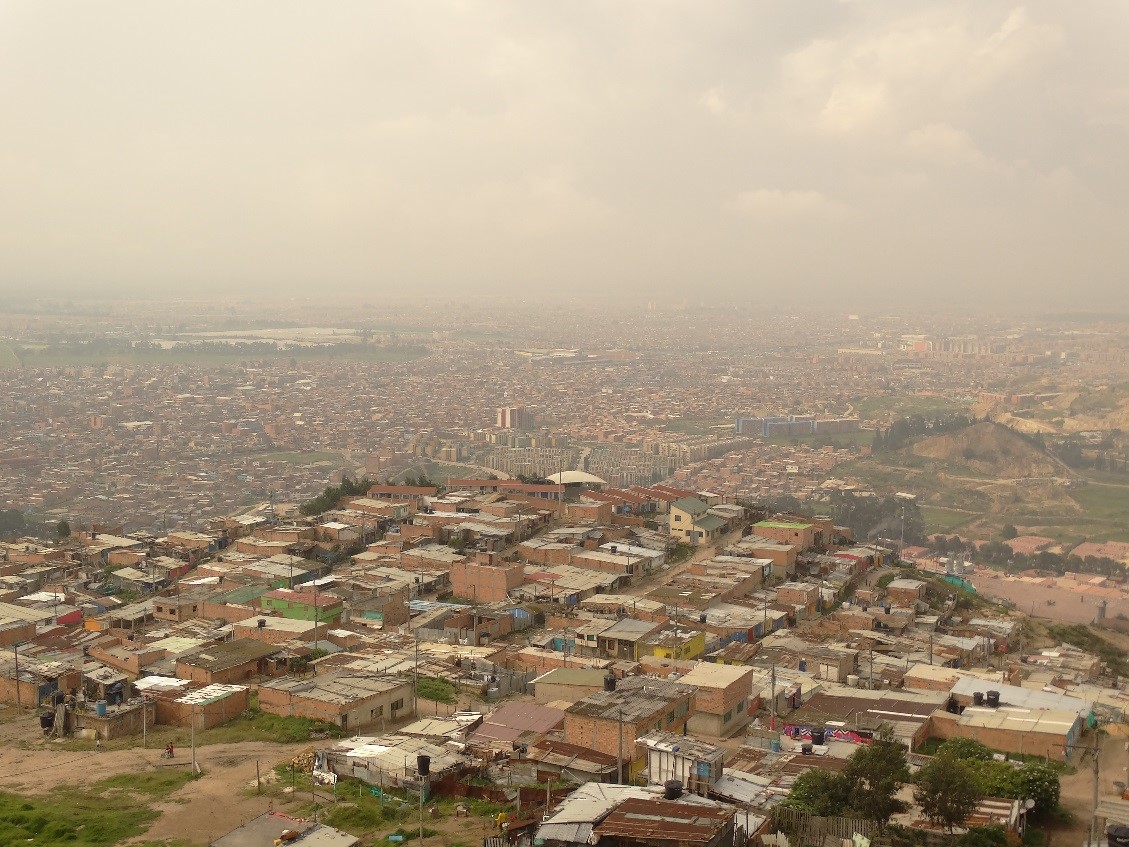
View of Altos de Florida and Soacha on the outskirts of Bogota, the capital of Colombia.


“I was displaced by the paramilitary from Llanos Orientales to Chocó in 2005,” says Yomaira, who lives with her husband and three children in Altos de la Florida, an informal settlement in urban Soacha, just outside the Colombian capital of Bogota. “Three years later we fled to the urban areas of Buenaventura and then again in 2012 to Bogota due to increased violence. In 2014 we started to build a house on this hill because the cost of living in the city was too high.” Yomaira’s narrative reflects the experience of many families for whom armed conflict prompted just the first of many internal displacements: 5.8 million people remain displaced in Colombia as of the end of 2019.[1]

The Root Causes of Displacement

In Colombia, initial displacements due to armed conflict or generalized violence often results in displacements again to urban areas, where families seek protection and economic opportunities. An estimated 87% of the country’s IDPs come from rural areas, and they wind up in the only places that they can access due to their vulnerability: the informal settlements,[2] where more than half of the IDPs live.[3] Both authorities and humanitarian, development, and peace actors need to better understand these supposed urban refuges.

This article is based on a research project implemented from 2015 until 2018 in Altos de la Florida, including surveys of 211 households, 98 in-depth interviews, 3 social cartographies, and 3 focus group discussions.[4] Altos de la Florida is a neighborhood in Soacha, a municipality of approximately 1 million people, the largest of the cities surrounding Bogota. Over two-thirds of its population was living under the poverty line as of 2010.[5]

According to the city’s development plan, 48% of the municipality—378 neighborhoods—are deemed “illegal” by local authorities. The IDP population in the municipality stood at around 50,000 in July 2018. Since the outbreak of the economic and political crisis in neighboring Venezuela, at least 12,300 Venezuelans have joined the ranks of Soacha’s displaced people.

Altos de la Florida suffers from the common pattern of social and spatial segregation in a poverty area with low-quality housing, services, and infrastructure: 72.9% of households are in conditions of structural poverty. The neighborhood as an urban community, formed by 1,011 families of around 3,657 people, has two main characteristics: 52.49% are less than 25 years old, and 48.81% are women.
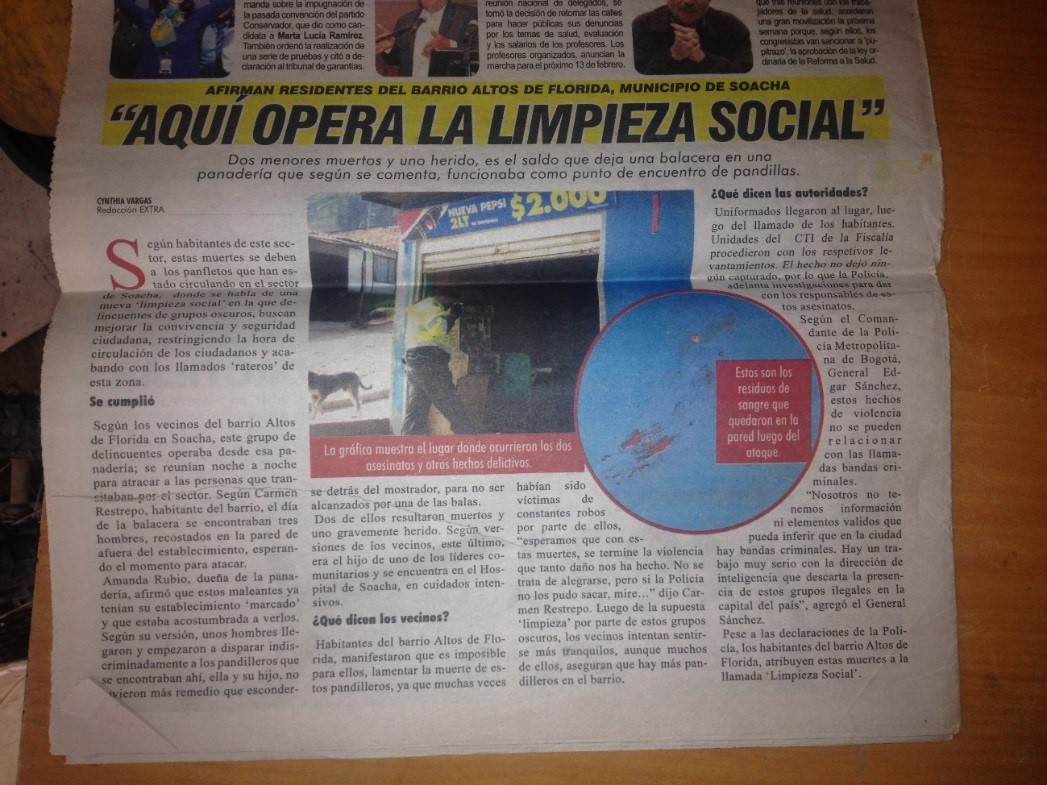
An article in a local daily linked so-called social cleansing with the murder of the son of a community leader in Altos de la Florida.

From One Informal Settlement to Another

The UNHCR and UNDP have diagnosed Altos de la Florida as a “vulnerable community due to the informality of the neighborhood.”[6] The informal nature of these urban settings limits the capacity to reduce vulnerabilities, yet the planning secretary of the mayor’s office refuses legalization.

Due to the absence of political will, households lack tenure security and have no official proof of home ownership. The neighborhood faced eviction attempts in 2009, and the lack of basic services and infrastructure in Altos de la Florida increases residents’ vulnerability. According to my survey results, 97.1% of households do not have access to drinking water except for a tank trunk, around 300 children need a kindergarten, and there are no primary health centers in the area—in fact, Soacha’s hospital has only 250 beds for 1 million people.

Altos de la Florida is regarded as an urban territory without state.[7] Urban violence increases protection risks. Informality combined with the settlement’s geostrategic position, and the absence of local authorities makes the neighborhood a strategic location for nonstate armed actors. According to Forensis data, the homicide index in Soacha was 40.58 per 100,000 inhabitants in 2016, the highest in the department of Cundinamarca. The profile of victims follows a common pattern seen in other urban contexts in Latin America: 91.5% are men, and 44.3% are between 20 and 29 years old. Interpersonal violence also represents a significant challenge with 2,898 cases per year, the fourth highest behind the cities of Medellin, Cali, and Barranquilla.

The lack of political will, the structural vulnerabilities of communities in informal urban areas, and high levels of insecurity are the causes of new urban displacements, both intra- and inter-urban. Re-victimization and re-displacement are the two main characteristics of this vicious cycle. Intra-urban displacement is the victimizing event with the greatest impact on the urban dynamics of the conflict in Colombia.[8] Urban IDPs are forced to flee their informal settlements due to violence, only to arrive in other settlements with similar protection risks. Informal settlements are therefore at once expelling zones and arrival areas for displaced populations. In socially and spatially segregated Altos de la Florida, IDPs represent 30%–40% of the population.
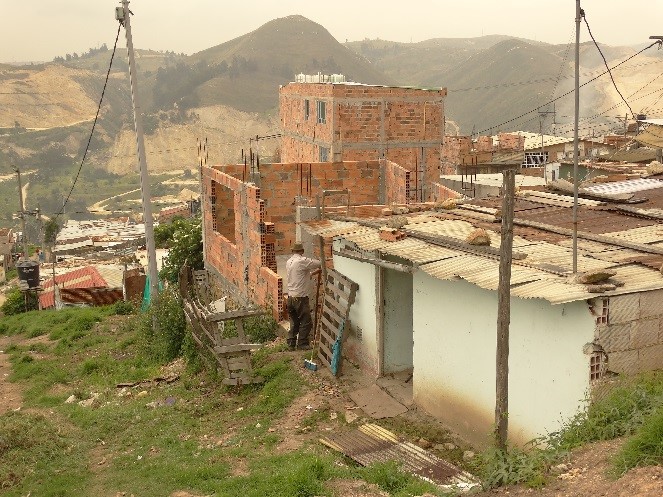
A man in Altos de la Florida building a brick house.

Promoting Community Participation

Humanitarian, development, and peace actors have increased their interest in urban contexts in recent years. Despite increasing knowledge, though, a lack of experience and challenges inherent to urban settings continue to undermine humanitarian and development interventions. International humanitarian aid began in 2001, when World Vision International established a presence in Colombia. In 2006 UN agencies and the Jesuit Refugee Service (JRS) started their intervention. Particularly interesting was the UN Human Security Program (2010–12) and the UN Transitional Solutions Initiative (TSI) project (2012–16).

In the settlements, a protracted and supply-driven emergency response has caused people to become dependent on external aid. Emergency assistance is an essential form of humanitarian aid, mainly for displaced families, but protracted aid can discourage community participation and increase the gap between assistance and development. According to one development worker operating in the neighborhood, to avoid creating dependency, “it is necessary to promote sustainable public policy solutions and the participation of IDPs in the political, economic, and social life of the host community.”[9]

The dependency of community leaders on humanitarian assistance also undermines social cohesion in the neighborhood. Limited consultation and lack of coordination decreases the effectiveness of the intervention. Past project evaluations have found that “international cooperation is insufficient and requires the integral intervention of the State.”[10] Therefore, achieving a durable solution for urban displacement requires closer collaboration between the humanitarian sector and local authorities, along with strong political will at both the local and national levels.

Resilience Spaces as a Protective Approach

In urban informal settlements, humanitarian, development, and peace actors must work in a weakened and less cohesive social engagement environment, exacerbated by sporadic violence. These circumstances lend themselves to short-term responses and silo-approaches to deal with emergencies, further increasing dependence among the communities that receive support. Poorly integrated responses have limited capacity to address complex urban crises. Cooperation between humanitarian and development actors and engagement with national and local actors are essential, given the potentially limited capacity and political will of certain municipalities.

The protracted vulnerability of urban IDPs and host communities in informal urban contexts has revealed the need for real change in humanitarian aid, particularly as fragile situations are exacerbated by urban violence. Protracted urban displacement requires better connectivity between humanitarian and development efforts, and the needs of IDPs should be balanced with those of the host communities. Current debates show a growing consensus around new and comprehensive approaches. To face the challenges of protracted urban displacement, interventions must go beyond immediate humanitarian needs and should aim to reduce the vulnerabilities of both IDPs and local host communities.

Humanitarian aid should be committed to not only ensuring survival but also supporting people to live in dignity. “Resilience spaces” were developed as a complementarity approach in the UNHCR’s Policy on Refugee Protection and Solutions in Urban Areas (2009), combining assistance and recovery by not only addressing urgent needs but also strengthening local capacities. The framework combines a top-down protection approach with a bottom-up capacity building approach through three areas of intervention: creating education, economic, and labor opportunities; strengthening social cohesion; and, supporting leadership capacities.

Such resilience spaces have been set up in Altos de la Florida, resulting in the creation of two important grassroots organizations in the informal settlement: Comité de Impulso, a fortnightly meeting among community leaders, dwellers, IDP associations, and humanitarians; and Florida Juvenil, a youth community organization engaged in break-dance, theater, and football activities.

Resilience has emerged as one of the strongest responses to the humanitarian and development divide. In Altos de la Florida, the joint work of humanitarian and development actors, in collaboration with national and local counterparts, aims to achieve collective results in the short to medium term (three to five years) to reduce risk and vulnerability. The situation in Altos de la Florida features three criteria that are on the rise in modern humanitarianism and deemed essential in urban responses to displacement: complementarity, connectivity, and sustainability.
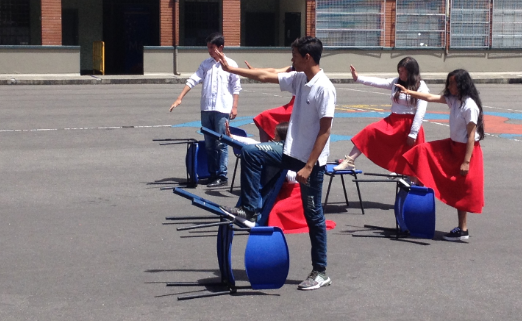
A youth theater group supported by Fe y Alegría in Altos de Florida.

In Altos de la Florida, international actors strengthened rather than replaced local and national systems. The complementariness of response included collaboration with local and national aid providers in affected territories, empowerment of leaders of both local and national NGOs and community-based organizations, as well as inclusion of authorities and municipalities at the urban level. Going beyond complementarity, connectivity can not only to bridge the humanitarian-development divide but also incorporate approaches like resilience, which is key to strengthening local capacities. Sustainability, evident through positive long-term results for the supported individuals and societies, depends directly on this capacity for collaboration among the actors and the strengthening of local and national capacities.

Currently, there is consensus in the humanitarian community that in urban contexts populations can be protected by strengthening their capacity. In this sense, humanitarian action has a particular and perhaps unique role in protecting the population through strategies that allow people to build their resilience. Resilience approaches bridge lingering disparities and disconnections between humanitarian and development responses in urban interventions. The approach observed in Altos de la Florida helps better articulate an urban response around the construction of resilience as an instrument of protection. This protection, in turn, represents a comprehensive strategy to address the root causes of urban displacement.
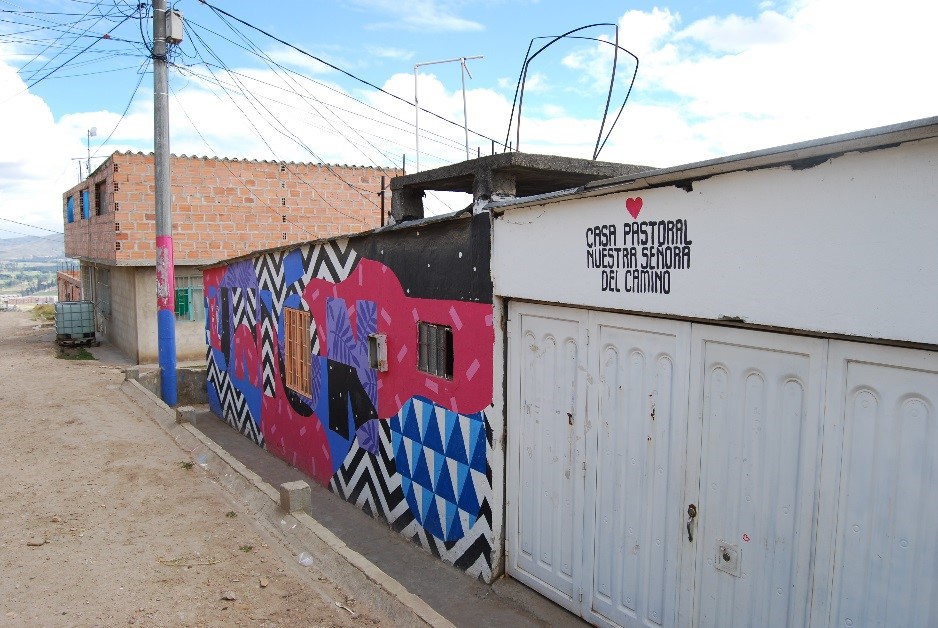
Resilience space in Altos de la Florida supported by the Jesuit Refugee Service.


[1] IDMC (2019), ‘Global Report on Internal Displacement 2019’, IDMC, p. 44, https://bit.ly/2WNKeKQ.

[2] CNMH (2010), ‘Una nación desplazada. Informe nacional del desplazamiento forzado en Colombia,’ CNMH and UARIV, p. 38, https://bit.ly/29uyNzv.

[3] IDMC (2015), ‘Global Overview 2015. People internally displaced by conflict and violence,’ IDMC, p. 20, https://bit.ly/2TSq3ZK.

[4] This part of the project was funded by the European Union’s Horizon 2020 research and innovation program under the Marie Skłodowska-Curie grant agreement No 691060.

[5] UNDP (2010), ‘Política Pública de Desarrollo Social Incluyente. Municipio de Soacha,’ UNDP.

[6] UNHCR and UNDP (2017), ‘Documentación proceso de integración local comunidad Altos de la Florida, Soacha,’ UNHCR and UNDP, https://bit.ly/2SQ0vgc.

[7] Laura Tedesco (2007), ‘El Estado en América Latina ¿fallido o en proceso de formación?’ Fundación para las Relaciones Internacionales y el Diálogo Exterior, Vol 37.

[8] CODHES (2013), ‘Desplazamiento forzado intraurbano y soluciones duraderas,’ CODHES, p. 18, https://bit.ly/2EEfmpf.

[9] Interview, April 4, 2016, with a UNDP TSI coordinator in Soacha.

[10] Econometría Consultores (2016), ‘Evaluación externa del programa “Construyendo Soluciones Sostenibles-TSI,”’ Econometría S.A., p. 19.

  • HOME
  • 投稿者 : ld-sylff

Seventh “Voices” Booklet Now Online and in Print

April 22, 2020

Voices Vol.7 (7.1MB.)

The Sylff Association secretariat is pleased to announce the publication of the seventh edition of Voices from the Sylff Community as a PDF file and in print format.

The latest edition contains 25 articles uploaded on the Sylff website between June 2018 and October 2019. Eighteen were submitted by the awardees of various support programs. They offer valuable hints on how the awards can be used to further fellows’ research and social engagement activities. You will also find reports, including many photos, of the 25th anniversary ceremonies and related events at nine universities in China. Rounding out the booklet are two pages of photos featuring the many outstanding fellows whom members of the Sylff Association secretariat met in 2018-19.

The booklet can be downloaded as a PDF file here.

We Want to Hear Your “Voice”

We are always eager to learn about the academic achievements and social intiatives of all fellows. Please send your contributions to the Sylff Association secretariat (sylff [a]tkfd.or.jp) to be shared through the Sylff website and Voices booklet. (replace [a] with @).

Guidelines for writing a Voices article can be downloaded here.

*     *     *

Voices from the Sylff Community 
April
2020, Vol. 7

CONTENTS

Sylff Support Programs: Sylff Project Grant (SPG)

Developing an Inclusive Distribution Model

Yutaka Tokushima

Keio University

Making a Significant Difference to Early Childhood Development in South Africa

Louis Benjamin

University of the Western Cape

Sylff Support Programs: Sylff Leaders Workshop

[Report] Fall Session of Sylff Leaders Workshop 2018–19

Keita Sugai

Sylff Association Secretariat

Holistic and Empirical Approaches to Ensuring Food Security

Nuruddeen Mohammed Suleiman

University of Malaya

An Amazing Experience in Effective Teamworking and Accountable Leadership

Nermeen Varawalla

INSEAD, The Business School for the World

Sylff Leaders Workshop: Not Only a Global Partnership but a Global Friendship

Anna Plater-Zyberk

Jagiellonian University

Designing Food for the Future

Kabira Namit

Princeton University

Thoughts Regarding Local Foods

Nomingerel Davaadorj

National Academy of Governance

A Journey in the Land of the Rising Sun

Ayo Chan

Peking University

Sylff Support Programs: Sylff Leadership Initiatives (SLI)

Carceral Logics and Social Justice: Women Prisoners in India

Rimple Mehta

Jadavpur University

Catalyzing Cultural Revitalization in Western Province, Solomon Islands

Joe McCarter

Victoria University of Wellington

Sylff Support Programs: Sylff Research Abroad (SRA)

Political Reconciliation in Postcolonial Ghana

Frank Afari

Graduate Institute of International and Development Studies

Listen to Your Uber Driver: A Comment on the Economic and Emotional Vulnerability of Uber’s Silent Partner

Emma McDaid

UNSW Business School

Beyond the Treasures? Beyond the Nation? Museum Representations of Thracian Heritage from Bulgaria

Ivo Strahilov

Sofia University “St.Kliment Ohridski”

Sylff Support Programs: Local Association Networking Support (LANS)

JU-SYLFF LANS Meet 2019

Amrita Mukherjee, Sreerupa Bhattacharya, Moitrayee Sengupta, Sawon Chakraborty, Sudeshna Dutta, Sujaan Mukherjee

Jadavpur University

Program Report on the LANS Meeting

Luisa Alejandra Gonzalez Barajas

El Colegio de Mexico

Sylff Fellows as Agents of Change

Socrates Kraido Majune

University of Nairobi

The 2018 Inaugural Sylff Fellows Networking Event in Auckland, New Zealand

Tess Bartlett

Massey University

Across the Community

Potters’ Locality: The Socioeconomics of Bankura’s Terracotta

Soumya Bhowmick

Jadavpur University

Toward an International Academic Career

Mihoko Sakurai

Keio University

Dr. Yohei Sasakawa: An Inspiration to All

Joyashree Roy

Jadavpur University

Sylff’s Silver Jubilee in China

Milestone Administrators Meeting in Beijing

Yue Zhang

Sylff Association Secretariat

25th Anniversary Ceremony and Commemorative Symposium

Yue Zhang

Sylff Association Secretariat

Four Universities Celebrate 25th Anniversary

Yue Zhang

Sylff Association Secretariat

Four Universities Celebrate 25th Anniversary in 2019

Yue Zhang

Sylff Association Secretariat

Appendix: Support Program Awardees in 2018-19

2018-19 in Pictures: Leaders with a Mission


  • HOME
  • 投稿者 : ld-sylff

  • HOME
  • 投稿者 : ld-sylff

The State and the Rights of Individuals: Pursuing Research at the Graduate Institute Geneva

April 16, 2020
By 25314

Using an SRA grant, Benedikt Behlert spent four months from September 2019 to January 2020 as a junior visiting fellow at the Graduate Institute of International and Development Studies in Geneva, Switzerland, which proved to be highly beneficial for his PhD project on the administrative procedures required to protect human rights. 

*     *     *

My PhD project on “The Necessity of a Conversation between the Administration and the Individual: The Relevance of Procedure to International Human Rights” asks the question whether international human rights law requires states to have in place structured decision-making procedures for their administrative bodies. Such procedures are often perceived as a nuisance by the two sides involved—the administration and the individual confronted with it—and as an unwelcome hurdle in reaching their objectives.

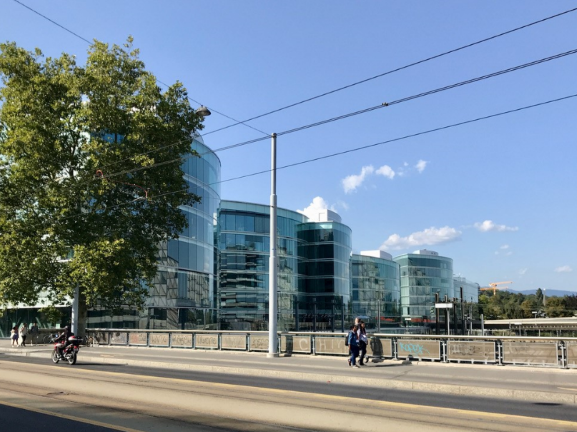
The Maison de la Paix, home of the Graduate Institute Geneva.

This perception clouds the value of administrative procedure, however, which can protect individual rights against arbitrary state action. This protective potential is realized first and foremost by involving the individual in the decision-making process, such as by granting them a right to be heard and requiring reasons for a negative decision. This is the insight from which my normative analysis of international human rights law commences.

The different ways in which individuals are potentially confronted by administrative bodies are numerous. Beyond “everyday encounters,” such as when an individual applies for a permit, there are complex and sensitive human-rights issues like the ongoing “migration crisis” that highlight the relevance of this inquiry.

What does international human rights law say about the relevance of procedures for the protection of the rights of migrants and refugees? Does it require institutionalized procedures to examine whether a person’s claim for asylum is well-founded? What should such procedures look like? A thorough understanding of the general relationship between the laws governing international human rights and administrative procedures should help answer such questions about specific encounters between state administrations and individuals.

Comparison with Constitutional Rights

One chapter of my thesis draws inspiration from German constitutional law, in particular, the German doctrine of constitutional rights. The connection between administrative procedure and German constitutional rights has been discussed for more than 40 years. The ideas and arguments found in this discourse are by now well-developed, and given the striking structural and substantial similarities, they might provide valuable insights for human-rights-based arguments.

The goal of this comparative exercise was to learn something about the structure and nature of international human rights law, which will inform the subsequent part of my thesis where I try to construct an international-human-rights-law-based argument in favor of procedural rights and obligations.

However, looking for inspiration from one’s own jurisdiction carries a certain risk for the international lawyer. The outcome of research may be too heavily influenced by one’s own background and thus irrelevant to the international legal discourse. In order to avoid falling into this trap, I decided to write the part of my thesis focusing on the similarities and differences between constitutional rights and international human rights in a highly international research environment.

I had the great honor of spending four months at the Graduate Institute of International and Development Studies in Geneva as a junior visiting fellow. With its very diverse faculty and even more diverse student body, the Graduate Institute Geneva—also a Sylff institution—was just the right place for me to get the inspiration and critical feedback I needed.

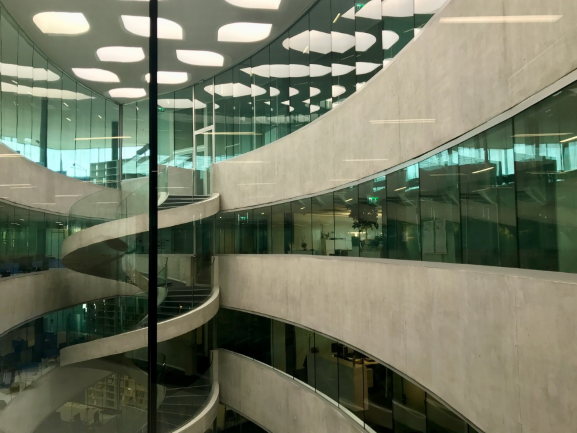
The view from my workplace at the Graduate Institute Geneva.

The Benefits of an International Research Environment

I reviewed pertinent German constitutional law literature and international human rights law literature during my stay. The vast number of resources available at the Graduate Institute and its library were a great help. Most importantly, however, I had the chance to talk to researchers at various levels—PhDs, postdocs, and professors—from different disciplinary and national backgrounds, both informally and in more formal settings. Everyone at the International Law Department was extremely welcoming and helpful. In numerous talks with members of the world-renowned faculty and fellow PhD students, I received valuable input.

Furthermore, I gave a presentation in a roundtable session at the International Law Department, which was followed by an engaging and stimulating discussion. Not only did all these talks enable me to think about the German ideas more critically, but they also helped me to find more effective ways to present my findings to an international audience, which is the eventual target of my thesis.

Beyond the direct benefits for my research, my time as a junior visiting fellow at the Graduate Institute helped to broaden my horizon more generally. Almost every day, a high-level event with leading figures of international politics took place in the grand auditorium, exposing me to many interesting and informed analyses of current issues and crises. The junior visiting fellowship thus enabled me to better perceive my research within the bigger picture of international studies. Finally, the support which the International Law Department and the visiting fellows office provided was outstanding, very personal, and made my stay comfortable and easy.

Being a junior visiting fellow at the Graduate Institute Geneva was a splendid experience. I am certain that my thesis will reflect the inspiration and input I received during my stay. I am immensely grateful to the Sylff Association for funding my stay in Geneva with a generous SRA award, and I can only encourage other fellows who have not done so to make use of the extraordinary opportunities the Sylff Association provides!

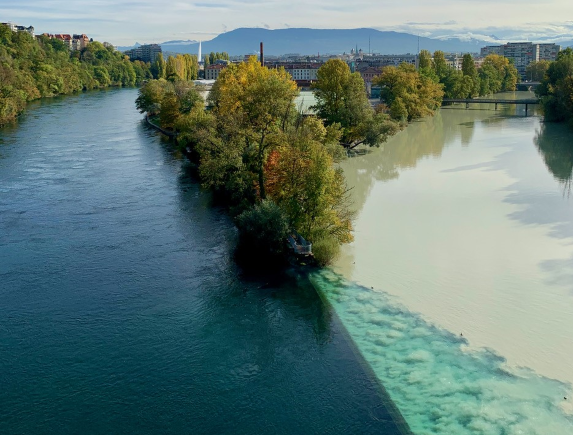
Jonction, the place in Geneva where the Rhône and the Arve meet.

Behlert's related article "Forced Migration in Transition: Perspectives from Social Science and Law" can be read at www.sylff.org/news_voices/27466/.

  • HOME
  • 投稿者 : ld-sylff

Insights into the Dynamics of Diplomacy in the Future

April 14, 2020
By 19817

Didzis Kļaviņš, a Sylff fellowship recipient in 2012, is a senior researcher at the Faculty of Social Sciences and Advanced Social and Political Research Institute, University of Latvia. He is currently conducting a research project on the transformation of diplomacy in the Baltic and Nordic countries. The aim of the comparative research is to analyze the nature of the changes in the ministries of foreign affairs in six countries: Estonia, Latvia, Lithuania, Sweden, Denmark, and Finland. In this article, Kļaviņš shares a number of observations from his ongoing post-doctoral research project.

 * * *

During the last two decades, changes in diplomacy have been widely observed. Commercial diplomacy, digital diplomacy, and city diplomacy are just some of the types of diplomacy that characterize the scale and variety of changes. Although sometimes it may seem as though diplomacy—as an instrument of foreign policy and diplomatic practice—has accordingly experienced significant changes or is experiencing them right now, diplomacy development trends in recent years prove that the largest changes are still to be expected. The issue is related with the readiness of each country and its ability to adapt to such changes. By taking the multifaceted nature of international relations and unpredictability into account, this article aims to raise some of the main issues in diplomacy, the meaning of which will continue to grow and require increased attention in the coming years.

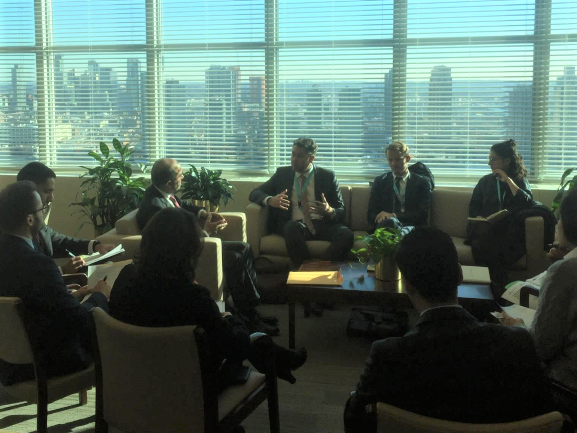
Photo of Denmark's Tech Ambassador visiting the United Nations Headquarters.


New Technologies and Artificial Intelligence

Undeniably, in the future, new solutions in technology and communications will significantly change the nature of diplomatic communication. Operativity in the circulation of information and the availability thereof will change the dynamics of diplomatic work by requesting an even faster response on the part of foreign affairs services. More attention will also be paid to the selection of information and the verification of facts by using the newest technological solutions. Moreover, the integration of the information technology (IT) infrastructure of foreign affairs services with the IT systems of other governmental institutions will be one of the most current issues. There is no doubt that the introduction of new technological and communication solutions in each and every ministry of foreign affairs (MFA) will require large investments of financial means in comparison to the benefits acquired by society from the use of such technologies in foreign affairs.

Significant changes in MFAs will be determined by the solutions of artificial intelligence, which are now enjoying their victory procession in the field of technologies and which are used more and more in the improvement of public administration work. It may be that in the coming years, the use of AI in foreign affairs will significantly affect the work of diplomatic and consular services. Already now, the solutions offered by artificial intelligence indicate that changes will be revolutionary. Machine learning, neural networks, virtual assistants, and chatbots will not be unknown in diplomacy, a prediction that is backed by the research published and forecasts expressed during recent years. Thanks to innovative methods and algorithms that efficiently process large amounts of data and ensure significantly high speed, one of the main benefits of AI will be the automation of processes. Although for the time being AI hardly appears on the agenda of foreign policy as indicated by Ben Scott, Stefan Heumann, and Philippe Lorenz (2018), this situation will rapidly change in the very near future, and AI will become one of the central themes in the creation of foreign policy, including the modernization of diplomatic practice.

Bearing in mind the current development of artificial intelligence, it is important not to postpone looking at the issues of how it might be possible to better integrate AI with the needs of the MFAs.

 It is also quite possible that many countries will begin by using AI solutions for the needs of the consular service, commercial diplomacy, and public diplomacy. Examples include the provision of information regarding the work of the consular service, help in emergency situations abroad, safe travel, export possibilities abroad, and the formation of the state image via a virtual assistant or chatbot. The possibility cannot be excluded that AI solutions will be used in the management of crises. In general, the rapid development of technologies and diverse innovations will require a more operative response and operation of the MFAs. It will mean in turn that the possibilities of communication technologies will allow society and mass media to request even faster and more decisive foreign policy actions from the ministries and governments in general, including more operative activities by the foreign affairs services.


The Significance of Diplomacy in Public Administration

Although nowadays more or less every government  ministry and agency directly cooperates with other public administration institutions, it is predicted that in the future even more involvement in the coordination of foreign policy issues and involvement of other state institutions in solving external issues will be expected from every MFA (Rana 2011; Hocking, Melissen, Riordan, and Sharp 2012, 2013). With regard to the provision of support to other state institutions, great importance will be given to the use of the “whole of government” approach (WGA) in the formation of international issues and administering of public administration. It for the MFA to no longer perform the “gatekeeper” role between foreign policy and interior policy and to become a support institution or a platform for other public administration institutions instead. The types of support may vary from the coordination of interinstitutional issues to servicing all government institutions. Tom Christensen and Per Lægreid (2007) are just two of the well-known WGA researchers who underline the significance of horizontal coordination. In the future, many MFAs are expected to focus on coordinating foreign policy issues between the institutions involved; this is in line with the nature of the national diplomatic system, namely, the MFA as a part of the wider governmental system in the implementation and coordination of foreign policy issues (Rana 2011; Hocking, Melissen, Riordan, and Sharp 2012, 2013; Hocking and Melissen 2015; Hocking 2016, 75).


Dynamics of Change in Diplomatic Representations

Looking at the possible development of diplomacy, it may be predicted that employees in diplomatic missions abroad will have to deal with wider themes—for example, use of the newest communication technologies in the creation of the country’s image, use of artificial intelligence in the promotion of national competitiveness, and the formation of science and innovation diplomacy—which means acquiring new and diverse knowledge. Emphasis will also be placed on the implementation of WGA, which in turn means that employees from other ministries and agencies will be working more and more in embassies and other representations. It may be further predicted that the functions of ambassadors will become broader, because they must also support the activities and operations of the representatives of other institutions in the host country along with new agenda issues in foreign affairs. According to Kishan S. Rana (2011, 136), an ambassador will fulfill the role of the leader of the state team abroad. There is no doubt that diplomats abroad will have to be even more involved in the creation of the country’s image by using innovative communication solutions, including AI technologies.

The importance of public diplomacy will also become more topical. Along with the foregoing, diplomatic services will be required to promote economic and commercial diplomacy even more. In order to be able to promote export growth and attract investments, the MFAs will be forced to more actively use the accrued contacts and communication with representatives of the diaspora. The study by Ieva Birka and Didzis Kļaviņš (2019) on the role of diaspora diplomacy in the Baltic and Nordic countries is a good example of the importance of dialogue with diaspora communities abroad, including launching initiatives for growth and export purposes.  It is predicted that in the future, all abovementioned activities of the diplomatic service will be more deeply integrated with the model for performance management and activity reporting.


In Conclusion

By projecting the transformation of diplomatic practice in the coming years, it may be predicted that, in general, diplomacy that includes a variety of themes and functions—which is described as integrative diplomacy in the literature—will become dominant (Hocking, Melissen, Riordan, and Sharp 2012). Demand for the proactive service of foreign affairs and the implementation of WGA will promote structural and functional changes in the MFAs of many countries. Taking into account the fact that services will become even broader, it cannot be denied that one of the innovations could be the establishment of more and more specialized ambassadorial positions (for example, the designation of Tech Ambassador in Denmark). It may also be predicted that more external experts will be attracted to the field of strategic communications and creation of the country’s image.

Since September 2017, Casper Klynge is the first Tech Ambassador in Denmark and the world to be spearheading the government’s decision to elevate technology to a foreign policy priority as part of the Danish “TechPlomacy” initiative. (Photo courtesy of the Office of Denmark’s Tech Ambassador, Ministry of Foreign Affairs of Denmark)

References

Scott, Ben, Stefan Heumann, and Philippe Lorenz. 2018. Artificial Intelligence and Foreign Policy. Berlin: Stiftung Neue Verantwortung.

Rana, Kishan S. 2011. 21st Century Diplomacy: A Practitioner’s Guide. London: Continuum, 2011.

Hocking, Brian, Jan Melissen, Shaun Riordan, and Paul Sharp. 2012. “Futures for Diplomacy: Integrative Diplomacy in the 21st Century,” Clingendael Report 1: 1-79.

Hocking, Brian, Jan Melissen, Shaun Riordan, and Paul Sharp. 2013. “Whither Foreign Ministries in a Post-Western World?” Clingendael Policy Brief 20: 1-7.

Christensen, Tom, and Per Lægreid. 2007. “The Whole-of-Government Approach to Public Sector Reform,” Public Administration Review 67 (6): 1059–1066, doi.org/10.1111/j.1540-6210.2007.00797.

Hocking, Brian, and Jan Melissen. 2015. “Diplomacy in the Digital Age,” Clingendael Report: 1-58.

Hocking, Brian. 2016. “Diplomacy and Foreign Policy.” In The SAGE Handbook of Diplomacy, edited by Costas M. Constantinou, Pauline Kerr, and Paul Sharp, 67-78. London: SAGE.

Birka, Ieva, and Didzis Kļaviņš. 2019. “Diaspora Diplomacy: Nordic and Baltic Perspective,” Diaspora Studies, Epub ahead of print, doi.org/ 10.1080/09739572.2019.1693861.

Note: This work was supported by the European Regional Development Fund project “Post-doctoral Research Aid,” project title “Comparative research on foreign ministries in Baltic States and Nordic Countries (2012–2015),” research application Nr. 1.1.1.2/VIAA/1/16/082 and research agreement Nr. 1.1.1.2/16/I/001.


  • HOME
  • 投稿者 : ld-sylff

Support Programs and COVID-19

April 6, 2020

The Sylff Association Secretariat is deeply concerned about the alarming spread of COVID-19, declared a pandemic by the World Health Organization. We are also concerned about fellows who are engaged in or have been selected for funding to undertake activities under a Sylff Support Program, as well as those planning to apply in fiscal 2020 (April 1, 2020 to March 31, 2021). We intend to minimize the potential impact of the coronavirus to Support Program participants and candidates by adopting a flexible approach, as outlined below.

Current Participants of a Support Program

If the current situation prevents you from completing your activities as proposed under any Support Program, either partially or entirely, please contact sylff[at]tkfd.or.jp (replace [at] with @) to share details and discuss ways to deal with the situation.

If You Are Thinking of Applying

  1. Sylff Research Abroad (SRA)

We plan to conduct two selections rounds in fiscal 2020, but we are postponing our announcement due to uncertainty caused by the coronavirus outbreak. Please check our website and our Sylff News updates for announcements on when we will begin accepting SRA applications.

  1. Sylff Leadership Initiatives (SLI)

If you submit an SLI application after April 1, 2020, and are selected for a grant but cannot complete your project, either partially or entirely, please consult with the Sylff Association Secretariat. Projects may be postponed for up to one year from the original implementation date. If this deadline cannot be met, we will ask the SLI fellow to terminate the project for the time being and settle the project budget. If an opportunity to carry out the original plan appears at a later date, we will, as an exception, accept a reapplication and consider funding the project under a new plan.

  1. Sylff Project Grant (SPG)

Screening of SPG applications after April 1, 2020, may be delayed due to factors that could make implementation of the SPG proposal impossible. If the review is cancelled, applicants will be asked to submit a new application with a reorganized plan and schedule when the COVID-19 situation stabilizes.

  1. Local Association Networking Support (LANS)

A LANS application submitted after April 1, 2020, will be duly reviewed and accepted if it meets LANS requirements. However, LANS organizers may need to reschedule or cancel their plans during fiscal 2020. We will accommodate postponements of events up to March 31, 2022 (end of fiscal 2021). LANS organizers may retain the budget disbursed by the Secretariat up to this date, but we may need to reexamine the amount awarded to account for any changes in the number and locations of participants.

We want to help fellows make the most of the Support Programs even at this difficult time. Please note, though, that there may be delays in reviewing your applications, including for Support Programs not cited above. We ask for your understanding and hope you’ll keep posted of updates.

Contact sylff[at]tkfd.or.jp (replace [at] by @) if you have any questions or concerns.

  • HOME
  • 投稿者 : ld-sylff

Empirical Research on Financial Crowdfunding at a Leading Research Organization for Alternative Finance

March 31, 2020
By 26667

Wanxiang Cai, who received a Sylff fellowship at Chongqing University in 2016 is currently enrolled in a PhD course at the School of Economics, Utrecht University, Netherlands. His research area is entrepreneurship. Using an SRA award, he visited the Cambridge Centre for Alternative Finance, a leading research center in the field of fintech.

* * *

In recent years, crowdfunding has emerged as a source of online entrepreneurial finance. Although crowdfunding has attracted the attention of both researchers and policymakers, as an emerging form of entrepreneurial finance, we still have very limited information about its global pattern. My PhD research is about the governance of financial crowdfunding, and I suggest it is important to analyze the relationship among social capital, legal institutions, and financial crowdfunding at the macro (national), meso (platform), and micro (campaign) levels. It is essential for me to collect data about financial crowdfunding at the platform and national levels to finish my thesis.

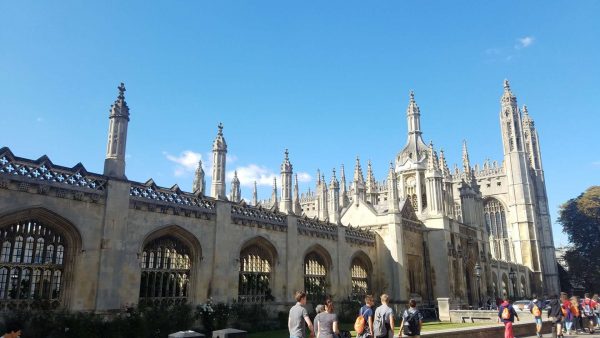
Kings College of the University of Cambridge.

The Cambridge Centre for Alternative Finance (CCAF) is a leading research center in the field of fintech. It publishes several international industry reports every year. The center collects data from more than 1,000 fintech companies around the world and provides information about the development of the alternative finance market in different countries. These reports are the most comprehensive publications in this field and have been extensively cited in academic papers. Furthermore, the CCAF has established favorable relationships with policymakers around the world, including the Financial Conduct Authority (FCA) in Britain, the Inter-American Development Bank (IDB), and the World Bank. Thus, visiting the CCAF can not only help me collect essential data for my research, but also offer me a chance to have a deeper understanding of the industry and get more great insights from policymakers.

The author, left, with several members of the benchmarking report project.

After communicating with Tania Ziegler, the lead in Global Benchmarking at the CCAF, we reached the agreement that I would visit the CCAF and help them write the global benchmarking report, and in return, they would provide me with their survey data for my research. Furthermore, they would also give me a chance to discuss my research with several senior researchers at the University of Cambridge, including Professor Raghavendra Rau, who has a very high reputation in finance. Thanks to Sylff Research Aboard, I had the chance to visit the University of Cambridge and had a great time at the CCAF.

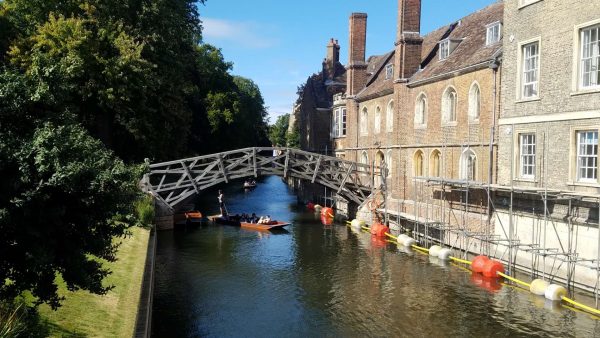
The Mathematical Bridge at the University of Cambridge.

I started my visits on September 1, 2019. I was shocked by the beauty of the city and the sacredness of the university. It was always sunny during my first two weeks in Cambridge, which is unusual in Britain, as it rains all the time. Several colleges are scattered along the banks of the River Cam, including Trinity College, where Issac Newton studied hundreds of years ago. An enormous number of visitors walked along the river, while the students in Cambridge shared with them the glories of the university, such as its history, famous alumni, and recent academic outcomes. These students looked very confident and felt so proud of their university, making me eager to start my research at Cambridge.

I began my research immediately. The first thing that I had to do was to collect data from a vast number of alternative finance platforms. The annual alternative finance report is based on these survey data. Thus, I contacted the founders of the platforms to see whether they were willing to get involved in our research. We collected data from more than 1,600 platforms around the world. Then we summarized how the market volume had changed over the last few years in major countries, as well as platform owners’ opinions about potential risks and regulatory changes. Based on this data, we also provided some preliminary analyses of what affects the growth of the alternative finance market. For example, we found a significant relationship between proper legal protections and the development of the alternative finance market. The information obtained in this way helps me to gain a deeper understanding of the global alternative finance market and is beneficial to my future research.

Meanwhile, I enrolled in an online course called Fintech and Regulatory Innovation. Through this course, I have gained new knowledge about fintech, especially from a regulatory perspective. More importantly, other students in this course are policymakers from around the world. During their discussions, I learned enormously from them. All the students come from central banks or other financial institutions, and they have great insights about the governance of fintech. They not only showed their expertise and experiences in the fintech topics but also raised questions about the future development of the market and potential research on these topics.

In addition to the above, we have discussed my research with several researchers. I have discussed one of my current papers with Wanxin Wang, a PhD candidate at Imperial College London. She also studies the topic of crowdfunding, and in fact, my paper is built on her recent paper published in a top journal. Her paper shares many similarities with mine, and she provided me with several suggestions for my research. I have also talked extensively with Dr. Rui Hao. She is very interested in my research, and she also helped me get a chance to interview policymakers worldwide. We decided to work together on a research project about how the regulations on equity crowdfunding will change. Unlike traditional entrepreneurial finance (e.g., venture capital and business angels), crowdfunding mainly consists of small investors who have limited knowledge about finance and investments, making it difficult to make proper regulations on financial crowdfunding. On one hand, overly strict legal protections on investors may harm small firms and entrepreneurial initiatives. On the other hand, legal protections can resolve extensive information asymmetry between investors and entrepreneurs. Thus, we have decided to conduct interviews on dozens of policymakers around the world. Using qualitative research methods, we would like to study how the regulations on financial crowdfunding will develop in the future.

Lastly, I conducted a study about how equity crowdfunding affects traditional entrepreneur finance. As an emerging form of entrepreneurial finance, we know less about the influence of equity crowdfunding compared to traditional entrepreneurial finance. First, equity crowdfunding may substitute traditional forms of entrepreneurial finance, such as venture capital, business angels, and private equity. Alternative, it may compensate traditional entrepreneurial finance, as it mainly supports small companies. This study contributes to my PhD research, as it explores under which legal conditions equity crowdfunding can contribute to the development of traditional entrepreneurial finance. Using the data from the CCAF and other databases, I have done some preliminary analyses. I have also discussed the idea and methods with Professor Raghavendra Rau. He gave me several comments, and I am improving this paper based his useful input.

In a nutshell, I have benefited extensively from this visiting. I have made friends, shared my research, got feedback, and gained a deeper understanding of my research. I appreciate that the Sylff Association has provided me with the scholarship to support my research at the CCAF. I am confident that other scholarship winners will also benefit from the Sylff.

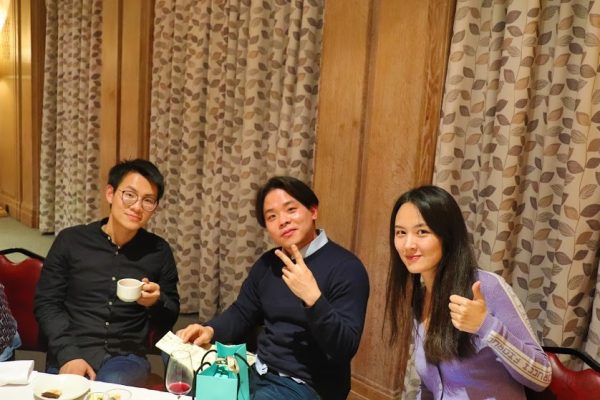
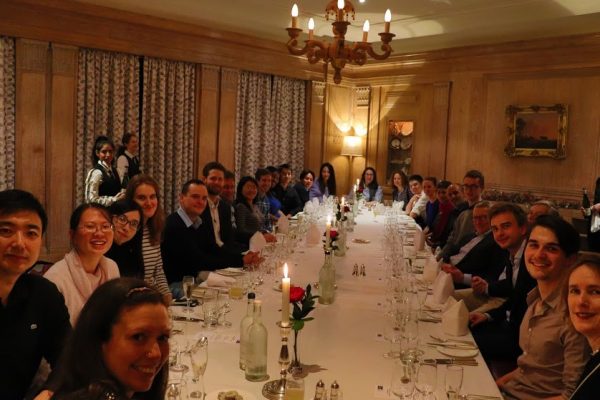
Christmas dinner at the CCAF.